


Single Core Copper Wire
Why Choose Us
Rich Experience
Able to quickly reach consensus on product development, production, and supply needs and provide corresponding solutions.
Research and Development
We attach great importance to investment in product research and development, build a scientific and reasonable R&D system, and closely meet the.
Our Service
We commit ourselves to providing our customers with superior quality, excellent service and competitive prices.
Provide Customization
Different specifications and functions can be customized according to customer requirements to meet the actual needs of customers.
Win-Win Cooperation
Adhering to the development strategy of growing together with well-known enterprises, we work together to forge ahead, develop together, and win the future together.
Quick Transportation
We cooperate with professional sea shipping, air and logistics companies to provide you with the best transportation solution.
What is Single Core Copper Wire?
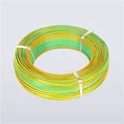
Single core copper wire consists of a single solid or stranded copper conductor surrounded by an insulating material. The copper provides excellent electrical conductivity, allowing for efficient transfer of electricity. Solid core copper wire is one continuous strand of copper, offering high mechanical strength but limited flexibility.


Product Categories



What Is Single Core Copper Wire Used For?
The Single Core Copper Wire is probably one of the most widely-used wires in our homes, shops, businesses and commercial installations. The most common use of single core strand cable is for transferring electrical power from one location to another. However, depending on the single core cable size required, it’s application may also span into other areas, such as for wiring in electrical appliances and equipment.
You may also see single core unsheathed cable used for electrical applications involving computers, power control panels and in powering of electrical gadgets.
For applications, where there is a risk of electromagnetic interference (EMI), you can also get single core wire with specially manufactured shielding that’s manufactured into the cable. Similar configuration shielding may also be available for flexible multicore cables. This type of shielded cable is also known as braided cable.
Shielded or braided cables are extremely adept at preventing external forces, such as signals from communication equipment or electromagnetic pulses from high-powered electrical or electronic devices, from compromising their functionality.
For example, electricians might use a single core braided cable to protect the cable if it passes near a microwave oven or a household cooking appliance. Similarly, if a cabling application passes near an electrical generator, there’s always the risk that EMI from the generator might impact the integrity of the cable. In such cases, either multicore or single core braided cable might be used.
There is also another use of braiding or shielding. Sometimes, engineers might use braided or shielded single core flexible cable in applications where there is need to use slightly stronger cabling. The interwoven metallic braiding serves a dual purpose. Firstly, it helps t deflect EMI, which could potentially compromise the cabling application. However, the use of single core braided cable, compared to the unshielded type, strengthens the overall cable. It protects the cable from mechanical stress and prolongs its life.
Finally, single core wire, with braiding, is also used in applications where engineers require the cable to display additional amounts of flexibility. Because the braiding is manufactured as an interwoven, lattice tubing, a single core braided cable or a similar multicore cable, reinforces the underlying insulated conductors and adds flex and versatility to the entire cable. This approach is used for cabling applications where a single wire cable might encounter tension and twists during installation, for example. The same concept works when there’s a need to use flexible multicore cable.
Features of Single Core Copper Wire
Single Core Copper Wire have notable features that differentiate them from the other cable variants. As a result, these features make single core cables more suitable for specific applications for others. These features will also help you understand where and how to use single core cables, especially if you need them for a particular application. The features of single core wires are:
Single Pathway Design
The main feature of Single Core Copper Wire is that they provide just one pathway for the electricity to travel through. This is because only a single conductor within the wire carries the current. Conversely, multi-core cables have multiple conductors within the same insulation. As a result, single-core cables are much more straightforward in their design and construction than multi-core cables.
Flexible
Single Core Copper Wire are much more flexible than their multi-core counterparts. This is because there is only one conductor in this solid core wire. As a result, the single conductor does not hamper how much they can twist and move around compared to cables with multiple cores. However, it is essential to note that these features will only apply to standard single core wires. After all, these cables can come in different shapes and sizes, with varying amounts of thinesses and thicknesses.


Color Coding
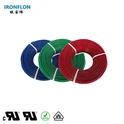
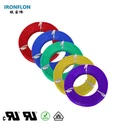
Another critical feature of Single Core Copper Wire is the clear labeling printed on these wires' outer insulation. The insulation material is typically made of PVC or XLPE, ensuring that the conduction material does not come into contact with another conductor. After all, such a possibility can lead to short-circuiting, current leakage, or unwanted connections that can lead to faults, damage, and even fatal conditions. The labeling on the insulation of single core cables also helps from a safety and identification perspective. This is because these wires are color-coded according to standards.
High Voltage Capacity
Single Core Copper Wire are much more suitable for higher voltages than multi-core cables. This is due to the design of these wires, where current only flows through a single path. As a result, there is much less magnetic interference. After all, a current-carrying conductor does produce a magnetic field around it, which can interact with other signals within the area. Therefore, electricians prefer using single-core cables for applications with high voltages because of their capacity to withstand them.
What Are The Advantages Of Single Core Copper Wire
Low resistivity: Aluminum wire and cable resistivity are about 1.68 times higher than copper wire and cable.
Good ductility: The ductility of copper alloy is 20~40%, the ductility of copper for the electrician is more than 30%, while the aluminum alloy is only 18%.
High strength: Respectively, the allowable stress at room temperature is 7~28% higher for copper than aluminum. Especially the stress under high temperatures, the difference between the two is very far.
Fatigue resistance: Aluminum is easy to break after repeated bending, and copper is not easy. Elasticity indicators are also higher than aluminum, about 1.7 ~ 1.8 times.
Good stability, corrosion resistance: Copper wire oxidation, and corrosion resistance, while the aluminum wire is susceptible to oxidation and corrosion.
High capacity: Due to low resistivity, the same cross-section of copper wire cable as aluminum wire cable allowable capacity (able to pass the maximum current) is about 30%-50% higher, especially the increasing number of household appliances, home furnishing basic copper wire.
Low voltage loss: Due to the low resistivity of copper wire and cable, the same section flows through the same current. Copper wire and cable voltage drops are small. Therefore, the same transmission distance can ensure higher voltage quality; or, under the conditions of the allowable voltage drop, copper wire cable transmission can reach a longer distance. That is, the power supply covers a large area, which is conducive to the planning of the network and reduces the number of power supply points set.
Low heat generation: At the same current, the heat generation of copper wire cable with the same cross-section is much smaller than that of aluminum wire cable, making the operation safer.
Low electrical loss: Due to the low resistivity of copper, it is obvious that the electrical energy loss of copper cables is low compared to aluminum cables. This helps improve the power generation utilization rate and protect the environment.
Oxidation resistance, corrosion resistance: Copper wire and cable joints are stable and will not cause accidents due to oxidation. Aluminum wire cable joints are unstable and often cause accidents due to oxidation, increasing contact resistance, and heat. Therefore, the accident rate is much greater than that of copper wire cables. Especially in some copper and aluminum wire butt place, slightly not connected to a long time on the problem. So the copper and aluminum wire butt must be strictly required to connect well.
Convenient construction
① Copper wire is flexible and allows a small radius of bend, so it is convenient to bend and easy to put through the pipe;
② Copper wire fatigue resistance, repeated bending is not easy to break, so wiring is convenient;
③ In the high mechanical strength of the copper wire can withstand a large mechanical tension, to the construction of laying brings great convenience, but also for the mechanization of construction to create the conditions.
How Do You Check the Quality of a Single Core Copper Wire?
Testing Before Installation
The first thing you should do is test it out immediately before installation. Check out whether it’s working, a good conductor of electricity, has good resistance to heat and all the other qualities that are needed are present.
Determination of Accessibility
This is a type of compatibility test to see if the copper wires are suited correctly and adjust to your software and other elements that are necessary for the whole process to go on smoothly.
Resistance Test
Coppers possess good resistance to heat which is the reason why it is so popular as a wire.So you have to check out the resistance of the piece of copper wire. You can also measure the voltage at the same time while knowing the resistance of the cable too.
Continuity Test
With the help of this test, you are able to determine a very important factor that determines the quality of the copper wire which is, if the wire connection inside the cable is solid. You can conduct this test with the help of a multimeter.
Best Use Cases Of Single Core Copper Wire
Single Core Copper Wire are the best option for long-distance transmission of high voltages. Therefore, these wires are perfect for power transmission in electrical grids. Electrical grids are crucial in providing electricity to people as they directly supply power to homes, commercial sites, and locations. The power supplied needs to be the correct voltage without wastage and interference to ensure that it is within the limit that appliances and systems can handle.
Electrical grids require power transmission lines to provide electricity over long distances. This requires the cables to be overhead or underground. This means they are subjected to many external environmental factors, such as wind, moisture, and soil conditions. These factors can take a toll on wires’ durability, leading to unsafe transmission. However, single core cables have high durability and can easily bend around. This means that they can handle the underground and overhead conditions and continue to transmit power for a long time without getting damaged.
The heavy-duty machinery and systems used in industries and factories have intensive power needs. This means that they typically use high voltages for their operation. As a result, single core cables are used extensively in industries for a variety of purposes. This includes connecting these systems, panels, machinery, and equipment to ensure that the factories are operating as they should. Single core cables are perfect for these high voltages as they have a high capacity and efficiency to handle them. Their lessened electromagnetic interference also ensures that signals that travel between components are not hampered. Furthermore, they are also durable and flexible, which means they can provide long service and be installed in locations with many bends, corners, and twists.
Railway systems are a great example of a use case where the benefits of single core cables are utilized. Railway systems tend to span vast distances and must provide high voltages for the train to move across the railway network. These high voltages electrify the railway network and allow the train to move from one place to another. For this purpose, single core cables are perfect as they can efficiently provide high voltages throughout the railway network. There will be minimal power losses compared to other cables.
HVAC stands for heating, ventilation, and air conditioning. These systems are crucial for providing optimal air conditions inside the rooms of commercial buildings, apartment complexes, and homes. They do this by regulating the temperature and conditions within spaces to ensure they are ideal for the people within them. Single Core Copper Wire are essential here to connect the equipment and control devices.
Telecommunication is a vital technology that helps us communicate over vast distances. Telecommunication networks consist of towers that transmit signals and data to each other over distances. This allows far away places to communicate with each other. Single core cables are vital in powering these towers and ensuring the network operates. Additionally, Single Core Copper Wire boast reduced electromagnetic interference, which ensures that the transmission of signals is not obstructed.
Our Factory
With strong belief in honesty and credit, we have built strong business relationships with many companies all over the world. We commit ourselves to providing our customers with superior quality, excellent service and competitive prices. We sincerely welcome customers at home and abroad to cooperate with us on the basis of mutual benefit. We will add value to anyone who will be our customer.

FAQ
Zhejiang IRONFLON Wire & Cable Co., Ltd. is well-known as one of the leading single core copper wire manufacturers and suppliers in China. If you're going to buy high quality single core copper wire made in China, welcome to get free sample from our factory. Also, customized service is available.
thick single core copper wire, for installation use single core copper wire, color of single core copper wire