


Why Choose Us
Rich Experience
Able to quickly reach consensus on product development, production, and supply needs and provide corresponding solutions.
Research and Development
We attach great importance to investment in product research and development, build a scientific and reasonable R&D system, and closely meet the.
Our Service
We commit ourselves to providing our customers with superior quality, excellent service and competitive prices.
Provide Customization
Different specifications and functions can be customized according to customer requirements to meet the actual needs of customers.
Win-Win Cooperation
Adhering to the development strategy of growing together with well-known enterprises, we work together to forge ahead, develop together, and win the future together.
Quick Transportation
We cooperate with professional sea shipping, air and logistics companies to provide you with the best transportation solution.
What is Copper Core Wire?
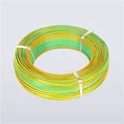
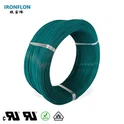
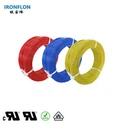
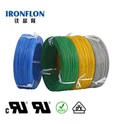
Copper core wire is an electrical conductor made from copper, which is known for its excellent electrical conductivity. Due to this property, copper is widely used in various electrical applications, from power distribution to electronics.


Product Categories


Laying method of Copper Core Wire and cables
Direct burial laying
This is a simple laying method that buries the wires directly underground. It is suitable for short-distance laying, and it is necessary to ensure that the moisture and humidity of the soil are low to avoid corrosion and damage to the wires.
Cable trench laying
Cable trench laying is a common method in construction sites or projects. By digging a trench and filling it with appropriate materials, place the wires into the trench and take protective measures. This type is suitable for long-distance and large-area laying and requires a professional construction team to operate.
Pipe laying
The wire is passed into a protective tube, which is generally a metal tube. It is suitable for occasions with high requirements for the protection of wires, such as occasions with high requirements for the insulation of wires in humid environments.
Wall laying
Make a slot in the wall, put the wires and cables into the slot, and fill it with cement and other materials. Suitable for short-distance laying in homes and projects.
Bridge laying
Suitable for long-distance laying, convenient for installation and maintenance.
Introduction To All Aspects Of Copper Core Wire Specifications
Current carrying capacity: Under the specified conditions (laying conditions; temperature conditions), the conductor can continuously carry (non-short circuit) without causing its stable temperature (too high to burn out) the maximum current exceeding the specified value (the highest temperature of the insulator).
Insulation materials: Materials attached to the outside of the copper core cable, generally PVC (polyethylene), XLPE (crosslinked ethylene), EPR (ethylene-propylene composite paste), minerals, and so on.
Standard cross-section specification (square mm) of a general copper core cable: 0.3; 0.5; 0.75; 1; 1.5; 2.5; 4; 6; 10; 16; 25; 35; 50; 70; 95;
According to the maximum allowable core temperature, cooling conditions, and laying conditions, the current carrying capacity under different conditions is completely different.
The current capacity of the aluminum core and copper core cable can be calculated according to the cross-section, and the cross-sectional area of the copper core aluminum core of the cable can also be calculated according to the current.
Ambient Temperature
The ambient temperature value used is the temperature of the surrounding medium when the cable or conductor under consideration is not loaded.
Soil Thermal Resistance Rate
For cables buried in the ground, where the actual soil thermal resistance is higher than 2.5K.m/W, the current carrying capacity must be appropriately reduced or the soil immediately adjacent to the cable should be replaced with a suitable material.
Multi-Loop Grouping
When installing more wires or cables in the same group, you must multiply by the specified correction factor.
The group correction coefficient is calculated on the assumption that a load of each loop cable of the group is the same.
Types Of Copper Core Wire


Solid Copper Wire: The Most Common Type
Solid copper wire is the most commonly used type of copper wire. It consists of a single strand of copper, which provides excellent conductivity. This type of wire is widely used in residential and commercial electrical systems, where it is used to connect electrical devices and components.
Stranded Copper Wire: Flexibility and Strength Combined
Stranded copper wire is made up of multiple thin strands of copper wire twisted together. This construction provides the wire with flexibility and strength, making it suitable for applications that require frequent bending or movement.
Tinsel Wire: Flexibility and High Durability
Tinsel wire is a type of copper wire that is made up of thin strands of copper wire wrapped in a polyester film. This construction provides the wire with a high degree of flexibility, making it suitable for applications that require frequent bending and movement.
Braided Copper Wire: Flexibility and Durability for Demanding Applications
Braided copper wire consists of multiple strands of copper wire braided together. This construction provides the wire with a high level of flexibility and durability, making it ideal for applications that require both strength and flexibility.
Bare Copper Wire: Versatile and Cost-Effective
Bare copper wire refers to copper wire that does not have any insulation or coating. It is the most basic form of copper wire and is widely available and cost-effective. Bare copper wire offers excellent electrical conductivity and is suitable for various applications.
Copper Clad Aluminum Wire: Cost-Effective Solution
Copper clad aluminum (CCA) wire is a type of wire that has an aluminum core coated with a thin layer of copper. This construction combines the conductivity of copper with the lightweight and cost-effectiveness of aluminum.
Specialized Copper Wires: Meeting Unique Requirements
In addition to the common types of copper wires discussed above, there are several specialized copper wires designed to meet specific requirements. These wires are tailored for specific applications and offer unique properties.

Telecommunication
In the early stage of its use, copper provided wires for telephone poles. Copper’s free-moving electron structure allows signals to be sent through telephone wires easily. Telephone poles use copper unshielded-twisted pair (UTP) wiring, and the twisted pairs provide increased bandwidth.
Supplying Electricity
Copper wires provide a means of transport for power sources to deliver energy to homes, commercial, and industrial facilities. Copper’s high ductility allows it to shape into numerous places to supply power anywhere in a household. Another major reason copper frequently appears in power transmission is that it is not an expensive precious metal.
Automobiles and Marine Wire
Climate durability is in high demand for industries like automobiles and underwater applications; therefore, copper demand increases by around 5% annually in these industries. Aside from being extremely electrically conductive, copper provides benefits like ductility, high melting point, and corrosion resistance. Like these industries, copper provides safe and efficient use in places where climate changes.
Application Of Copper Core Wire For Automotive Cable Harnesses
There are two main types of metal wires in automotive cable harnesses: copper and aluminum. The use of these metal wires in automotive cable harnesses involves many aspects such as current transmission, signal transmission, and protection.
First of all, copper wire is one of the most commonly used metal wires in automotive cable harnesses. Copper wire conducts electricity very well and can withstand high currents, so it is often used in electric vehicles to connect high-power circuits such as electric motors, battery packs, and charging systems.
Secondly, aluminum wire is another commonly used metal wire for automotive cable harnesses. Compared with copper wire, aluminum wire has slightly poorer electrical conductivity, so aluminum wire is often used to connect low-power circuits, such as car lights, speakers, air conditioners, etc. In addition, aluminum wire is lighter than copper wire and relatively cheaper, which can reduce the cost of automotive cable harnesses to a certain extent.
In addition to applications in current transmission, metal wires in automotive cable harnesses are also used for signal transmission and protection. For example, many types of sensors, controllers, and instruments require the use of metal wires to transmit signals. At this time, it is necessary to use metal wires with better quality and less electromagnetic interference to ensure the quality and stability of signal transmission.
In addition, metal wires also play an important role in the protection of automotive cable harnesses. For example, when a vehicle is driving, it will be subject to various external interference and damage, such as friction, vibration, collision, etc., which will cause damage and failure of the cable harness. In order to protect automotive cable harnesses, metal materials such as metal braiding or aluminum foil layers need to be added to the cable harness to provide additional strength and shielding effects and prevent the cable harness from external interference.
Advantages Of Copper Core Wire
The resistivity of aluminum core cables is about 1.68 times higher than that of copper core cables.
The allowable stress of copper core cables is 7~28% higher than aluminum respectively at ordinary temperature. Especially the stress at high temperatures, the difference between the two is even greater.
The ductility of copper alloy is 20-40%, the ductility of electrical copper is more than 30%, while the ductility of aluminum alloy is only 18%.
The copper core cables are resistant to oxidation and corrosion, while the aluminum core cables are susceptible to oxidation and corrosion.
Aluminum is easy to break after repeated bending, while copper is not easy. In terms of plasticity index, copper core cables are also about 1.7 to 1.8 times higher than aluminum core cables.
Due to the low resistivity, the copper core cables with the same cross-section is about 30% higher than the allowable current-carrying capacity (the maximum current that can pass) of the aluminum core cable.
Under the same current, the copper core cables with the same cross-section have much smaller heat than the aluminum core cables, which makes the operation safer.
Due to the low electrical resistivity of copper, it is obvious that copper core cables have low power loss compared to aluminum core cables. This is conducive to improving the utilization of power generation and protecting the environment.
Copper core cables can guarantee higher voltage quality at the same transmission distance. Under the allowable voltage drop condition, copper core cables can reach a longer distance for power transmission, that is, the power supply covers a large area, which is beneficial to network planning. Reduce the number of power supply points.
Length - The length of the wire will determine how much voltage can be transferred through it. If you need more power, then you should use a thicker wire so that more current can flow through it without overheating and damaging your equipment.
Thickness - The thickness determines how much current can flow through the wire. For instance, a thicker cable will carry more current than a thinner one but will also take up more space which may not be ideal if space is limited.
Voltage - Different types of copper wire have different maximum voltages which means they must be sized appropriately before connecting them to circuits.
Our Factory
With strong belief in honesty and credit, we have built strong business relationships with many companies all over the world. We commit ourselves to providing our customers with superior quality, excellent service and competitive prices. We sincerely welcome customers at home and abroad to cooperate with us on the basis of mutual benefit. We will add value to anyone who will be our customer.

FAQ
Zhejiang IRONFLON Wire & Cable Co., Ltd. is well-known as one of the leading copper core wire manufacturers and suppliers in China. If you're going to buy high quality copper core wire made in China, welcome to get free sample from our factory. Also, customized service is available.
ul wire cable, single core wire, electrical wire