


Multi Core Copper Wire
Custom Multi Core Copper Wire For Wholesale — IRONFLON
Zhejiang IRONFLON Wire&Cable Co., Ltd. is a source manufacturing enterprise specializing in high-temperature fluoroplastic (PTFE/XLPE/PFA/FEP) insulated wires and cables. We have 8 independent production lines with a monthly production capacity of up to 7500 kilometers, and have passed the ISO 9001, IATF 16949:2016 quality system and UL (E252458), RoHS authoritative certifications, supporting comprehensive and deep customization of specifications, conductors, colors, and lengths. By relying on factory price direct sales for bulk delivery guarantee and one-on-one exclusive service of "sales+technical engineers", we provide highly reliable cable solutions for high-temperature electrical applications of global customers.




Why Choose Us
Rich Experience
Able to quickly reach consensus on product development, production, and supply needs and provide corresponding solutions.
Research and Development
We attach great importance to investment in product research and development, build a scientific and reasonable R&D system, and closely meet the.
Our Service
We commit ourselves to providing our customers with superior quality, excellent service and competitive prices.
Provide Customization
Different specifications and functions can be customized according to customer requirements to meet the actual needs of customers.
Win-Win Cooperation
Adhering to the development strategy of growing together with well-known enterprises, we work together to forge ahead, develop together, and win the future together.
Quick Transportation
We cooperate with professional sea shipping, air and logistics companies to provide you with the best transportation solution.
What is Multi Core Copper Wire?
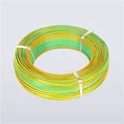
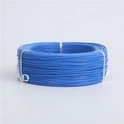
Multi core copper wire is an electrical conductor composed of multiple individual strands of copper wires bundled together. Each strand is individually insulated, and then the entire bundle is often wrapped in an overall protective sheath or jacket. This construction provides greater flexibility compared to single core copper wire, making it easier to install in applications where the wire needs to be bent or routed through tight spaces.
How to wrap multi-core copper wire connectors
Single volume method. First, take two adjacent wire cores on either side and cross them in the center of the joint. Then use one of the wire cores as a binding wire, wrap it around the wire 5 to 7 times, and then use the other wire core to tie it with the binding wire. The wires are twisted together, press the original binding wire, and continue to wrap it according to the above method. Its length is 10 times the diameter of the wire. Finally, the twisted wire end is twisted with the wire for 2 turns and then cut off. The wires on the other side are followed in sequence. , pay attention to arrange the twisted parts of the wire cores in a straight line.
Winding method. Bend the branch line at 90° and close to the main line. Bend the end of the binding wire into a semicircle at the appropriate place. Bend the short end of the binding wire to form a 90° angle with the semicircle, close it to the connecting wire, and wrap it with the longer end. , its length should be 5 times the diameter of the wire junction, then twist both ends of the binding wire 2 turns, and cut off the remaining wire.
Rewinding method. Break the end of the branch line into two halves and intersect it with the center of the main line connection. After winding the branch line tightly to both sides of the main line, cut the remaining wire in a ladder shape to a length of 10 times the diameter of the conductor.
Umbrella method. First, insert the two umbrella-shaped core wires opposite each other and flatten the core wires. Then divide the wire ends of the core wires on each side into 3 groups. First, lift the first group of wire ends on one side and wrap them tightly around the core wires. Lift the ends of the second set of threads and wrap them tightly around the core wire. Finally, lift up the ends of the third set of threads and wrap them tightly around the core wire.
T-shaped connection method. Intersect the ends of the branch core wires with the trunk core wires, leave 5mm at the root of the branch core wires, and then wind them clockwise for 6 to 8 turns. Use wire cutters to cut off the remaining core wires and clamp the core wires flat. end.

There are three methods for connecting multi-core copper wires, namely single coil method, winding method and rewinding method. First, use fine emery cloth to clean off the oxide film on the surface of the wire core, cut off 2/3 of the middle wire at the junction of the two core wires, open the outer wire cores in an umbrella shape, interlace each other into one, and The opened wire ends are combined into one body, and the cross connection method is used.
Single winding method: Take two adjacent wire cores on either side, cross them in the center of the joint, use one of the wire cores as a binding wire, wrap it around the wire 5 to 7 times, and then use After another wire core is twisted with the binding wire, press the original binding wire on top and continue to wind it according to the above method. Its length is 10 times the diameter of the wire. Finally, the twisted wire end is twisted with a wire for 2 turns and then cut off. The wires on the other side proceed in sequence. Note that the twisted cores should be arranged in a straight line.
Winding method: The same as the straight-line winding connection method of single-core copper wire.
Rewinding method: Suitable for the connection of multi-core flexible conductors. Temporarily bind one end of the closed wires with a short binding wire to prevent loosening. Wrap all the wire cores at the other end tightly for 3 turns, and cut off the excess wire ends in a ladder shape. Do the same on the other side.
What Are The Common Applications Of Multi Core Copper Wire
Transportation field
In the field of transportation, multi-strand copper core wires are mainly used to manufacture electrical circuits and information transmission lines for vehicles, such as electrical circuits and aircraft communication cables in vehicles such as cars, trains, and airplanes.
Energy sector
The application of multi-stranded copper core wires in the energy field is mainly used in fields such as power transmission, transformation, and distribution, such as power transmission lines in power plants, cables in substations, and lines that supply power to various types of equipment.
Communication field
In the field of communications, multi-strand copper core wires are mainly used in telephone lines, data transmission lines and other fields, such as mobile phones, indoor telephones, network lines, etc.
Other application areas
In addition, multi-stranded copper core wires can also be used in stage audio, electrical appliances and other fields. In the field of stage audio, multi-stranded copper core wires are used for audio lines in audio equipment; in the field of electrical home appliances, multi-stranded copper core wires are used in wires and cables for televisions, audio equipment, etc.
Benefits Of Multi Core Copper Wire
We discussed earlier how Multi Core Copper Wires help us save space. By combining all the power, data, and A/V cables, you save enormous space and effort. It generally helps where you need to store and install a huge amount of wires. The more efficient these wires are the better results you get. Imagine installing three separate wires for power, data, and audio signals. Now you can customize your cable so that it holds all the wires in a single cable.
Multi Core Copper Wires are tough, durable and heavy damage resistant. They can cover small spaces and give you the best user experience. These cables ensure no electrical interference. It boosts the performance of the cable. Hence, you get the best results. You can depend on them. They are long-lasting. You can use them regularly or from time to time. It entirely depends on you.
Multi Core Copper Wires are designed to withstand severe damage and are always better than regular braided shields. They give your cable that extra mechanical strength which improves the longevity of the cable. They are more user-friendly in terms of flexibility. Multi-Cores can cover a wide range and provides consistent performance even after receiving any heavy damage.
You will have no difficulty setting these cables anywhere. Being the most flexible cable, Multi-Cores can decrease any flexibility issues you are having with your standard cable. They are very easy to install, assemble, and disassemble. They can shorten space consumed by standard cables. It gives you the added advantage for a more controlled organization of your cables.
Multi Core Copper Wires have varied features and functions. It makes them very ideal for temporary projects which need outmost cable management. They can carry all the necessary signal cables and wrap them under a protective, conductive layer.
The purpose of the cable: To choose a suitable Copper Wire, you first need to consider its specific use. If it is a scene that needs to transmit high voltage and high current, it is recommended to choose a single-core Copper Wire; if it is necessary to transmit multiple signals or the cable needs to withstand certain electromagnetic interference, it is recommended to choose a multi-core cable.
Quality of cables: The quality of cables is an important factor affecting their service life and safety. It is recommended to choose a certified brand product, and pay attention to check whether the cable interface, insulation material and ground connection are in good condition.
Cable length: Whether the Copper Wire length is appropriate or not has a great influence on the transmission effect and safety of the cable. Copper Wire that are too long increase the resistance of the cable itself, resulting in increased power loss, while Copper Wire that are too short may not be able to transmit power to the target device. Therefore, it is recommended to conduct accurate measurements according to actual needs when purchasing cables.
Environmental climate: The environmental climate also has an impact on the service life and safety of the cable. Some special application scenarios, such as humid environment or high temperature environment, need to select the corresponding cable to ensure its safety and stability.

Best Practices In Multi Core Copper Wire Installation And Maintenance
Correct Wire Sizing: Always choose the wire size appropriately based on the calculated load to prevent overheating.
Secure and Neat Installation: Use cable ties and conduits to protect wires from physical damage and to keep installations neat and organized.
Regular Inspections: Conduct bi-annual checks to ensure all wires are in good condition, looking for signs of wear or damage.
Prompt Replacement: Replace any wires that show signs of deterioration or damage immediately to maintain system integrity and safety.
Insulation Wear: Look for cracks or brittleness in wire insulation, particularly in areas exposed to sunlight or chemicals.
Connection Issues: Loose connections can lead to arcing and overheating. Ensure all connections are tight and secure during regular maintenance checks.

Cable Design: It’s essential to select a Multi Core Copper Wire design that matches the requirements of the application. This includes selecting the right number of conductors, conductor size, and cable jacket material.
Environmental Conditions: The environmental conditions of the application should be considered when selecting Multi Core Copper Wire. Factors such as temperature range, exposure to chemicals, and exposure to UV radiation should all be taken into account.
Installation: Multi Core Copper Wire should be installed according to the manufacturer’s instructions to ensure optimal performance and safety. This includes selecting the right connectors, routing the cables correctly, and ensuring proper grounding.
Maintenance: Regular maintenance and inspections of Multi Core Copper Wire can help detect and prevent potential issues before they become critical.
Our Factory
With strong belief in honesty and credit, we have built strong business relationships with many companies all over the world. We commit ourselves to providing our customers with superior quality, excellent service and competitive prices. We sincerely welcome customers at home and abroad to cooperate with us on the basis of mutual benefit. We will add value to anyone who will be our customer.

FAQ
Zhejiang IRONFLON Wire & Cable Co., Ltd. is well-known as one of the leading multi core copper wire manufacturers and suppliers in China. If you're going to buy high quality multi core copper wire made in China, welcome to get free sample from our factory. Also, customized service is available.
multi core copper wire for appliances, copper wire for telephone systems multi core, copper wire for surveillance systems multi core