


Custom ETFE Insulated Wire For Wholesale — IRONFLON
Zhejiang IRONFLON Wire&Cable Co., Ltd. is a source manufacturing enterprise specializing in high-temperature fluoroplastic (PTFE/XLPE/PFA/FEP) insulated wires and cables. We have 8 independent production lines with a monthly production capacity of up to 7500 kilometers, and have passed the ISO 9001, IATF 16949:2016 quality system and UL (E252458), RoHS authoritative certifications, supporting comprehensive and deep customization of specifications, conductors, colors, and lengths. By relying on factory price direct sales for bulk delivery guarantee and one-on-one exclusive service of "sales+technical engineers", we provide highly reliable cable solutions for high-temperature electrical applications of global customers.
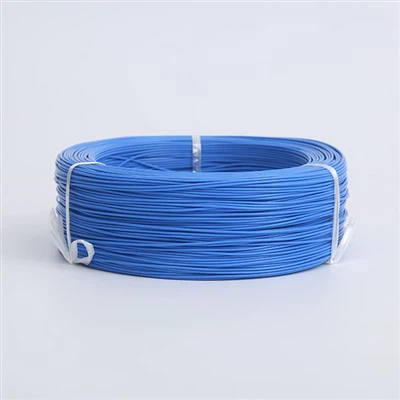




Why Choose ETFE for Wire Insulation?
ETFE is highly resistant to a wide range of chemicals and solvents, as well as extreme temperatures, which makes it an ideal choice for applications where the wiring may be exposed to harsh environments or conditions.
ETFE is extremely durable and long-lasting, with excellent resistance to abrasion, punctures, and other types of damage.
Despite its strength and durability, ETFE is incredibly lightweight. This makes it a great option for applications where weight is a concern, such as in aerospace or automotive industries.
ETFE is often chosen over FEP or PTFE due to its superior mechanical strength. It has excellent thermal-aging properties and can withstand high voltages.
Another advantage of ETFE is that it is more versatile than PTFE in processing since it can be extruded, injected, and molded into almost any form. While compared to PTFE, ETFE is significantly stronger and has a higher chemical resistance.
Benefits Of ETFE Insulated Wire


High Heat Insulation: ETFE wires are highly flame retardant as they have a melting point of 270°C. They have excellent resistance to extremes of temperature.
Self-Cleaning: The material has self-cleaning quality. The special surface structure of ETFE insulated wires ensures that wind and rain are sufficient to remove dirt, reducing the cost of periodical maintenance and cleaning.
Lightness: These wires are lightweight. They weigh approximately 1% of the weight of glass.
Durable: It has a life span of more than approximately 25 years due to its durability against UV, air pollution and environmental conditions. Extensive laboratory and field research have suggested that the material can even extend its life span in excess of 40 years.
High light transmission: ETFE material is highly translucent and has light permeability of 85-95%.
Environment-friendly: The material is eco-friendly as it 100% recyclable.
Elasticity: The wires made from ETFE are high in elasticity as they continue their structural resistance as they can extend by up to 600% until torn.
Flame retardant: ETFE insulated wires are also fire resistant and have low smoke and flame characteristics. Thus the wiring material is safe.
Elasticity: The wires made from ETFE are high in elasticity as they continue their structural resistance as they can extend by up to 600% until torn.
Flame retardant: ETFE insulated wires are also fire resistant and have low smoke and flame characteristics. Thus the wiring material is safe.
Energy-efficient: From extrusion to assembly, they consume significantly less energy than glass.
Weatherproof: The wires exhibit outstanding resistance to weather and aging.
Structural Composition And Materials Of ETFE Insulated Wire
Function: Conductor is a component of a wire and cable that transmits electrical (magnetic) energy, information and realizes specific functions of electromagnetic energy conversion.
Material: There are mainly uncoated conductors, such as copper, aluminum, copper alloy, aluminum alloy; metal-coated conductors, such as tinned copper, silver-plated copper, nickel-plated copper; metal-clad conductors, such as copper-clad steel, copper-clad aluminum, aluminum clad steel, etc.
Function: The insulating layer is wrapped around the conductor or the additional layer of the conductor (such as refractory mica tape), and its function is to isolate the conductor from bearing the corresponding voltage and prevent leakage current.
The commonly used materials for extruded insulation are polyvinyl chloride (PVC), polyethylene (PE), cross-linked polyethylene (XLPE), low-smoke halogen-free flame retardant polyolefin (LSZH/HFFR), fluoroplastics, thermoplastic elasticity (TPE), silicone rubber (SR), ethylene propylene rubber (EPM/EPDM), etc.
Function: The shielding layer used in wire and cable products actually has two completely different concepts.
First, the structure of wires and cables that transmit high-frequency electromagnetic waves (such as radio frequency, electronic cables) or weak currents (such as signal cables) is called electromagnetic shielding. The purpose is to block the interference of external electromagnetic waves, or to prevent the high-frequency signals in the cable from interfering with the outside world, and to prevent mutual interference between wire pairs.
Second, the structure of medium and high voltage power cables to equalize the electric field on the conductor surface or the insulating surface is called electric field shielding. Strictly speaking, the electric field shielding does not require the function of “shielding”, but only plays the role of homogenizing the electric field. The shield that wraps around the cable is usually grounded.
Electromagnetic shielding structure and materials
① Braided shielding: Mainly use bare copper wire, tin-plated copper wire, silver-plated copper wire, aluminum-magnesium alloy wire, copper flat tape, silver-plated copper flat tape, etc. to be braided outside the insulated core, wire pair or cable core;
② Copper tape shielding: Use soft copper tape to cover or wrap vertically outside the cable core;
③ Metal composite tape shielding: Use aluminum foil Mylar tape or copper foil Mylar tape to wrap around or vertically wrap the wire pair or cable core;
④ Comprehensive shielding: Comprehensive application by different forms of shielding.For example, wrap (1-4) thin copper wires vertically after wrapping with aluminum foil Mylar tape. The copper wires can increase the conduction effect of the shielding;
⑤ Separate shielding + overall shielding: Each wire pair or group of wires is shielded by aluminum foil Mylar tape or copper wire braided separately, and then the overall shielding structure is added after cabling;
⑥ Wrapping shielding: Use thin copper wire, copper flat tape, etc. to wrap around the insulated wire core, wire pair or cable core.
The function of the sheath is to protect the cable, and the core is to protect the insulation. Due to the ever-changing usage environment, usage conditions and user requirements. Therefore, the types, structural forms and performance requirements of the sheathing structure are also varied, which can be summarized into three categories:
One is to protect the external climatic conditions, occasional mechanical forces, and a general protective layer that requires general sealing protection (such as preventing the intrusion of water vapor and harmful gases); If there is a large mechanical external force or bear the weight of the cable, there must be a protective layer structure of the metal armor layer; the third is the protective layer structure with special requirements.
Composition And Application Of ETFE Insulated Wire


Conductor
Conductor is the conductive part of wire and cable, which is used to transmit electric energy and is the main part of wire and cable.
Insulation layer
The insulating layer is used to electrically isolate the conductors from the earth and conductors of different phases to ensure the transmission of electric energy. It is an indispensable part of the wire and cable structure.
Shielding layer
Wire and cable of 15KV and above generally have conductor shielding layer and insulation shielding layer.
Protective layer
The function of the protective layer is to protect the wires and cables from the invasion of external impurities and moisture, as well as to prevent external forces from directly damaging the power cables.
Power system
The wire and cable products used in the power system mainly include overhead bare wires, bus bars (buses), power cables (plastic cables, oil-paper power cables (basically replaced by plastic power cables), rubber sheathed cables, overhead insulated cables, branch cables (replacing some buses), electromagnetic wires and electrical equipment wires and cables for power equipment.
Information transmission
The wires and cables used for the information transmission system mainly include local telephone cables, television cables, electronic cables, radio frequency cables, optical fiber cables, data cables, electromagnetic cables, power communication cables or other composite cables.
Instrument system
This part is applied to almost all other products except overhead bare wires, but mainly power cables, electromagnetic cables, data cables, instrument cables, etc.
What Are the Uses of ETFE Insulated Wire
Automotive Industry
Electrical wires are used to connect different components like: the car battery, alternator, lights, sensors, built-in navigation systems, windows, and other electronic devices. There is a wide range of automotive and electric wire options available, and choosing the right wire comes down to four considerations: materials, amperage, gauge, and connections (soldered or solderless).
Copper and aluminum are the most common wire material options. Copper is more flexible, conductive, and not as likely to corrode, but it weighs more and is more prone to fluctuations in price. Aluminum is lightweight and more budget-friendly but it comes with the downside of being more likely to corrode and build more electrical resistance over time.
The most common wires found in the automotive industry include: primary GPT wire, battery cable, marine-grade wire, trailer cable, automotive cross-link, service cord, and shielded cable.
Electrical Appliances
Electrical wires are widely used for appliances in different settings. These wires are responsible for supplying the appliance with a stable electrical current. Appliances that are powered by electric wires include anything from kitchen appliances like: microwaves, ovens, and washing machines, to other household appliances like: hair dryers, televisions, radios, etc.
Electrical wire is also used to supply electricity to industrial appliances and office appliances, among others, including industrial machinery and printers, respectively.
Electrical Systems
Electrical wires form the backbone of electrical systems in homes, buildings, and industrial facilities. They are used to transmit electricity from the power source to various outlets, switches, and devices. The wiring in electrical systems must adhere to safety standards and regulations to prevent electrical hazards. Different types of wires are used, including insulated and non-insulated wires, depending on the specific requirements of the system.
Lighting Systems
Lighting systems, whether in residential, commercial, or industrial settings, heavily rely on electrical wiring. Wires connect light fixtures to power sources, switches, and dimmers. Specialized wires may be used for outdoor lighting or in environments in which exposure to moisture or extreme temperatures is a concern.
Telecommunication Systems
The transmission of data and communication signals is made possible through the use of electrical wires in telecommunication systems. Telephone lines, internet cables, and fiber-optic cables all utilize electrical wiring to transmit signals over short or long distances. Electrical wire provides reliable, cost-effective connectivity over long distances.

TPE thermoplastic elastomer insulation or jacket
According to UL, this insulation is suitable for direct burial and passes two levels of oil resistance. It can withhold extremely low temperatures but does not do well if extremely high temperatures. The material has excellent resistance to UV lights. The material is continuous flex, making it perfect for control and instrumentation applications.
Chlorinated Polyethylene (CPE) insulation or jacket
CPE has similar properties to TPE, but it does not possess a continuous flex and is unsuitable for direct burial. However, its chemical resistance is way superior to CPE.
XLPE insulation
Cross-Linked polyethylene is good for high-power applications as it sustains higher voltages. The insulation is resistant to oil, UV, and chemicals, including two levels of UL oil resistance. Cross-linking makes the insulation resistant to high temperatures.
Cable insulations for extreme industrial conditions
Extreme industrial conditions in the oil and gas industry mean exposure to extreme low and high temperatures, radiation, and water, including saltwater. These cables also required increased mechanical protection. For added mechanical protection, armor can be added in addition to insulation.
FEP / Fluorinated Ethylene Propylene insulation or jacket
The insulation has unprecedented resistance to fires, chemicals, oil, and UV. The temperature rating is -200°C to 200°C. The insulation is low smoke zero halogen.
Our Factory
With strong belief in honesty and credit, we have built strong business relationships with many companies all over the world. We commit ourselves to providing our customers with superior quality, excellent service and competitive prices. We sincerely welcome customers at home and abroad to cooperate with us on the basis of mutual benefit. We will add value to anyone who will be our customer.

FAQ
Zhejiang IRONFLON Wire & Cable Co., Ltd. is well-known as one of the leading etfe insulated wire manufacturers and suppliers in China. If you're going to buy high quality etfe insulated wire made in China, welcome to get free sample from our factory. Also, customized service is available.
stranded wires, high temperature flexible cable, performance wires