When doing decoration, engineering, or selecting wire accessories, many friends are confused by the terms single core wire and stranded wire.In fact, the former is commonly referred to as single core electric wire, while the latter is multi strand soft wire.They are like the "two main forces" in the wire industry, each with their own abilities.Choosing the right one can save a lot of trouble, while choosing the wrong one may bury safety hazards and waste money.Below, based on my years of experience in the industry, I will talk about these two types of wires to help you choose.
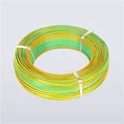
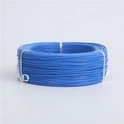
Let's first take a look at these two types of wires: Single core wire, as the name suggests, is a wire with only one solid conductor, mostly made of pure copper, wrapped in an insulating layer on the outer layer, which feels hard and not easy to bend; Stranded wire, it is made by twisting multiple thin copper wires together according to certain rules, and then wrapping them with an insulation layer.It has a soft touch and can be bent freely, just like the texture of the mobile phone charging cable we usually use.
Some friends may ask, how much difference can there be between all the wires, one hard and one soft? In fact, the core difference between the two has already been determined in terms of structure, which directly determines their performance, use, and even price.Let's start with the most intuitive structure and performance.
Single core electric wire is sturdy and durable because it is a single solid conductor with particularly strong tensile strength.Buried on walls, underground, or laid on cable trays, it is not easy to break or deform.In addition, copper wire has a small surface area, is not easily oxidized or corroded, and has a long service life.It can usually be used for decades and is particularly suitable for long-term fixed scenarios.Secondly, it has strong conductivity stability, no joints in a single conductor, uniform resistance, and low losses during current transmission.Especially in long-distance power transmission or high-power equipment power supply, its advantages are obvious, such as dedicated lines for household main lines, air conditioners, water heaters and other high-power electrical appliances.
But it also has a 'little temper', it's just too hard.During construction, the difficulty of threading pipes can be higher, especially when encountering corners and narrow spaces.It is not advisable to repeatedly bend them, otherwise it is easy to break the copper wire, affect the conductivity, and even cause short circuits.And its heat dissipation is relatively average, because the heat is concentrated on a single copper wire without gaps for heat dissipation.Therefore, when used in high temperature environments, special attention should be paid to leaving sufficient safety margins.In addition, single core electric wire with the same cross-sectional area is slightly cheaper than stranded wire, about 10% -20% cheaper.For scenarios with limited budget and pursuit of long-term stability, choosing it is definitely the right choice.


Looking at stranded wire again, it is made up of multiple thin copper wires twisted together, just like many thin ropes twisted together.This structure gives it excellent flexibility.Whether it's threading pipes, bending, or connecting devices that require frequent movement, it can easily handle them and is particularly worry free during construction.For example, it can avoid bending and breaking problems with complex wiring inside distribution cabinets, robot harnesses, car wiring, and home socket branch lines.Moreover, multiple thin copper wires have a larger total surface area, better heat dissipation, and can effectively utilize the skin effect during current transmission (in simple terms, high-frequency currents prefer to flow on the surface of conductors), making them suitable for weak current signal transmission and high-frequency electrical scenarios.
However, there are also areas that need to be noted, as it is a twisted pair of thin copper wires with a large surface area, which is prone to oxidation in humid environments.Therefore, terminal crimping or soldering must be used at the joint to avoid loose strands and loose connections, otherwise it will heat up and pose a safety hazard.Moreover, its tensile strength is not as good as that of single core electric wires, making it unsuitable for long-term outdoor exposure or fixed wiring scenarios that require tensile strength.Its service life is also slightly shorter than that of single core electric lines.In addition, Stranded multi-core wire with the same cross-sectional area is more expensive than single core wire due to the additional twisting process, resulting in higher costs.
Here are two common pitfalls that many people tend to confuse.The first misconception is that stranded electric wire has "greater power" and blindly selects thicker ones.In fact, under the same cross-sectional area, the current carrying capacity of stranded electric wire is only slightly higher.The key still depends on the device's interface and power requirements.Blindly increasing the thickness not only wastes money, but may also be incompatible.The second misconception: thinking that single core is "outdated" and that twisted pair is more advanced.In fact, in industrial power distribution, photovoltaic power stations, long-distance transmission and other scenarios, single core is still mainstream because its stability and durability cannot be replaced by twisted pair.
Next is what everyone is most concerned about - how to choose? Remember one core principle: single core for fixed use, multi-core for mobile use; Single core for strong electricity and multi-core for weak electricity.Let's divide the scenarios into specific ones for everyone's convenience.
Priority should be given to scenarios with Single core electric line: hidden wires inside walls, fixed wiring under floors, main entry lines, as well as power supply for fixed equipment in industrial plants, long-distance power transmission, and underground buried wiring.These scenarios do not require wire movement and have high requirements for stability and durability, with a single core that can be perfectly adapted.For example, the main lighting line in the home uses a 1.5mm ² single core electric line, and the dedicated lines for air conditioning and water heaters use a 4mm ² single core electric line, which is both safe and durable, and can save budget.
Priority should be given to stranded electric wire scenarios: devices that require frequent movement (such as vacuum cleaners, drills, robots), vibrating environments (such as air conditioning outdoor units, water pumps, elevators), wiring in narrow spaces or complex corners (such as inside ceilings or pipelines), and weak electrical signal transmission (such as network cables, audio cables, sensor lines).These scenarios require high flexibility and anti-interference of wires, and the advantages of stranded multi-core wire can be reflected.For example, using 2.5mm ² stranded electric wire for the branch circuit of the socket at home is convenient for threading and easy for later maintenance; The wiring harness inside the car, using stranded electric wire, can adapt to the vibration of the vehicle body and is not easily broken.
If it is home decoration, the most practical combination plan is "mainline single core+branch line twisted multi-core", which can ensure overall stability and also consider construction convenience, saving about 30% of costs compared to using stranded multi-core wire entirely.For example, single core is used for the main entrance line, air conditioning, and water heater, while twisted multi-core is used for the branch lines of sockets and lighting fixtures, perfectly balancing safety, practicality, and cost-effectiveness.
Finally, let me give you a few tips for choosing wires, no matter which type of wire you choose, you can avoid pitfalls.Firstly, identify UL certification to avoid buying inferior wires; Secondly, based on the material of the copper wire, pure copper conductors are preferred for better conductivity and durability.Do not buy inferior products such as copper-clad aluminum or copper-clad steel; Thirdly, choose the wire diameter based on the power consumption.For high-power equipment such as air conditioners and water heaters, sufficient margin should be left to avoid wire diameter being too small and causing heat generation; Fourthly, the joints of stranded wire must be handled properly, using terminal crimping or soldering.When connecting single core wire, they should be tightened to avoid virtual connections.
In addition, I would like to add a small knowledge point for everyone.The current carrying capacity of wires is affected by environmental temperature For example, in high temperature environments in summer, the current carrying capacity will decrease.For every 5 ℃ increase, the current carrying capacity will be multiplied by a coefficient of approximately 0.86-0.92; If the wires are laid through conduits, the heat dissipation will deteriorate, and the current carrying capacity will also need to be multiplied by a coefficient of about 0.8.These details can be paid more attention to in practical use to avoid safety issues caused by overload.