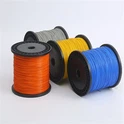
As a supplier of UL10358 single core copper wire, I often encounter inquiries from customers about the wire's resistance to salt spray. This is a crucial question, especially for applications in coastal areas or environments with high salt content. In this blog, I will delve into the science behind the salt spray resistance of UL10358 wire, drawing on industry knowledge and our own experience.
UL10358 single core copper wire is well regarded in the electrical industry for its high quality conductivity and flexibility. Copper, as the core material, offers excellent electrical properties, making it suitable for a wide range of applications, from household wiring to industrial equipment. The UL certification indicates that the wire meets specific safety and performance standards set by Underwriters Laboratories.
Salt spray contains a high concentration of sodium chloride and other salts. When copper wires are exposed to salt spray, a series of chemical reactions can occur. The salt can accelerate the oxidation process of copper. Oxidation of copper forms copper oxide on the surface, which can increase the electrical resistance of the wire. Over time, this can lead to heat generation, reduced efficiency, and even potential safety hazards.
Moreover, the chloride ions in salt spray can cause pitting corrosion on the copper surface. Pitting corrosion creates small holes in the copper, which can weaken the wire's structure and ultimately lead to wire failure. This is particularly concerning in critical applications where the integrity of the electrical system is of utmost importance.
The purity of the copper used in UL10358 wire plays a significant role in its salt spray resistance. Higher purity copper generally has better corrosion resistance because it contains fewer impurities that can act as sites for corrosion initiation. Our UL10358 wire is made from high purity copper, which provides a solid foundation for good salt spray resistance.
The insulation material surrounding the copper core also affects the wire's resistance to salt spray. A high quality insulation can act as a barrier, preventing the salt spray from reaching the copper core. Our UL10358 wire uses advanced insulation materials that are designed to resist moisture and salt penetration. This insulation not only protects the copper core but also helps to maintain the wire's electrical properties in harsh environments.
Surface treatments can enhance the salt spray resistance of copper wires. For example, applying a thin layer of anti corrosion coating on the copper surface can slow down the oxidation and corrosion processes. Our UL10358 single core copper electric wire undergoes a specialized surface treatment process to improve its resistance to salt spray.
To ensure the salt spray resistance of our UL10358 single core copper electric wire, we conduct rigorous testing in our in house laboratory. We use a salt spray test chamber, where the wires are exposed to a controlled salt spray environment for a specified period. During the test, we monitor the wires for signs of corrosion, such as changes in color, surface pitting, and changes in electrical resistance.


Based on our testing results, our UL10358 single core copper electric wire shows excellent resistance to salt spray. After extended exposure to salt spray, the wires maintain their structural integrity and electrical performance. This makes our wire a reliable choice for applications in salt rich environments.
When considering wires for salt spray prone environments, it's worth comparing UL10358 single core copper electric wire with other types of wires. For instance, the UL10584 single core wire has its own set of features and performance characteristics. While it may also be suitable for some applications, our UL10358 electric wire offers superior salt spray resistance due to its high purity copper and advanced insulation.
Another option is the high voltage flexible cable. Although it is designed for high voltage applications, its salt spray resistance may not be as good as our UL10358 electric wire, especially in long term exposure scenarios.
The single core multi strand flexible copper cable shares some similarities with our UL10358 electric wire. However, our wire's specialized surface treatment and high quality insulation give it an edge in terms of salt spray resistance.
Our UL10358 electric wire is well suited for a variety of applications in salt rich environments. In coastal power plants, it can be used for internal wiring, ensuring reliable electrical connections even in the face of salt laden air. Marine vessels also benefit from using our wire, as it can withstand the harsh salt water environment and maintain stable electrical performance.
In addition, outdoor lighting systems in coastal areas can rely on our UL10358 single core electric wire. The wire's salt spray resistance ensures that the lighting system operates smoothly without being affected by corrosion.
In conclusion, our UL10358 single core copper wire is highly resistant to salt spray. Through the use of high purity copper, advanced insulation materials, and specialized surface treatments, we have created a wire that can withstand the challenges of salt rich environments. Whether you are in the coastal power industry, marine applications, or outdoor lighting, our UL10358 single core electric wire is a reliable choice.
If you are interested in purchasing our UL10358 single core copper wire or have any questions about its performance, we welcome you to contact us for further discussion. We are committed to providing high quality products and excellent customer service.