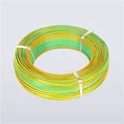
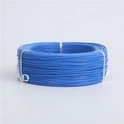
FEP Insulated Wire (fluorinated ethylene propylene copolymer Insulated Wire) and PTFE Insulated Wire (polytetrafluoroethylene insulated wire) are two high-performance fluoropolymer insulating materials, which are widely used in electrical and electronic, chemical, medical and other fields. Although these two materials both belong to the fluoroplastic family, they each have their own characteristics and application scenarios.
Comparison of Material Characteristics
FEP Insulated Wire is a copolymer of tetrafluoroethylene and hexafluoropropylene, and has the following significant characteristics:
- It has a wide temperature resistance range (-200℃ to 200℃), suitable for most high-temperature environments.
- High transparency makes it convenient to observe the internal conditions.
- It has excellent processing performance and can be welded and produced continuously.
- It has strong chemical inertness and can resist the corrosion of most industrial chemicals.
- It has good flame retardant performance and meets strict electrical safety standards.
PTFE Insulated Wire exhibits even more extreme performance:
- It has a wider temperature resistance range (-80℃ to 260℃) and better long-term stability.
- It is almost immune to corrosion by any chemical reagents, including strong acids and strong alkalis.
- The coefficient of friction is extremely low (0.04), the lowest among known solid materials.
- It has excellent electrical insulation performance, with a dielectric constant of only 2.0.
- It has high mechanical strength, but relatively poor flexibility.


Typical application scenarios
FEP Insulated Wire performs outstandingly in the following areas:
- Internal wiring of high reliability electrical equipment (such as aviation electronics and military equipment);
- Protection of Corrosive Media Transport Pipelines in the Chemical Industry;
- Components in medical equipment that require sterilization treatment;
- LCD manufacturing equipment and high-purity reagent delivery system.
PTFE Insulated Wire is more suitable for:
- Insulation layer for high-frequency circuits and microwave equipment;
- Ultra pure chemical transportation in semiconductor manufacturing;
- Electrical connections in extreme environments (such as aerospace and deep sea);
- Medical implant materials (such as artificial blood vessels, plastic fillers).


Application cases of FEP insulated wire and PTFE insulated wire
Application cases in the field of electrical and electronic engineering
Electrical and Electronic Applications of FEP Insulated Wire
- Aerospace : The Boeing 787 aircraft uses FEP insulated wire to construct the entire electrical system, ensuring safe transoceanic flight with temperature resistance ranging from -65 ℃ to 200 ℃. FEP material maintains stable electrical performance at extreme temperatures and is an ideal choice for aviation electronic equipment.
- Data Center : The cloud data center uses FEP insulated Category 6 Ethernet cables to maintain a 10 gigabit transmission rate in an environment ranging from -40 ℃ to 85 ℃. The high-frequency characteristics of this material make it a key component of 5G communication infrastructure.
Electrical and Electronic Applications of PTFE Insulated Wire
- High frequency circuits : PTFE insulated wire are widely used in microwave equipment and RF coaxial cables due to their stable dielectric constant of 2.1. In 5G base station antennas and satellite communication systems, PTFE material ensures the stability of signal transmission.
- Industrial automation : The robot control system uses PTFE insulated wire, which have oil and chemical resistance characteristics to ensure reliability in harsh industrial environments. PTFE material is also widely used in the internal wiring of industrial sensors and measuring instruments.
Application cases in the field of chemical engineering
Chemical application of FEP insulated wires
- Chemical equipment : FEP material is widely used in the lining and sealing of chemical equipment, and its chemical inertness can resist the corrosion of strong acids, strong bases, and organic solvents. In the pharmaceutical industry, FEP insulated wire are used in high-purity reagent delivery systems.
- Waste gas treatment : The fluorine-containing compound waste gas generated during the FEP production process is treated using a combination process of "alkali spray+activated carbon adsorption+catalytic combustion" to ensure compliance with emission standards. FEP material itself is also used to manufacture key components of exhaust gas treatment equipment.
Chemical application of PTFE insulated wires
- Chemical pipeline : PTFE material is widely used for chemical pipeline lining, and its reputation as the "plastic king" comes from its excellent corrosion resistance. PTFE insulated wire also have important applications in chemical pump valve control systems and measuring instruments.
- Seals : PTFE seals, gaskets, and washers are made by molding suspended polymer PTFE resin and used for sealing various chemical equipment. PTFE material performs particularly well in high-pressure reactors and distillation devices.
- Ultra pure chemicals : The transportation system for ultra pure chemicals in semiconductor manufacturing uses PTFE insulated wire to ensure the purity of the chemicals is not contaminated. The low precipitation characteristics of PTFE make it an ideal choice for high-purity processes.


Application cases in the medical field
Medical applications of FEP insulated wires
- MRI equipment : The MRI superconducting magnet cooling system uses PTFE insulated wire, which can enable it to work at ultra-low temperatures of -269 ℃ to ensure stable operation of the equipment. FEP material is also used for internal wiring of medical imaging equipment.
- Medical heat shrink tubing : FEP heat shrink tubing is used for insulation, protection, and connection in medical devices. Its high transparency allows medical personnel to clearly observe the flow of internal media. This material can work stably within the extreme temperature range of -200 ℃ to 200 ℃.
- Implanted devices : FEP material is used to manufacture the lead parts of medical implant devices, and its biocompatibility and sterilization resistance meet medical grade requirements. FEP is also used for internal connections of pacemakers and neurostimulators.
Medical applications of PTFE insulated wires
- Vascular grafts : Expanded polytetrafluoroethylene (ePTFE) is used to manufacture vascular grafts, and its microporous structure promotes tissue growth and endothelialization. PTFE material is an ideal substitute for small diameter blood vessels with a diameter of less than 6 millimeters.
- Surgical patch : ePTFE and polypropylene fiber composite material are used for abdominal hernia repair surgery, promoting tissue growth on the side facing the abdominal wall, and providing a permanent barrier on the visceral side with ePTFE. This design minimizes tissue adhesion to the greatest extent possible.
- Medical equipment : The formed ePTFE membrane can be used to manufacture various medical accessories, including wound care materials, face masks, sensor protectors, ostomy bags, urine bags, drainage bags, etc. PTFE material is also used in artificial organs and implantable medical devices.


Future prospects of FEP insulated wire and PTFE insulated wire
Technological innovation direction
- Material modification : Improve the mechanical strength and processing performance of PTFE through nanocomposite technology, and develop a mixed formula of FEP and PTFE to balance the advantages of both.
- Green Manufacturing : Addressing the challenges of PFAS pollution control, developing fifth generation fluorinated ODS alternatives, and addressing environmental risks associated with traditional materials.
- Process optimization : The FEP field will focus on breaking through grades with higher temperature stability, while PTFE is committed to the research and development of low-temperature sintering processes to reduce energy consumption.
Expansion of application areas
- Space Economy : PTFE insulation material exhibits irreplaceability in satellite communication and space station cables.
- Quantum computing : The unique value of FEP materials in quantum bit control circuits at ultra-low temperatures.
- Intelligent wearables : Innovative application of flexible FEP insulated wire in medical monitoring devices.
With the advancement of technology, the application boundaries of FEP Insulated Wire and PTFE Insulated Wire are constantly expanding. In the field of chemical equipment protection, FEP heat shrink tubing has successfully solved the corrosion problem of the stirring shaft of reaction vessels, extending their service life from three months to over two years. In the medical field, the surgical success rate of expanded artificial blood vessels made of PTFE material is as high as 100%. These innovative applications are driving the industry towards higher performance and greater specialization.
If you need to learn more about the technical parameters or application cases of FEP insulated wire and PTFE insulated wire, please feel free to contact our professional technical team at any time( luna@ironflon.com )We will provide you with detailed answers.