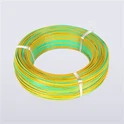
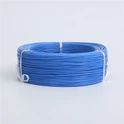
In industrial equipment design, wire selection is often evaluated based on electrical parameters such as voltage rating, temperature resistance, and insulation material. However, wire flexibility is an equally important factor that directly affects equipment reliability, service life, and maintenance costs. For equipment manufacturers and engineering teams, the wrong wire construction can lead to installation difficulties, conductor fatigue, insulation damage, and unexpected system failures-especially in applications involving vibration, repeated movement, tight installation spaces, or high-temperature environments.
For this reason, selecting a flexible high-performance wire is not only a matter of installation convenience; it is a key decision that impacts the long-term reliability of the entire electrical system.
The conductor structure is one of the most important factors affecting the flexibility of electrical wires.
- Solid conductors provide excellent mechanical strength and are suitable for fixed installations but have limited bending capability.
- Stranded conductors consist of multiple smaller wires twisted together, allowing the cable to withstand repeated bending and vibration.
The insulation material also plays a significant role in wire flexibility.
Different fluoroplastic materials provide different combinations of flexibility, temperature resistance, and chemical stability:
| Insulation Material | Flexibility Characteristics | Typical Advantages |
|---|---|---|
| PTFE | Moderate flexibility with excellent thermal stability | Extreme temperature and chemical resistance |
| FEP | Good flexibility and melt-process capability | Easier processing and good electrical performance |
| PFA | Improved flexibility compared with PTFE in many constructions | High temperature, chemical resistance, and mechanical durability |
| ETFE | Higher mechanical strength and abrasion resistance | Toughness and impact resistance |
How Wire Flexibility Affects Equipment Reliability
Reduces Mechanical Fatigue Failure
In equipment exposed to continuous movement or vibration, rigid wires experience repeated mechanical stress.
Common failure modes include:
- Conductor strand breakage
- Insulation cracking
- Terminal connection failure
- Intermittent electrical signals
A flexible wire design allows bending stress to distribute across multiple conductor strands, reducing fatigue accumulation and extending service life.
This is especially important in:
- Robotic arms
- Automated production systems
- CNC machines
- Semiconductor processing equipment
- Vehicle electrical systems
Improves Installation Reliability
Modern industrial equipment often requires compact internal wiring layouts with limited installation space.
A flexible wire provides:
- Easier routing around components
- Reduced installation force
- Smaller bending radius
- Lower risk of insulation damage during assembly
This means faster production processes and fewer wiring-related assembly issues.
Enhances Performance in High-Temperature Applications
When exposed to heat, some conventional insulation materials may become:
- Harder
- Less flexible
- More vulnerable to cracking
Such as PTFE, FEP, PFA, and ETFE insulated high-temperature cables, maintain stable mechanical performance across wide temperature ranges.
This makes them suitable for applications including:
- Industrial heating systems
- Semiconductor manufacturing equipment
- Automotive engine compartments
- Aerospace electronics
- Laboratory instruments
When choosing a suitable flexible high-temperature cables, attention should be paid to:
Operating Temperature Range
Determine:
Continuous working temperature
Short-term temperature exposure
Thermal cycling requirements
For harsh thermal environments, fluoropolymer insulation such as PTFE, FEP, and PFA provides reliable long-term performance.
Movement and Bending Requirements
Consider:
Fixed installation or dynamic movement
Minimum bending radius
Number of bending cycles
Vibration exposure
Applications with continuous motion require flexible conductor structures designed for repeated mechanical stress.
Chemical and Environmental Exposure
Evaluate exposure to:
Oils
Solvents
Corrosive gases
Moisture
Cleaning chemicals
Fluoroplastic insulated wires are widely selected because of their excellent chemical resistance.
Certification and Manufacturing
For industrial OEM applications, buyers should verify:
UL certification requirements
Material traceability
Dimensional consistency
Quality control procedures
Reliable manufacturing processes ensure consistent electrical and mechanical performance from batch to batch.
Zhejiang IRONFLON Wire & Cable Co., Ltd. is an ISO 9001:2015 and IATF 16949 certified manufacturer specializing in high-performance fluoroplastic insulated wires, high-temperature cables, and customized wiring harnesses. Integrating R&D, continuous manufacturing, and international trade, we provide dependable thermal and electrical connectivity solutions for demanding environments worldwide.


Advanced Manufacturing & Product Spectrum
Driven by advanced extrusion technologies and precision equipment imported from Europe, Japan, and the United States, our facility maintains tight tolerance controls across a broad product range, including:
- Fluoroplastic High-Temperature Cables: PTFE, PFA, FEP, ETFE insulated wires.
- Specialty Wiring Solutions: Micro-coaxial shielded cables, flexible power supply cables, instrument compensation leads, high-temperature sleeving, and customized wire harnesses.
Professional Service & Lifetime Support
- Pre-Sales: Professional engineering consultation and technical wiring solutions matched to your exact equipment specifications.
- In-Sales: Real-time production tracking, free sample dispatch for preliminary testing, and flexible batch scheduling.
- After-Sales: Dedicated customer service files, lifetime technical consulting, and a rapid response mechanism to guarantee continuous operation.
For industrial equipment manufacturers, wire flexibility is not simply a convenience factor during installation. It directly influences system reliability, maintenance requirements, and product lifespan.
Choosing suitable flexible fluoroplastic insulated high-temperature cables can help reduce mechanical failures, improve assembly efficiency, and ensure stable operation in harsh environments.