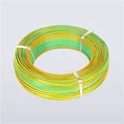
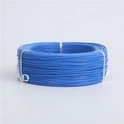
Under high temperature, corrosion, and high-frequency conditions, ordinary PVC and XLPE high temperature resistant cables are prone to problems such as high temperature aging, surface cracking, penetration corrosion, and leakage. Fluoroplastic insulated cables are the first choice for this condition. But the mainstream PTFE, FEP, and PFA fluoroplastic cables on the market look similar in appearance, but the price difference is not small. Choosing the wrong type not only wastes budget, but also may cause hidden dangers such as wire aging, breakdown, and leakage, delaying the entire equipment construction period.
Many purchasing friends have the same confusion: all three materials are resistant to high temperature and corrosion, what are the differences? Which type of high-temperature working condition should be used? Who should I choose for pursuing cost-effectiveness? Which high-precision equipment should be locked in? Especially for the popular FEP Teflon wire, many buyers cannot distinguish its compatibility boundary with the other two fluoroplastic cables.
As a salesperson who has been deeply involved in the cable industry for many years, today we will talk about the performance differences, advantages and disadvantages, adaptation scenarios, and selection techniques of these three types of fluoroplastic insulated cables.
Introduction to PTFE, FEP, PFA
PTFE, FEP, PFA are all perfluorinated plastics that possess the core advantages of universal fluorine materials - high temperature resistance, acid and alkali corrosion resistance, flame retardancy, low dielectric, excellent insulation, and are suitable for harsh scenarios such as industrial high temperature, chemical, precision electronics, aerospace, etc. However, the "strengths and weaknesses" of the three are completely different, and each has its own focus on positioning.
- PTFE (polytetrafluoroethylene): an old classic model with top-notch temperature resistance, full corrosion resistance, and moderate cost-effectiveness. It is a "universal basic model" for industrial high-temperature scenarios.
- FEP (Perfluoroethylene Propylene): Balanced and practical, with good processability, excellent flexibility, and the most affordable price, it is the "first choice for high cost-effectiveness" in medium and high temperature scenarios.
- PFA (soluble polytetrafluoroethylene): a high-end top of the line product that combines the temperature and corrosion resistance of PTFE with the ease of processing of FEP. It has no shortcomings in performance and is suitable for "high-end specialized products" in high-precision and demanding scenarios.
Core performance differences
Temperature resistance performance
- PTFE: It has the strongest high-temperature stability, is not easy to age, deform, or fail under long-term ultra-high temperature conditions, and has top-notch heat shock resistance. It is the first choice for extreme high-temperature environments;
- FEP: The performance is stable under working conditions below 200℃, and long-term use above 200℃ will significantly accelerate the aging rate, with relatively obvious temperature resistance shortcomings;
- PFA: Perfectly inherits the high-temperature stability of PTFE, with long-term continuous use at 260℃ without pressure. It will not experience creep or softening deformation at high temperatures, and has the best performance durability.
Flexibility&Mechanical Properties
Many device wiring requires bending, threading, and repeated movement, and cable flexibility directly affects installation efficiency and service life:
- PTFE: It is relatively hard and has average flexibility. With too many bends, it tends to become stiff and is not suitable for frequent bending or complex wiring scenarios in narrow spaces. It is more suitable for static working conditions of fixed installation;
- FEP: The best flexibility, the wire is soft and easy to bend, the difficulty of threading and wiring is low, and it is suitable for equipment circuits that move dynamically and bend frequently;
- PFA: Moderate flexibility, balancing hardness and bending performance, with creep resistance and deformation resistance at high temperatures far exceeding the other two. It is also less prone to cracking and damage during long-term bending, and has the best mechanical stability.
Processing and appearance characteristics
This is a point that many procurement companies tend to overlook, directly affecting cable accuracy, appearance, and adaptability to special scenarios:
- PTFE: It cannot be processed by hot melt extrusion and can only be processed by pressing technology. The processing difficulty of long line materials and thin-walled insulation is high, and the uniformity of the insulation layer is average, opaque, and not suitable for high-precision fine wires and thin-walled cables;
- FEP: Hot melt extrusion, easy processing, stable molding, uniform wire wall thickness, with high transparency texture, suitable for scenes that require visualization and high-precision fine wires;
- PFA: also supports hot melt extrusion, with processing accuracy comparable to FEP, while retaining the high-purity characteristics of perfluorinated materials, without impurities or precipitation, suitable for high cleanliness scenarios such as medical and semiconductor.
Price cost
The price tiers of the three are very clear: FEP < PTFE < PFA
FEP technology is mature and the material cost is low, making it the most cost-effective among the three; PTFE has a moderate price and is suitable for mass industrial scenarios; PFA raw materials are expensive, the processing technology is strict, and the overall cost is the highest, making it only suitable for high-end rigid demand scenarios.


Selection Guide
Choose FEP: Pursuing cost-effectiveness, preferred for medium temperature conventional working conditions
If your device meets the following operating conditions: long-term working temperature ≤ 200℃, frequent bending and wiring required, limited budget, and pursuit of high cost-effectiveness, directly lock the FEP Teflon wire.
Adaptation scenarios: ordinary industrial high-temperature equipment, internal wiring of household appliances, conventional wiring of automation equipment, outdoor weather resistant wiring, equipment wiring that requires transparent insulation layer.
Core advantages: versatile performance, flexible wiring, and affordable price. It is the optimal solution for replacing ordinary high-temperature wires in small and medium-sized working conditions, and also the most cost-effective high temperature resistant cable in civilian and general industrial scenarios.
Choose PTFE: the preferred choice for extreme high temperature and strong corrosion static working conditions
If your working condition is: long-term high temperature above 200℃, contact with acid and alkali, oil stains, strong corrosive media, and the line is fixed and does not require frequent bending, PTFE cables are preferred.
Adaptation scenarios: chemical reaction equipment, high-temperature drying equipment, wiring around furnaces, industrial anti-corrosion circuits, and ordinary military supporting static circuits.
Core advantages: Full corrosion resistance, almost no reaction with any chemical medium, stable performance under extreme high temperatures without degradation, and extremely strong durability. It is an excellent high temperature resistant cable in the field of chemical and high-temperature equipment.
Choose PFA: the first choice for high-precision, high cleanliness, and ultra harsh working conditions
If your equipment belongs to the high-end precision field, with extremely high requirements for wire purity, stability, and service life, and sufficient budget, you can directly equip it with PFA cable.
Adaptation scenarios: semiconductor equipment, medical sterilization equipment, biopharmaceutical equipment, aerospace precision wiring, high-end instruments and meters, long-term dynamic high temperature and harsh working conditions.
Core advantages: high temperature resistance, corrosion resistance, high purity, bending resistance, aging resistance, no precipitation and no pollution, different from conventional fep teflon wire, it is suitable for various ultra high precision and severe working conditions, and is the exclusive choice of high-end precision equipment.
Selection principle
Not blindly pursuing high-end products: Under normal operating conditions below 200℃, choosing FEP is completely sufficient, there is no need to spend extra money on PTFE and PFA, saving procurement costs;
High temperature corrosion is not acceptable: In chemical environments with high temperatures above 200℃ and strong corrosion, FEP is strictly avoided and PTFE is preferred. In harsh and clean environments, PFA is directly used to avoid premature aging and scrapping of wires;
Material selection based on wiring method: Flexible FEP/PFA is selected for frequent movement and bending wiring, while PTFE with higher cost-effectiveness is selected for fixed static wiring, balancing practicality and durability.
The selection of fluoroplastic insulated cables is never the more expensive the better, the one that is suitable for the working conditions is the best. Choosing the right materials can not only meet the requirements of high temperature resistance, corrosion resistance, and high insulation of equipment, but also maximize the control of procurement costs and reduce the frequency of maintenance and replacement in the later stage.
Zhejiang IRONFLON Wire&Cable Co., Ltd. has been deeply involved in the development of fluoroplastic special cables for many years. We can provide a full range of insulated cables made of pure PTFE, FEP, PFA, and support customization of various specifications, high-precision, high temperature resistant, and corrosion-resistant special cables to meet the needs of industrial, medical, semiconductor, aerospace, and other full scenarios. If you have customized specifications requirements, feel free to consult and we will provide one-on-one accurate selection and avoid procurement risks for you.