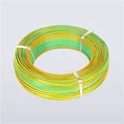
With the deepening of the national "dual carbon" strategy, the recommendation of green factories for 2025 has been fully launched. As an important basic industry of the national economy, how can wire and cable enterprises successfully apply for green factory?
New requirements for green factory declaration in 2025
According to the latest notice from the Ministry of Industry and Information Technology, the application for green factories in 2025 presents the following characteristics:
Key industry support: This year, 53 key industry enterprises will be supported to apply, and the wire and cable industry, as an important field of manufacturing, will be included in the scope of key support.
Upgrading evaluation indicators:
- Greening of infrastructure (weight 20%): It is required that the coverage rate of rooftop photovoltaics is ≥ 30%, and the proportion of green building materials used is ≥ 70%.
- Proportion of clean energy: The utilization rate of renewable energy is ≥ 25%, and the installed capacity of photovoltaic/wind power is ≥ 15% of the annual electricity consumption.
- Digital control: Deploy AI energy management system (EMS) to monitor energy consumption data in real time and connect directly with the national platform.
Simplified declaration process: Enterprises can independently fill in through the industrial energy conservation and green development management platform, without the need for third-party evaluation reports.
Special requirements for the wire and cable industry
1. Application of environmentally friendly materials
* Prioritize the use of low smoke halogen-free flame retardant materials to reduce the toxic gases generated during combustion.
* Choose environmentally friendly materials with a biodegradable/recyclable ratio of ≥ 50% for packaging materials.
* Raw material procurement should prioritize the selection of environmentally friendly, renewable, and recyclable materials.
2. Production process control
* Exhaust gas treatment: Activated carbon adsorption devices, catalytic combustion equipment, etc. need to be installed in processes such as extrusion molding and wire drawing.
* Wastewater treatment: Establish sewage treatment facilities, with an industrial water reuse rate of ≥ 95%.
* Noise control: Ensure that factory noise meets national standards and reduces its impact on the surrounding environment.
3. Resource recycling
* Establish a cooling water circulation system, such as Guizhou Tianhong Cable, which has reduced its monthly water consumption from 200 tons to 50 tons through renovation.
* The comprehensive utilization rate of industrial solid waste is ≥ 95%, achieving waste resource utilization.
* Recycling and utilizing the waste heat and energy generated during the production process.

Rated Temperature: 250 Degree
Rated Voltage: 5KV/DC
Conductor Material: Nickel plated
Length: 1000FT/305M

Rated Temperature: 125 Degree
Rated Voltage: 300V
Conductor Type: Stranded
Conductor Material: Tin plated

Rated Temperature: 250 Degree
Rated Voltage: 600V
Kind Of Insulation: PTFE
Length: 1000FT/305M

Rated Temperature: 200 Degree
Rated Voltage: 300V
Conductor Type: Stranded
Conductor Material: Tin plated
Implementation path for meeting standards
1. Infrastructure renovation
* The factory adopts insulation materials and natural lighting design, and the energy consumption per unit area is lower than the industry benchmark value.
* Install distributed photovoltaic power generation systems to increase the proportion of clean energy.
* Deploy an energy metering and monitoring system to achieve real-time monitoring of energy consumption data.
2. Construction of management system
* Certified according to ISO 14001 (Environmental Management) and ISO 50001 (Energy Management).
* Establish a green factory management organization and formulate medium - and long-term green development plans.
* In the past three years, the proportion of green research and development expenses has been ≥ 3%, and continuous investment in technological innovation has been made.
3. Production process optimization
* Introduce efficient and energy-saving equipment, such as energy-saving renovation of air compressor rooms.
* Apply low-carbon technologies such as waste heat recovery and motor frequency conversion transformation.
* Realize paperless information transmission throughout the production process and enhance the level of intelligence.
4. Green supply chain
* Conduct green assessments on suppliers to ensure environmental compliance in the supply chain.
* Establish a green supply chain information sharing platform and strengthen upstream and downstream cooperation.
* Require supply chain enterprises to achieve green production and build an industry ecosystem.