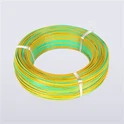
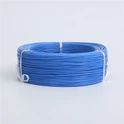
Nowadays, people's standards for building safety are becoming increasingly high, and their environmental awareness is constantly strengthening. The application of flame-retardant (ZR), fire-resistant (NH), and halogen-free low smoke (WDZ) cables in various projects is also becoming more and more widespread. These three types of cables have their own characteristics and are suitable for different safety requirements and environmental conditions. This article will introduce the technical parameters, application scenarios, and differences of these three cables.
Flame retardant (ZR) cable
Basic characteristics
Flame retardant cable refers to a special type of cable in which the flame only spreads within a limited range after the sample is burned under specified test conditions, and can be self extinguished after removing the fire source.
Flame retardant performance: By using flame retardant materials (such as low smoke halogen-free polymers) to delay the spread of fire, the A/B/C flame retardant level is three (ZA>ZB>ZC).
Safety Design: During combustion, smoke light transmittance shall exceed 60%, with hydrogen chloride gas release below 5mg/g.
Temperature Rating: Maximum operating temperature of conductor is 140°C, with short-circuit withstand temperature not exceeding 180°C.
Application scenarios:
Fire protection system, emergency lighting system, and rescue system for high-rise buildings.
Hospitals, schools, shopping malls and other densely populated places.
Indoor, cable trench, pipeline, and direct burial locations in industries such as metallurgy, power, and chemical engineering.
Fire-Resistant (NH) Cable
Characteristics and Technical Parameters:
Fire resistance temperature range from 750°C to 1000°C, depending on fire resistance rating.
Continuous power supply duration typically 90 minutes.
AC rated voltage options: 600/1000V (V Series), 450/750V (K Series and B Series).
Maximum long-term operating temperature ranges from 70°C to 260°C depending on material.
Minimum ambient temperature down to -60°C (fluoroplastic insulation).
Applications:
Fire protection systems in high-rise buildings.
Locations requiring fire safety and rescue functionality, such as underground railways and power stations.
Emergency lighting and fire control systems requiring continued operation during fires.
Halogen free low smoke (WDZ) cable
Characteristics and Technical Parameters:
It does not contain halogens and does not release toxic gases during combustion.
The smoke volume is extremely low, with a light transmittance of ≥ 60%.
Rated voltage 450/750V, conductor made of high-purity copper core.
Applicable temperature range -40 ℃~200 ℃.
Has characteristics such as acid and alkali resistance, oil resistance, moisture resistance, and mold resistance.
Application scenarios:
1. Public places with high population density
High rise buildings, especially those exceeding 100 meters, must use B1 grade or higher flame-retardant cables according to regulations.
Subway system: Closed spaces such as tunnels and platforms require cables to maintain emergency lighting and ventilation system operation in case of fire.
Airport terminal: The characteristics of large space and high pedestrian traffic require cables with high safety levels.
Hospitals: Key areas such as operating rooms and ICUs require continuous power supply without producing toxic smoke.
School: Teaching buildings, dormitories and other places where personnel are concentrated, especially emphasizing evacuation safety in case of fire.
Large shopping malls/sports centers: High personnel density and high fire risk, WDZ cables can effectively control the spread of fire.
2. Emergency system
Fire protection system: key circuits such as fire alarm, smoke exhaust equipment, emergency lighting, etc.
Evacuation layer/safety passage: It is required by regulations to use B1 level or above flame-retardant cables.
Elevator system: In the event of a fire, it may be necessary to maintain operation to assist in personnel evacuation.
Comparative Analysis of Three Types of Cables
| feature | Flame retardant (ZR) cable | Fire res istant (NH) cable | Halogen free low smoke (WDZ) cable |
| Main functions | Prevent the spread of flames | Maintain power supply during a fire | Low smoke and non-toxic |
| Flame retardant rating | Grade A/B/C | A/B level | Usually rated as A-level |
| Fire resistance time | Not applicable | 90 minutes | Not applicable |
| Smoke characteristics | May produce smoke | Moderate smoke emission | Minimal smoke emission |
| Toxicity | May contain halogens | May contain halogens | Halogen-free and non-toxic |
| Applicable Temperature | 70-90℃ | 70-260℃ | -40~200℃ |
| Typical Applications | General architecture | fire protection system | public place |


Typical Application Cases
Rail Transit
After adopting low smoke and halogen-free cables, the smoke transmission rate of the high-speed train is increased to over 70% during a fire, which saves time for evacuation. A certain case shows that after renovation, the fire losses caused by electrical short circuits were reduced by 80%.
Medical buildings
After using flame-retardant cables in the hospital data center, the cables did not become a source of fire during the fire test, and the smoke density was 50% lower than the standard value. The ICU ward can use fire-resistant cables to ensure continuous power supply for medical equipment.
Petrochemical industry
Flexible fire-resistant cables (such as BTLY) form ceramic shells at high temperatures to prevent the spread of flames. After the renovation of a chemical plant, the fire accident rate significantly decreased.