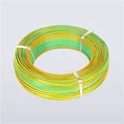
With the rapid development of industrial technology, the demand for high temperature resistant wire in extreme environments is increasing day by day. These types of wires have become core materials in fields such as aerospace and automotive manufacturing due to their excellent heat resistance and stability. At the same time, PTFE wire occupies an important position in industries such as electronics and healthcare due to its excellent insulation and chemical inertness. This article will explore the technical characteristics and market prospects of these two types of special wires.
Market Trends and Industry Dynamics
The global demand for high temperature resistant Electrical Wire is rapidly growing with the expansion of new energy and high-end manufacturing industries. Especially in the fields of electric vehicles, renewable energy generation, and aerospace, high-temperature resistant wires have become key materials due to their stable performance at extreme temperatures. At the same time, PTFE Electrical Wire continues to expand its applications in 5G communication, medical electronics, and semiconductor equipment due to its excellent insulation and chemical stability. With the advancement of intelligence and precision trends, these two types of special wires are constantly expanding new application scenarios driven by innovation.
However, the industry also faces multiple challenges. The fluctuation of raw material costs is one of the main pressures for high temperature resistant wire manufacturers, such as the significant impact of supply chain on the prices of silicone and specialty alloys. In addition, environmental regulations have imposed stricter restrictions on the emission of perfluorinated compounds in PTFE Electrical Wire production, forcing companies to accelerate the development of green alternative processes. On the technical level, how to improve the high temperature resistance while maintaining the flexibility of the wire, and further reduce the dielectric loss of PTFE wire, is still the core issue of research and development.


Technological breakthroughs and innovation directions
High temperature resistant Electrical Wire usually uses silicone, glass fiber or special alloy as the insulating layer and can maintain stable performance within a wide temperature range from -60°C to 200°C. Its core advantage lies in its ability to resist high-temperature oxidation, mechanical stress and corrosive media, making it suitable for harsh scenarios such as metallurgy and petrochemicals. For instance, in the battery system of electric vehicles, high temperature resistant teflon wire can effectively prevent short circuits and thermal runaway, significantly enhancing safety. In addition, its lightweight design also provides a more flexible wiring solution for the aerospace field.
PTFE Electrical Wire uses polytetrafluoroethylene as the insulating material. It has extremely low dielectric loss and excellent chemical resistance, and can work stably for a long time even in strong acid and strong alkali environments. This feature makes it an ideal choice for precision electronic devices such as semiconductor equipment and medical instruments. In recent years, with the popularization of 5G communication and the Internet of Things, the application of PTFE Electrical Wire in high-frequency signal transmission has further expanded. Its non-sticky surface also simplifies the installation and maintenance process of cables, reducing the overall cost.
Expansion of application areas
The application cases of high temperature resistant Wire in extreme environments continue to emerge:
- Aerospace field: Energy transmission systems for satellites and spacecraft, capable of withstanding a wide temperature range of -60 ℃ to 200 ℃.
- Nuclear energy industry: As a signal transmission line for nuclear reactor control systems, it has excellent radiation resistance performance.
- New energy vehicles: internal connection wires of the battery pack to meet safety requirements in high-temperature environments.
PTFE wire, with its unique chemical inertness and electrical properties, shines in multiple key fields:
- Medical equipment: used for surgical sutures and vascular substitutes, with excellent biocompatibility.
- Electronics industry: High frequency circuit board substrate with low signal transmission loss.
- Industrial filtration: corrosion-resistant flue gas dust removal filter material, with a service life far exceeding traditional materials.


Industry Challenges and Future Prospects
Despite their broad development prospects, the high temperature resistant teflon wire and PTFE teflon wire industries still face some challenges:
- The cost of raw materials is relatively high, especially high-purity PTFE resin and special alloys.
- The processing technology is complex and requires strict requirements for production equipment and technology.
- Some high-end products still rely on imports, and there is huge room for domestic substitution.
From high-temperature industry to precision electronics, High temperature resistant wire and PTFE wire are driving technological progress in multiple fields with their irreplaceable characteristics. With the continuous breakthroughs in materials science, these two types of special wires will play a key role in a wider range of scenarios in the future, providing solid support for global industrial development.