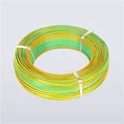
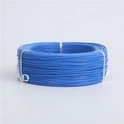
Compliance is always the first red line when purchasing Teflon Insulated Wire. This high-end cable, known for its high temperature resistance, corrosion resistance, and strong insulation, is widely used in key fields such as aerospace, electronic equipment, and chemical engineering. Its international and regional compliance standards are updated frequently and require strict requirements. Since 2025, major global markets have undergone intensive adjustments to compliance policies, from the revision of EU REACH 2.0 to the upgrading of US UL standards, and to the coordination of ASEAN regional standards. Any oversight could result in goods being detained, returned, or even confiscated. This article reviews the latest compliance trends to help you accurately avoid risks and efficiently layout your supply chain.
What are the updates to the core indicators of the international standard for Teflon insulated wire?
The basic framework for global compliance of Teflon high temperature resistant wire is the International Electrotechnical Commission (IEC) standards. In 2025, multiple key standards will be updated, with a focus on high-temperature resistance, flame retardant rating, and hazardous substance control. These changes directly affect product entry thresholds.
1. New requirements for high temperature resistance and stability testing
The core advantage of Teflon High Temperature Resistant Wire is its temperature resistance. In the past, the industry default range of -60 ℃ to 200 ℃ was used, but now there are more refined testing standards. The IEC 60332-3-24/25:2018 RLV standard, updated in July 2025, has added requirements for extreme temperature cycling testing - cables must pass 50 consecutive temperature cycles from -55 ℃ to 125 ℃, with a phase drift not exceeding 15 ° after testing and signal amplitude fluctuations controlled within ± 1.4dB.
Simply put, when purchasing, it is necessary to confirm that the supplier can provide corresponding cyclic testing reports, especially for cables used in high-end electronic devices and radar systems. Failure to meet temperature stability standards will directly affect the performance of the end product.
2. Upgrade of flame retardant testing standards
The IEC 60332-1-2 standard, updated in February 2025, strengthens the requirements for vertical flame propagation testing of single cables, using a 1kW premixed flame method. It requires that the droplets of the cable after combustion do not ignite the combustible material below, and the flame retardant level must reach V0 or above. This standard has become a universal threshold for mainstream markets worldwide, and whether exporting to Europe, America, or Southeast Asia, flame retardant test reports are essential documents.


Compliance dynamics in key areas: Breaking down by market
Compliance policies in different regions have their own emphasis, and targeted verification is required during procurement. The following are the latest requirements of the four most concerned markets in 2025, with detailed explanations of the terms for quick comparison.
EU: REACH 2.0 revision raises compliance threshold further
The EU is a high-end consumer market for Teflon Insulated Wire, and the REACH regulation revision proposal proposed in April 2025 is the most comprehensive update in nearly 20 years, with significant impact.
- Registration validity period is limited : REACH registration numbers that were previously valid for life will now have a validity period of 10 years, and updated files must be submitted before expiration; If the product contains substances of high concern (SVHC), the registration information must be updated immediately, otherwise the registration number will be revoked.
- Strict control of PFAS substances : As key raw materials for the production of Teflon, perfluorinated and polyfluoroalkyl substances (PFAS) are included in the restricted list, with a content not exceeding 0.005% (50ppm). When purchasing, suppliers are required to provide PFAS testing reports.
- Digital requirements for supply chain : Electronic format Safety Data Sheets (SDS) must be provided when importing, and in the future, Digital Product Passports (DPP) will gradually be implemented. Customs will automatically verify registration and authorization numbers, and paper documents will no longer be recognized.
- Special requirements of member states : Germany requires the content of polycyclic aromatic hydrocarbons (PAHs) in cables to comply with the GS marking standard; Sweden has added a new chemical tax, and non compliant products will be subject to high taxes and fees; Despite Brexit, the UK still adheres to the UK RoHS standard and requires separate UKCA certification.
North America (USA+Canada): UL/CSA standards with stricter detail control
The certification requirements for Teflon cables in the North American market are very clear, with the core being UL (Underwriters Laboratories) and CSA (Canadian Standards Association) certification. In 2025, the focus will be on updating high-temperature performance and environmental indicators.
- Core requirements of UL standards : Must comply with UL758 and UL1581 standards and pass UL VW-1 vertical flame retardant test; The rated temperature of Teflon High Temperature Resistance Wire should be clearly marked as -80 ℃~200 ℃, and the conductor should be made of silver plated or tin plated copper wire to ensure corrosion resistance.
- Canadian CSA certification: It is required to meet the CSA C22.2 No.210.2 standard, which is basically consistent with the UL certification testing items, but an additional French version of the compliance statement is required, suitable for the procurement needs of exporting to both the United States and Canada.
- PFAS control upgrade: The US Environmental Protection Agency (EPA) will add PFAS restriction clauses in 2025, which will be in line with EU requirements. When importing, a PFAS compliance report issued by a third-party laboratory must be submitted.
Southeast Asia: Regional standard coordination, conditional tariff preferences
With the advancement of ASEAN economic integration, Southeast Asia has become an emerging market for Teflon cables. By 2025, regional standards will become more unified, while countries will retain special requirements. When purchasing, regional rules and local certifications need to be taken into account.
- ASEAN Uniform Standards (AHEEERR): All electronic and electrical cables must comply with ASEAN's unified electrical safety, energy efficiency, and environmental standards, which are equivalent to a "universal pass" within the region. Through this standard, tariff reductions can be enjoyed among member countries.
- The rules of origin must be met: in order to enjoy zero tariffs in the ASEAN Free Trade Area, more than 45% of the raw materials or production processes must come from ASEAN member countries, and a certificate of origin (CO) must be submitted. The electronic certificate (ECO) has been promoted and used in the region.
- Special certification for each country: Vietnam requires CR certification (valid for 1-3 years), which requires laboratory testing and factory audit; Malaysia requires GMP certification, and environmental indicators must comply with RoHS requirements; Singapore focuses on green label certification, making it easier for environmentally friendly cables to enter the market.
Japan and South Korea: Precise standards, adapted to high-end application scenarios
The Japanese and Korean markets are mainly focused on high-end electronics and automotive demand, with standard requirements for precise integration of application scenarios. There will be no major revisions by 2025, but detailed requirements need to be closely monitored.
- Japanese JIS standard: Following JIS C 3005 standard, the focus is on assessing the temperature stability and signal transmission performance of cables. Cables used for automotive electronics need to undergo additional oil resistance testing to ensure normal operation in high-temperature and oily environments in the engine compartment.
- Korean KC certification: All imported cables must pass KC certification, and the testing items include insulation resistance, voltage resistance performance, and flame retardant level. The certification cycle is about 2-3 months, and the cycle needs to be planned in advance.


Common compliance misconceptions: Don't step on these pitfalls
In actual procurement, many buyers have overlooked details and made mistakes. They have compiled four high-frequency misconceptions to help you avoid them in advance:
- Misconception 1: "One certification is valid for life" - REACH registration number is valid for 10 years, Vietnamese CR certification is valid for 1-3 years, and supplier qualifications need to be regularly checked for updates.
- Misconception 2: "With CE certification, exports can be made to all of Europe" - Germany, Sweden and other countries have special requirements and need to additionally meet local chemical control standards.
- Misconception 3: "Neglecting PFAS control" - In 2025, the European Union and the United States will simultaneously tighten PFAS restrictions, and those who fail to test or exceed the standards will be directly rejected.
- Misconception 4: "Paper documents are sufficient for compliance" - The European Union has implemented electronic SDS, and in the future, digital product passports will become essential, requiring early coordination with suppliers' digital documents.
The core trend of global Teflon Insulated Wire compliance standards in 2025 is "stricter material control, more digitized supply chain, and more segmented regional requirements". For buyers, compliance is no longer an additional cost, but a core competitiveness to ensure supply chain stability and avoid trade risks.
It is recommended to establish a three-dimensional compliance system of "qualification verification document retention batch re inspection" during procurement. Priority should be given to selecting suppliers who can synchronously adapt to multiple regional standards, while closely monitoring the standard update dynamics of the target market - after all, the losses caused by one compliance error far exceed the initial investment in compliance. In the future, with the tightening of global environmental policies, the compliance requirements for Teflon high temperature resistant wire will continue to upgrade. Only by laying out in advance can we seize the opportunity in the high-end market.