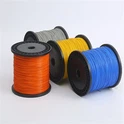
As an ETFE insulated wire supplier, I often encounter questions from customers regarding the suitability of our products for various applications. One common query is whether ETFE insulated wire can be used in low - temperature applications. In this blog, I'll delve into the properties of ETFE insulated wire and explore its performance in low - temperature environments.
Understanding ETFE Insulated Wire
ETFE, or ethylene tetrafluoroethylene, is a fluoropolymer known for its excellent chemical resistance, high mechanical strength, and remarkable electrical insulation properties. When used as an insulation material for wires, it provides a protective layer that safeguards the conductor from external factors such as moisture, chemicals, and abrasion.
Our company offers a wide range of ETFE insulated wires, including 18awg kabel, Household Electrical Wire, and high temperature flexible cable. These wires are designed to meet different industry requirements, from household electrical systems to high - tech industrial applications.
Properties of ETFE in Low - Temperature Conditions
Mechanical Properties
One of the key factors to consider when using wire in low - temperature applications is its mechanical flexibility. ETFE retains its flexibility at low temperatures better than many other insulation materials. Unlike some polymers that become brittle and prone to cracking in cold environments, ETFE maintains a certain degree of elasticity. This property is crucial because it ensures that the wire can withstand bending and movement without the insulation breaking, which could expose the conductor and lead to safety hazards.
In laboratory tests, ETFE insulated wires have been shown to maintain their mechanical integrity at temperatures as low as - 60°C. This means that in most cold - climate applications, such as outdoor electrical systems in polar regions or refrigeration units, ETFE insulated wire can perform reliably.
Electrical Properties
The electrical insulation properties of ETFE are also stable at low temperatures. The dielectric constant of ETFE, which is a measure of its ability to store electrical energy in an electric field, remains relatively constant over a wide temperature range. This stability ensures that the wire's electrical performance does not degrade significantly in cold environments.
Moreover, ETFE has a low dissipation factor, which means that it generates very little heat when an alternating current passes through it. This property is beneficial in low - temperature applications because it helps to prevent overheating and ensures the efficient transmission of electrical power.
Chemical Resistance
ETFE's excellent chemical resistance is another advantage in low - temperature applications. In cold environments, there may be a presence of chemicals such as de - icing agents or refrigerants. ETFE is resistant to a wide range of chemicals, including acids, bases, and solvents. This resistance protects the wire from chemical corrosion, which could otherwise compromise its performance and lifespan.
Applications of ETFE Insulated Wire in Low - Temperature Environments
Aerospace and Aviation
In the aerospace and aviation industries, equipment often operates in extremely low - temperature conditions. For example, aircraft flying at high altitudes are exposed to temperatures well below freezing. ETFE insulated wires are used in aircraft electrical systems because of their ability to maintain mechanical and electrical performance in these harsh environments. They are also lightweight, which is an important consideration in aviation to reduce fuel consumption.
Outdoor Electrical Systems
Outdoor electrical systems in cold climates, such as power transmission lines in northern regions or lighting systems in winter sports facilities, require wires that can withstand low temperatures. ETFE insulated wires are a suitable choice for these applications because of their cold - resistance properties. They can be used in both above - ground and underground installations, providing reliable electrical connections even in freezing conditions.
Refrigeration and Cold Storage
In refrigeration and cold storage facilities, the temperature can be as low as - 20°C to - 30°C. ETFE insulated wires are used in the electrical systems of these facilities to control compressors, fans, and other equipment. Their ability to maintain flexibility and electrical performance at low temperatures ensures the smooth operation of the refrigeration systems.
Limitations and Considerations
While ETFE insulated wire has many advantages in low - temperature applications, there are still some limitations and considerations to keep in mind.
Cost
ETFE is a relatively expensive material compared to some other insulation materials. This cost factor may be a consideration for some applications, especially those with large - scale wiring requirements. However, the long - term benefits of using ETFE insulated wire, such as its reliability and durability, may outweigh the initial cost.
Installation
Proper installation is crucial for the performance of ETFE insulated wire in low - temperature applications. During installation, care must be taken to avoid damage to the insulation. For example, if the wire is bent too sharply or if the insulation is scratched during handling, it could compromise its performance in cold environments.


Conclusion
In conclusion, ETFE insulated wire can indeed be used in low - temperature applications. Its excellent mechanical, electrical, and chemical properties make it a reliable choice for a wide range of industries operating in cold environments. Whether it's in aerospace, outdoor electrical systems, or refrigeration facilities, ETFE insulated wire can provide long - lasting and efficient electrical connections.
If you are considering using ETFE insulated wire for your low - temperature applications, I encourage you to contact us for more information. Our team of experts can help you select the right wire for your specific needs and provide guidance on installation and maintenance. We look forward to the opportunity to work with you and help you find the best wiring solutions for your projects.
References
- ASTM International. (Year). Standard test methods for electrical insulating materials.
- Manufacturer's technical data sheets for ETFE insulated wire.
- Research papers on the performance of fluoropolymers in low - temperature environments.