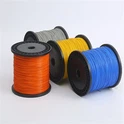
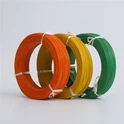
As a supplier of ETFE insulated wire, I'm often asked about the suitability of our products for marine applications. In this blog post, I'll delve into the characteristics of ETFE wire and examine whether it's a viable option for use in the harsh marine environment.
Understanding ETFE Insulated Wire
ETFE, or ethylene tetrafluoroethylene, is a fluoropolymer known for its excellent chemical resistance, high temperature tolerance, and low flammability. When used as an insulation material for wires, it provides a protective layer that shields the electrical conductors from various external factors.
One of the key advantages of ETFE insulation is its resistance to chemicals. In a marine environment, wires are exposed to saltwater, which is highly corrosive. Saltwater can cause rust and degradation of metal conductors over time, leading to electrical failures. ETFE's chemical resistance helps prevent such corrosion, ensuring the long term reliability of the wires.
ETFE also has a high melting point, typically around 250-270°C. This high temperature tolerance is beneficial in marine applications where the wires may be subjected to heat generated by electrical equipment or the surrounding environment. For example, in engine rooms or areas near electrical generators, the wires need to withstand elevated temperatures without losing their insulation properties.
Another important characteristic of ETFE is its low flammability. In marine vessels, fire safety is of utmost importance. ETFE insulated wires are less likely to catch fire and spread flames, which can help prevent catastrophic fires on board.
Challenges in Marine Applications
While ETFE wire has many positive attributes, there are also some challenges in marine applications that need to be considered.
One of the main challenges is mechanical stress. In a marine environment, wires are often subject to vibrations, bending, and stretching. For instance, on a ship, the constant movement of the vessel can cause the wires to vibrate, and during installation and maintenance, the wires may be bent or stretched. ETFE insulation, although relatively tough, may be prone to cracking under extreme mechanical stress over time. However, proper installation techniques and the use of mechanical protection can mitigate this risk.
Moisture penetration is another concern. Although ETFE is resistant to many chemicals, there is still a possibility of moisture seeping into the wire over time. Moisture can cause electrical leakage and short circuits, which can be dangerous in a marine setting. To address this issue, some manufacturers offer additional moisture resistant coatings or jackets for ETFE wires.


Assessing the Suitability of ETFE Wire for Specific Marine Use Cases
Navigation and Communication Systems
Navigation and communication systems on a ship require reliable electrical connections. ETFE wire's chemical resistance and low flammability make it a good choice for these applications. For example, in radar systems, where high frequency signals are transmitted, the insulation properties of ETFE can help maintain signal integrity. Additionally, the low flammability reduces the risk of fire in areas where sensitive electronic equipment is located. Our UL1516 High quality wire is well suited for such applications, as it meets high quality standards and provides reliable insulation.
Power Distribution
In the power distribution network of a ship, wires carry large amounts of electrical current. The high temperature tolerance of ETFE wire is valuable here. The wires may heat up due to the flow of current, and ETFE can withstand these elevated temperatures without significant degradation. Our high temperature flexible cable is designed to handle high temperature conditions, making it a potential option for power distribution in marine vessels.
On Board Lighting
ETFE wire can also be used for on board lighting systems. The chemical resistance of ETFE protects the wires from the corrosive effects of saltwater and other chemicals present in the marine environment. Our single copper cable can be a good choice for lighting circuits, as it provides a reliableelectrical connection with the protection of ETFE insulation.
ETFE insulated wire can be used in marine applications, but it's important to carefully consider the specific requirements of each application and the challenges posed by the marine environment. With its chemical resistance, high temperature tolerance, and low flammability, ETFE insulated wire offers many advantages. However, proper installation, protection against mechanical stress, and moisture prevention are crucial for ensuring its long term performance.
If you're in the marine industry and are considering using ETFE insulated wire for your projects, we'd be more than happy to discuss your specific needs and provide you with the right solutions. Contact us to start a procurement discussion and find out how our high quality ETFE insulated wires can meet your requirements.