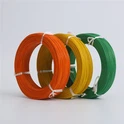
As a supplier of UL1671 tin plated ETFE insulated wire, I often get asked about the bending radius of this wire. So, I thought I'd dedicate this blog post to answering that question and sharing some important details about it.
First off, let's talk a bit about what UL1671 tin plated ETFE insulated wire is all about. This wire is quite something. The tin plating on the conductor gives it great corrosion resistance, which is super important in environments where the wire might be exposed to moisture or other corrosive elements. And the ETFE insulation? Well, it's known for its high temperature resistance, chemical resistance, and excellent electrical properties. It can handle a wide range of temperatures without degrading, making it suitable for a variety of applications.
Now, onto the main topic: the bending radius. The bending radius of a wire is basically the minimum radius that a wire can be bent around without causing damage to the conductor or the insulation. For UL1671 tin plated ETFE insulated wire, the bending radius typically depends on a few factors.
One of the key factors is the wire gauge. Thicker wires generally have a larger bending radius compared to thinner ones. This is because a thicker conductor is less flexible.
Another factor is the application environment. If the wire is going to be used in a static installation, where it won't be moved around much after installation, a relatively smaller bending radius might be acceptable. However, if the wire is going to be subject to repeated flexing, like in a moving machine part, a larger bending radius is needed to prevent damage over time.
In general, for UL1671 wire, the industry standard minimum bending radius is around 5-10 times the outer diameter of the wire. But this is just a ballpark figure. For more precise requirements, it's always a good idea to refer to the specific product documentation or consult with the wire manufacturer.
Let's talk about why the bending radius is so important. When a wire is bent beyond its recommended bending radius, the conductor inside can get damaged. This can lead to increased electrical resistance, which in turn can cause overheating. Overheating is a major problem as it can degrade the insulation, leading to short circuits and potentially dangerous situations. Also, excessive bending can cause the insulation to crack or separate from the conductor, exposing the wire and increasing the risk of electrical shock.


For applications that require wires to withstand high temperatures, our High Temperature Insulated Wire is a great choice. And if you specifically want ETFE insulation wire, check out our ETFE insulation wire. Each of these products has been carefully engineered to meet the highest quality standards.
When you're working with UL1671 tin plated ETFE insulated wire or any of our other products, it's essential to follow the proper installation procedures. Make sure you measure the bending radius accurately and use the right tools for bending. If you're unsure about anything, don't hesitate to reach out to us for advice.
As a supplier, we're committed to providing high quality wires and excellent customer service. We understand that every project is unique, and we're here to help you find the right solution for your needs. Whether you're working on a small DIY project or a large industrial application, we have the expertise and the products to support you.
If you're interested in purchasing UL1671 tin plated ETFE insulated wire or any of our other products, we'd love to have a chat with you. We can discuss your specific requirements, provide you with a quote, and answer any questions you might have.