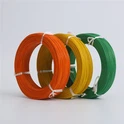
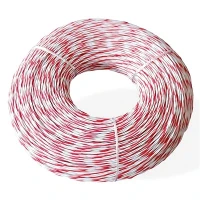
Hey everyone, I'm Jake, and for the last 8 years, I've been running a copper core wire supplier that's worked with everyone from tiny DIY shops to big industrial factories around the world. If you've ever shopped for electrical wire, you've probably noticed that some brands cost twice as much as others-even when the product looks the same on the shelf. Today I'm breaking down exactly how a brand actually impacts the quality of copper core wire, because this stuff isn't just about pretty packaging or a logo; it's about stuff that can make or break a job, or even be a safety hazard.
First off, let's start with the basics: copper core wire isn't just copper. The core is the conductor, and the surrounding insulation, the purity of the copper, and how it's constructed all matter. Brands don't just pick these things at random-they make decisions that filter down to every meter of wire you buy. Let's start with the biggest one: copper purity. The absolute best copper for electrical wire is electrolytic-tough pitch (ETP) copper, which is at least 99.9% pure. But some cheaper brands use recycled copper that's been poorly sorted, leaving traces of iron, lead, or other metals. Those impurities mess with conductivity-more resistance means more heat builds up, which can make insulation break down faster, or even cause fires if it's for high-load applications. I've seen first-hand: one client switched to a no-name brand for their factory's new machinery, and they had to rewire three sections in 6 months because the impure copper corroded so fast. It's not just a random mistake; brands that cut corners on material quality don't care about that long-term headache for their customers.
Next up is manufacturing standards. Not all copper core wire is made to the same rules. A reputable brand will follow global standards like UL, IEC, or CSA, which test everything from voltage resistance to temperature tolerance. Cheaper brands often skip these certifications to save money, which means their wire might not hold up in extreme heat, cold, or when it's bent repeatedly. For example, flexible wire that's used in automotive or robotics gets moved a lot-if the insulation is thin or made of low-grade plastic, it'll crack, expose the copper, and cause shorts. This is where some of our products come in: we make 3 Core Flexible Wire that's built to UL standards, tested to bend over 10,000 times without insulation damage, perfect for tight, moving spaces. If you go with a no-name brand, they might advertise "flexible" but use insulation that cracks after a few hundred bends-you're not just throwing money away, you're risking a job site shutdown.
Another big one is construction consistency. Ever bought a roll of wire and noticed that some meters are way thinner or thicker than others? That's a sign of poor manufacturing quality from cutting corners. Reputable brands use precision machinery to cut copper cores to exact gauges every single time, and to apply insulation evenly. Cheap brands often use old, worn equipment that doesn't measure accurately, so you might get a 14-gauge wire that's actually thinner than it should be. Thinner wire can't handle the same current as a properly gauged one-so if you're using it for a circuit that needs 15 amps, that thin wire will overheat, no two ways about it. We don't cut corners here: every roll we sell, whether it's our UL10584 single core wire or our multi-core stuff, is checked for gauge consistency before it leaves our warehouse. Consistency isn't a nice-to-have-it's part of what makes a brand trustworthy.
Wait, let's talk about insulation materials too, because that's half the wire. Some brands use virgin-grade PVC or silicone for insulation, which is durable, heat-resistant, and non-toxic. Other brands use recycled plastic, which is brittle, has lower heat resistance, and can release fumes when it's hot. For high-temperature applications, like appliances that get hot, or wiring in car engines, you need insulation that can stand up to 150°C or more. Our Silicone Flexible Wire is built for exactly that-silicone insulation can handle way more heat than standard PVC, and it stays flexible even in cold weather. If you buy a cheap brand's "high-temp wire," it's probably using a thin, low-grade plastic that'll melt the first time it gets near a hot engine part. I've seen that too, and it's not a pretty sight.


Brands also do their own testing, not just third-party certifications. A good quality brand will test every batch of wire they make, checking conductivity, insulation resistance, and mechanical strength, to make sure nothing slips through. Cheap brands might only test a tiny sample of each roll, or skip testing entirely-they just package it up and ship it. That's why some rolls from no-name brands work fine, and others are garbage. When you buy from a reputable brand, you know every meter of wire is tested, so you don't have to cross your fingers. We test every single batch we produce, and we keep those records on file for anyone who asks-we're not hiding anything.
Another thing a lot of people don't think about: supply chain transparency. Some big brands work with multiple suppliers for their copper and insulation, which can lead to inconsistent quality if one supplier's materials are worse than the last. But smaller, specialized brands (like ours) work with the same trusted suppliers year after year, so we know exactly where every part of our wire comes from. That consistency is huge-you don't want to change suppliers every quarter because it messes with your product quality. We've had the same copper supplier for over a decade; their ETP copper is consistently 99.92% pure, which is exactly what we need to make reliable wire.
Now, let's get real about cost. People always ask me, "Why is your wire more expensive than that random brand on Alibaba?" And the answer is simple: we're paying for better copper, better insulation, better machinery, and testing. That extra dollar per meter isn't profit-it's investing in materials and processes that don't cut corners. A lot of people think "wire is wire" until something goes wrong. I had a construction client last year who bought 10,000 meters of cheap wire for a new apartment building. Six months in, 20% of the outlets in the basement weren't working because the thin copper cores couldn't handle the load. They had to rip out all the walls, rewire, and that cost them 10 times what they saved by buying cheap wire. That's the math no one tells you about-cheap wire ends up being way more expensive in the long run.
Wait, let's also talk about specific use cases. If you're wiring a home, you can get away with a reputable mid-tier brand, but if you're doing industrial control wiring or automotive wiring, you need something that can take a beating. Our Multi core control cable is used in factory control panels, where reliability is non-negotiable-if that wire fails, the whole production line stops, costing thousands of dollars an hour. A cheap brand's multi-core cable would probably have uneven insulation, so cores would touch each other and cause shorts, or have lower conductivity that slows down signal transmission. We test our multi-core control cables for both electrical and mechanical performance, so you don't have to worry about that.
I should also mention certifications because they're a big part of brand credibility. A lot of brands will put "UL listed" on their packaging, but not all of them actually follow UL standards. Some pay for the certification and then make wire that doesn't meet the requirements. That's called "certification fraud," and it's super common in the low-end wire market. Reputable brands don't cut corners on certifications-they want you to know their product is safe and reliable. All of our wire, including our multi core copper cable, is actually listed with UL, not just advertised as such. You can look up each batch's certification number on the UL website, so you know it's real.
Let's talk about durability too. Outdoor wiring is a perfect example-wire that's buried in the ground or exposed to sun and rain needs insulation that's UV-resistant and water-proof. Cheap brands use insulation that breaks down in a year, so you have to rewire your outdoor lights every 12 months. Our outdoor-grade wire uses cross-linked polyethylene (XLPE) insulation, which lasts 20+ years in direct sun and underground. That's another part of brand choice-do you want to buy wire that lasts, or wire you'll have to replace over and over? It's a no-brainer.
I know a lot of people just look at the price tag when they're buying wire, and I get it-everyone's trying to save money. But when it comes to electrical components, saving a few bucks upfront can cost you way more later, or even put people at risk. A brand that invests in quality materials, manufacturing, testing, and transparency isn't just selling wire-they're selling peace of mind. You don't have to worry about fires, shorts, or production shutdowns because your wire is made to last.
If you're in the market for copper core wire, whether it's for a small home project or a big industrial job, take a minute to look beyond the price. Check for certifications, ask about copper purity, and don't be afraid to ask the brand about their testing processes. We've been helping contractors, electricians, and factory managers get reliable copper core wire for years, and we're here to answer any questions you have, or help you find the right product for your job.
If you're ready to chat about your project and get a quote, don't hesitate to reach out. We work with everyone from individual DIYers to large corporations, and we can help you pick exactly the right wire, whether you need single-core, multi-core, flexible, or something else. No pushy sales stuff, just honest advice and high-quality wire. Don't settle for cheap wire that'll cost you later-go with a brand that cares about quality as much as you do.
References
- Underwriters Laboratories (UL). (2023). Standard for Safety for Electrical Wires and Cables (UL 83).
- International Electrotechnical Commission (IEC). (2022). IEC 60227: Insulated cables for rated voltages up to and including 450/750 V.
- Copper Development Association. (2021). Electrolytic-Tough Pitch (ETP) Copper for Electrical Applications.
- National Electrical Manufacturers Association (NEMA). (2022). Standards for Insulated Wire and Cables.