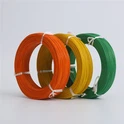
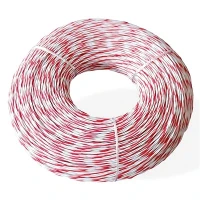
Hey there, if you're reading this, chances are you're either working with UL10584 single core copper wire or figuring out how to test its insulation resistance - and as someone who's supplied this stuff for over 8 years, I'm here to save you from the headaches we used to run into back in the day. When I first started in this game, testing insulation resistance (IR) felt like guessing in the dark: too low a voltage, and we missed a bad batch; too high, and we fried a good one. After countless missteps, I've got a solid process that works specifically for UL10584 single core copper wire, and I'm breaking it down here so you don't have to learn the hard way.
First, let's cut to the chase: why does UL10584's IR matter anyway? This is the wire you'll find in everything from small appliance internals to low-voltage control circuits - the stuff that keeps power where it's supposed to be. If the insulation is crummy, you get leaks; too many leaks, and you're looking at short circuits, overheating, or even safety hazards. That's not just a production hiccup - UL certs can get revoked fast if your IR numbers don't line up with their standards.
Before you even grab a multimeter, you need to gather the right gear. I've seen people try to wing this with a regular voltmeter, and let's just say it doesn't end well. For UL10584 single core copper wire, you need two key tools: a megohmmeter (aka "megger" - everyone calls it that, no need to be fancy) and a sample of wire that's properly prepped. The megger isn't a regular multimeter - it can pump out the precise, consistent voltage needed to test insulation, which is non-negotiable here. Also, make sure you're using a megger rated for the voltage UL specifies for 10584; most of the time that's 500V DC, but don't just assume - double-check the wire's spec sheet.
Next, prepping the wire. This is where new testers mess up all the time. You can't just yank a random foot of wire off the spool and test it. The sample length is super important - for UL10584, it should be at least 10 meters (around 33 feet) long. Why? If the wire's too short, the surface area of the insulation under test is tiny, and you'll get a false high IR reading. Too long, and capacitance kicks in, skewing the numbers. 10 meters is the sweet spot per UL guidelines. Also, strip about 10cm of insulation off both ends of the wire to expose the copper conductor - that's how you make contact with the core. Wait, what about the other part? The insulation itself is the "other conductor" in this test, right? We're measuring how well the insulation keeps current from leaking from the core to… well, everywhere else.
Oh, and a quick side note: if you're ever dealing with uninsulated copper wire, that's a whole different test - which is why we keep our unsheathed copper wire for other projects, not for IR checks on UL10584. For our single core UL10584, the insulated jacket is the star here, so we're only testing that layer.


Now, the actual test step. Let's walk through this like we're doing it right now. First, make sure the megger is off before you hook anything up - this is basic safety, but I still see people skip it. Take the two leads from the megger: connect the red lead to the exposed copper core of your UL10584 single core wire, and the black lead… wait, where? Oh right, to a uniform metal surface that's in contact with the entire length of the insulation. A lot of folks use a bucket of salt water for this - it's conductive, and it wraps around the insulation evenly. Submerge 5 meters of the wire in the salt water, leaving the other 5 meters exposed at the ends (stripped part out of the water, obviously). Make sure there's no copper core touching the water - only the insulation is in the water. That's how you create a consistent counter-electrode for the test.
Once that's set up, grab a timer - this is another thing people rush. Turn the megger to 500V DC, wait 1 minute, then read the IR number. UL's minimum requirement for UL10584 is 100 megohms per kilometer at 25°C. Wait, let's do that math for our 10-meter sample: that's 0.01 kilometers, so minimum 1 megohm. If your reading is below that, you've got a problem - maybe the insulation has a tiny nick, or it's got moisture trapped in it. If it's way higher? That's normal, but don't get spooked if it creeps a little during the minute - that's just dielectric absorption, not a flaw.
Here's the part I wish someone told me when I started: common mistakes that mess up IR readings. First, moisture. If your insulation is even slightly damp, water is conductive, so it'll drag the IR number way down. If you get a low reading, dry the insulation with a hair dryer (cool setting - hot can damage the jacket) and retest. Second, temperature. The 100 megohms per km number is at 25°C. If you're testing in a 35°C warehouse, you'll get a lower reading, but that doesn't mean the wire is bad - you can adjust it with a UL temperature correction formula, or just note the temp when you test. Third, sample length. Like I said earlier, if you test a 2-meter wire, your reading will be 5x lower than a 10-meter one - so you have to calculate for length. For example, if your 2-meter sample reads 0.2 megohms, that's 1 megohm per km, which passes, but if you didn't adjust for length, you'd think it's failing.
Another thing: don't confuse this test with other single core wire tests. We get a lot of customers asking if the same process works for our single core multi strand flexible copper cable, and honestly, the basics are similar, but multi strand has a bit more surface area on the core, so you might want to adjust the contact a tiny bit. For UL10584, it's a solid core, right? So the contact is straightforward, no extra steps needed.
What if your test fails? Let's troubleshoot. First, check the sample for nicks, cuts, or scratches in the insulation - that's the most common issue we see from spooled wire sometimes. If the sample looks perfect, retest a fresh 10-meter length. If that still fails, you might have a bad batch of insulation material, which is rare, but it happens. If you're supplying wire like I do, you'd reject that batch and send back a new roll - UL will catch loose IR if you ship bad stock, and no one wants that headache.
Now, let's talk about when you need to do this test. We test every single batch of our UL10584 single core wire before it leaves our warehouse, because that's our quality promise to customers. We also recommend that our clients do incoming inspection too - especially if you're using this wire for safety-critical applications like medical devices or aerospace controls. That way, if there's a shipping issue (like a spool getting dropped and damaging insulation), you catch it before you use it.
Wait, another quick note on tools: don't use a megger that's out of calibration. Every year, we send our test equipment out to be calibrated - it's cheap, and it makes sure our numbers are accurate. If your megger is off, your IR readings are off, which means you're either rejecting good wire or accepting bad wire. That's a cost no one wants to deal with.
Let me circle back to safety, because this stuff matters. Even though we're testing low-voltage wire, the megger puts out 500V DC, which can give you a pretty nasty shock if you're not careful. Always turn the megger off before disconnecting leads, and make sure no one is touching the wire while the test is running. I learned this the hard way when I forgot and got jolted - not fun, and it's avoidable.
If you're working with other UL-listed wire, like high voltage flexible cable, their IR requirements are way higher, so you'd use a higher megger voltage (like 1000V or 2500V) and different numbers. But for UL10584, 500V DC, 1 minute, 100 megohms per km at 25°C is the rule - stick to that, and you'll be good.
Now, let's get to the part that matters most if you're sourcing this wire: why does this test matter for you? If you're an OEM building products with UL10584, passing the IR test is non-negotiable for UL compliance. If you skip testing, you risk your product failing UL certification, which means you can't sell it. Even if you're a small shop, bad insulation can lead to product recalls, which are way more expensive than the cost of testing.
We've been supplying UL10584 single core wire for years, and we know how important consistent IR testing is to our customers. That's why we not only test every batch, but we also provide the test data right with the shipment - so you don't have to do it if you don't want to, or you can cross-check it easily. If you ever have questions about testing, or if you need a sample to practice on, reach out - we're here to help. Whether you need a small roll for a prototype or bulk stock for a production run, we've got UL10584, along with other UL-approved single core copper wire types, ready to go.
To wrap this up, measuring insulation resistance of UL10584 single core copper wire isn't rocket science, but it does require following the right steps: use a calibrated megger, prep a 10-meter sample, test at 500V DC for 1 minute, and correct for temperature if needed. Avoid common mistakes like moisture, short samples, and uncalibrated tools, and you'll get accurate, reliable numbers every time. If you're in the market for UL10584 wire, or any other single core copper wire, don't guess - trust a supplier that knows the test process inside and out. We're here to answer any questions, help with samples, and make sure your wire meets all your needs.
References
- Underwriters Laboratories. (2020). Standard for Safety for Insulated Wire and Cables for Wiring in Appliances, lamps, and General Equipment, UL 10584.
- IEEE Std 43-2018. (2018). IEEE Standard for Testing Insulation Resistance of Electric Machinery.
- National Electrical Manufacturers Association (NEMA). (2021). Standards for Insulation Resistance Testing of Single Core Copper Conductors.