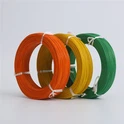
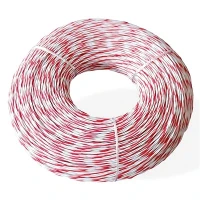
A few years ago, I got a call from a smart home startup that was pulling its hair out over wiring for a new line of WiFi-enabled thermostats. They'd been using standard single-core copper wire in their prototype, but they kept running into glitches: signal interference between low-voltage control lines and power cables, inconsistent connections that caused random sync drops, and even a few overheating issues when the wires had to squeeze into tight spaces behind wall-mounted control panels. That conversation made me think a lot about a question I get all the time from designers, electricians, and small home goods brands: can UL20711 multi core copper wire be used in smart home devices? As someone who's worked with multi core copper cables for over a decade, first as an installer and now as part of a team that supplies UL20711 product lines, I've got plenty of real-world perspective to share on this.
First, let's ground this in what UL20711 actually is, because it's not just a random code for wire. UL20711 is a safety standard from Underwriters Laboratories specifically for flame-resistant FEP (fluorinated ethylene propylene) insulated wires and cables, most commonly made with stranded multi core copper. The standard sets strict rules for temperature resistance (it can handle up to 150°C, way higher than many other common home wiring types), voltage ratings, and flame propagation-critical for any device that's going inside walls, near drywall, or close to other home materials. For smart home gear, which is all about mixing low-voltage data, control, and sometimes power lines in tight, hidden spaces, that level of safety and performance is non-negotiable.
One of the biggest reasons designers reach for multi core copper cable like UL20711 is smart home space constraints. Think about the average smart doorbell: it has to carry power, send video data, sync with a chime, and sometimes connect to a security system-all through a single wire run that's often just 18 or 20 gauge. If you use separate single-core wires for each function, you're not only taking up more space in a narrow chime box or door housing, but you're also more likely to have loose, tangled connections that fail over time. UL20711 multi core copper wires bundle all those conductors into one jacket, so you get every needed line in a compact, organized package. I've seen this work firsthand with a line of smart window blinds that switched to UL20711 last year; their install time dropped by 15% because electricians didn't have to fumble with multiple wires in the small headrail of the blind, and customer returns for connection issues went from 8% to less than 1% in six months.
But safety is where UL20711 really shines for smart home devices. FEP insulation, which is the standard for UL20711, is way more durable than PVC, which is used in many cheaper wires. It resists cracking from temperature swings-smart home devices in attics or near heating vents can get pretty warm, and PVC breaks down after a few years, leaving exposed copper that can cause shorts or fires. FEP also doesn't off-gas harmful chemicals, which matters for devices that are near air vents or in small, enclosed spaces. I'll be honest, though-early on, I worried that multi core cables might have interference issues, since multiple conductors are so close together. But UL20711 is designed with that in mind. The insulation between cores is thick enough to prevent crosstalk, which is when signal from one line bleeds into another. For smart home devices that rely on WiFi, Bluetooth, or Z-wave signals, that's a huge plus-no more spotty thermostat syncing or blurry doorbell video because wires are interfering with each other.
That said, it's not a one-size-fits-all solution, and I've seen brands make mistakes when switching to UL20711 multi core copper wire. The biggest one is misrating the voltage or current for their specific device. For example, a smart outlet that draws more power than the UL20711 wire's rating (which is usually 300V or 600V, depending on the gauge) will overheat, even if the wire is UL-listed. I remember a small brand that tried to use UL20711 20 gauge wire for a smart refrigerator control module-fridges draw a lot of startup current, and that wire couldn't handle the surge, causing the module to crash once a week. They switched to a higher-gauge UL20711 line designed for higher current loads, and the problem went away. Another common mistake is not accounting for the number of cores. Some smart devices only need 2 cores for power and data, but others (like multi-zone smart speakers or security cameras with multiple sensors) need 4 or more. If you buy a multi core control cable with too few cores, you'll have to add more wires, negating the space benefit. If you buy too many, you're wasting money on unused conductors.
To help brands get this right, we've put together a guide to matching UL20711 multi core copper wire to smart home devices, and all these years in the industry have taught me that context is everything. Let's break down specific smart home categories and where UL20711 works best:
First, low-voltage smart devices. This is where UL20711 is almost a no-brainer. Smart thermostats, doorbells, window sensors, and voice assistant wall modules all run on 12V to 24V power and use low-bandwidth data signals. Their wiring needs to be compact, safe, and resistant to small amounts of heat from being enclosed. I recently worked with a startup that makes hardwired smart smoke detectors-they were using separate single-core wires until they switched to our UL20711 multi core copper wire. The bundled design meant they could fit the wiring into the small base of the detector without cramming, and the FEP insulation held up better in the warm air near ceiling ducts. They also tested for interference, and the UL20711 core spacing meant no signal dropout between the smoke detector and the home's security panel.
Next, mid-power smart devices. Think smart outlets, small appliance controllers, or multi-room audio speakers that draw between 100W and 500W. For these, UL20711 still works, but you have to pick the right gauge and number of cores. Multi core power cables for these devices need to balance current capacity and flexibility-since mid-power smart devices often go into movable parts, like smart lamp bases or retractable blind heads. UL20711's stranded copper cores are more flexible than solid core, so they don't break when bent repeatedly, which is a big plus for moving parts. We've had a customer who makes smart power strips switch from solid core single wires to our UL20711 multi core power cable last year, and their product's lifespan increased by 25% because the wires didn't crack when users plugged and unplugged devices frequently.
Where UL20711 is less ideal is for very high-power smart home devices, like smart garage door openers that draw 1000W or more, or electric vehicle chargers. For those, you need thicker, higher-gauge wires that are rated for higher current loads (usually 600V or more) and have thicker insulation than FEP can provide at that size. It's not that UL20711 is unsafe-it's just not optimized for the extreme power levels these devices need. That's why it's important to match the wire to the device's specific needs, not just grab the newest, most popular UL-listed wire.


Another thing to consider is installation ease, which is a huge part of smart home adoption. Most homeowners hire electricians to install hardwired smart devices, and electricians care about speed and reliability. Multi core copper cable is faster to run because you don't have to strip and connect multiple wires every time-you can just run one jacketed cable and connect each core to its respective terminal. For electricians, that means less time on a job, which means lower costs for homeowners. I've had installers tell me that switching to UL20711 multi core wires cut their smart home installation time by 20% on average, because they don't have to deal with loose single wires that are easy to mix up or cross.
Durability is another big factor for smart home devices, which are meant to last 5 to 10 years, sometimes longer. UL20711's FEP insulation resists UV damage, moisture, and chemical exposure, so it works for both indoor and outdoor smart home devices-like smart outdoor security cameras or pathway lights. A lot of cheap multi core electrical cable uses PVC insulation, which gets brittle after a year in direct sunlight or near sprinklers, leading to exposed wires. UL20711 stands up to that kind of wear way better, so you don't have to rewire your smart lights every few years. That's a big selling point for brands trying to build long-term customer loyalty, not just one-time sales.
Of course, I'm not saying UL20711 is perfect for every smart home use case. For example, if you're building a smart device that's very small, like a tiny sensor for a pet door or a bathroom mirror touch switch, you might need even thinner wire than UL20711's thinnest gauge. In that case, some brands opt for ultra-thin multi core wire with similar FEP insulation, but it's not UL20711. But for 90% of the hardwired smart home devices on the market right now-thermostats, doorbells, window blinds, smart outlets, security sensors-UL20711 multi core copper wire is more than suitable, and often a better choice than traditional single-core or non-UL-listed wires.
Let me also touch on something that a lot of new designers overlook: compliance. Smart home devices have to meet local building codes, and UL20711 is a nationally recognized standard in the U.S. and Canada. If you use a wire that's not UL-listed, you might run into issues during inspections, which can delay product launches or even get devices pulled from shelves. I've seen a small smart home brand lose a whole batch of devices because they used unlisted multi core wire that didn't meet building code requirements-costing them tens of thousands of dollars and months of delay. UL20711 takes that compliance worry off the table, because it's already tested and certified to meet strict safety standards.
For anyone still on the fence about whether to use UL20711 multi core copper wire in smart home devices, here's the bottom line: it works, but only if you pick the right variant for your device. If you're working on a low-voltage device that needs compact, safe, interference-free wiring, go for the standard UL20711 multi core control cable. If you're building a mid-power device that needs flexibility for moving parts, look at our multi core power cables rated for the current your device draws. For general smart home wiring needs, our line of UL20711 multi core copper wire is a great starting point.
At the end of the day, smart home devices are all about making life easier, and the wiring that connects them shouldn't be a source of frustration. Too many brands cut corners on wiring to save a few cents, only to deal with returns, repairs, and bad reviews down the line. As someone who's been in the multi core copper wire supply business for years, I've seen too many products fail because of bad wiring-so when a brand does their research and picks a UL-listed, high-quality wire like UL20711, it makes all the difference.
If you're a smart home designer, brand, or installer looking to upgrade your wiring to UL20711 multi core copper wire, or if you have questions about matching the right product to your device, feel free to reach out for a consultation. We work with startups and established brands alike, and we can help you find the exact multi core copper cable or multi core power cable that fits your specific needs, without wasting money on unnecessary features or undersizing your wiring.
References
- Underwriters Laboratories. (2022). Standard for Safety for Flame-Resistant FEP-Insulated Wires and Cables (UL 20711).
- National Electrical Code (NEC). (2023). Article 725: Class 2, Class 3, and Remote-Control Circuits.
- Copper Development Association. (2021). Multi Core Copper Cables for Smart Home Applications: Performance and Safety Considerations.
- U.S. Consumer Product Safety Commission. (2020). Wiring Hazards in Smart Home Devices: A Review of Common Failure Points.