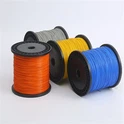
Temperature plays a crucial role in the tin plating process of UL1670 ETFE insulated wire. As a supplier of UL1670 tin plated ETFE insulated wire, I have witnessed firsthand how temperature variations can impact the quality and performance of the wire. In this blog post, I will explore the relationship between temperature and tin plating on UL1670 wire, and discuss the implications for our customers.
Tin plating is a common method used to protect copper wires from corrosion and improve their solderability. In the case of UL1670 ETFE insulated wire, the tin plating is applied to the copper conductor before the ETFE insulation is extruded over it. The tin plating process typically involves several steps, including cleaning the copper wire, activating the surface, and applying the tin coating.
The temperature at which the tin plating is applied can have a significant impact on the quality of the coating. If the temperature is too low, the tin may not adhere properly to the copper surface, resulting in a weak or uneven coating. On the other hand, if the temperature is too high, the tin may melt and flow unevenly, causing blisters or other defects in the coating.


One of the most important factors affected by temperature is the adhesion of the tin coating to the copper wire. At lower temperatures, the tin may not form a strong bond with the copper surface, leading to poor adhesion. This can result in the tin coating peeling or flaking off over time, which can compromise the performance of the wire.
To ensure good adhesion, the temperature during the tin plating process should be carefully controlled. The optimal temperature range for tin plating on UL1670 ETFE insulated wire is typically between 220°C and 240°C. At this temperature range, the tin can form a strong metallurgical bond with the copper surface, providing excellent adhesion and corrosion resistance.
Temperature can also affect the thickness of the tin coating. At higher temperatures, the tin may flow more easily, resulting in a thicker coating. However, if the temperature is too high, the tin may become too fluid and flow off the wire, leading to an uneven coating thickness.
On the other hand, at lower temperatures, the tin may not flow as easily, resulting in a thinner coating. This can also lead to uneven coating thickness and poor adhesion. To ensure a consistent coating thickness, the temperature during the tin plating process should be carefully controlled within the optimal range.
The solderability of the tin-plated wire is another important factor affected by temperature. At higher temperatures, the tin coating may become oxidized, which can reduce its solderability. Oxidation can also cause the tin coating to become brittle, making it more prone to cracking or peeling.
To ensure good solderability, the temperature during the tin plating process should be carefully controlled to minimize oxidation. Additionally, the wire should be stored in a dry environment to prevent further oxidation.
As a supplier of UL1670 tin plated ETFE insulated wire, we understand the importance of providing high-quality products that meet our customers' needs. Temperature plays a critical role in the tin plating process, and we take every measure to ensure that our wires are plated at the optimal temperature range to provide excellent adhesion, coating thickness, and solderability.
If you are in the market for UL1670 ETFE insulated wire, we encourage you to contact us to discuss your specific requirements. Our team of experts can provide you with detailed information about our products and help you select the right wire for your application. We are committed to providing our customers with the highest level of service and support, and we look forward to working with you.