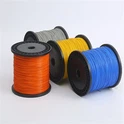
Hey there! As a supplier of UL10308 single core copper wire, I've seen a lot of confusion out there about how to tell if the wire you're getting is the real deal. So, I thought I'd share some tips on how to identify genuine UL10308 wire.
The first and most obvious way to start is by looking for the UL (Underwriters Laboratories) mark. UL is a well known independent safety science company. Genuine UL10308 wire will have the UL mark clearly printed on the insulation. This mark is like a stamp of approval, indicating that the wire has met UL's strict safety and performance standards.
When you see the UL mark, take a closer look at it. It should be sharp and clear. If the mark looks smudged, faded, or just doesn't seem right, it could be a sign that the wire is counterfeit. You can also go to the UL website and use their database to verify that the specific wire you have is listed as a UL approved product.
The insulation of UL10308 wire is an important part of its quality. High quality insulation should be smooth and uniform. Run your fingers along the wire; there should be no bumps, lumps, or rough spots.
The color of the insulation can also give you some clues. UL10308 usually has a specific color code, and it should be consistent throughout the length of the wire. If you notice any discoloration or uneven coloring, that's a red flag.
Another thing to check is the thickness of the insulation. UL has specific requirements for the insulation thickness of UL10308 wire. You can use a caliper to measure the insulation thickness at different points along the wire. If the thickness varies significantly or is much thinner than the UL standard, it might not be genuine.
The copper core is the heart of the wire. Genuine UL10308 wire should have a high quality copper core. Good copper has a bright, shiny appearance. If the copper looks dull, it could be a sign of low quality copper or oxidation.
You can also check the flexibility of the copper core. UL10308 wire is designed to be flexible, so it should bend easily without breaking. If the wire is too stiff or snaps easily when you try to bend it, it might not be up to the UL standard.
The diameter of the copper core is also important. Use a micrometer to measure the diameter of the copper core. It should match the specifications for UL10308. If the diameter is off, it could mean that the wire is not genuine.
The packaging of the wire can tell you a lot about its authenticity. Genuine UL10308 single core wire usually comes in well made packaging. The label on the packaging should have clear information about the wire, including the UL number, wire size, and other relevant details.


Look for any signs of tampering on the packaging. If the seal is broken or the label looks like it's been peeled off and re attached, it could be a sign that the wire is not genuine.
If you have the equipment and knowledge, you can conduct some electrical tests on the wire. Measure the resistance of the wire. The resistance should be within the range specified for UL10308 single core copper wire. You can use a multimeter to measure the resistance.
You can also test the wire's ability to carry current. UL10308 wire is designed to handle a certain amount of current safely. If the wire overheats or shows signs of electrical problems during the test, it might not be a genuine UL10308 wire.
If you're interested in other types of single core copper wires, we also offer high voltage flexible cable and UL10584 single core wire. And for those who need a different option, we have unsheathed copper wire.
As a supplier of UL10308 single core copper wire, we take pride in providing high quality products. We source our copper from reliable suppliers and follow strict manufacturing processes to ensure that our wires meet all the UL standards.