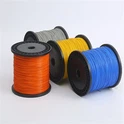
In the field of electrical wiring, the performance and durability of wires are of utmost importance, especially in terms of their resistance to various environmental factors. One such crucial factor is moisture. As a supplier of UL1886 tin plated FEP insulated wire, I am often asked about the wire's resistance to moisture. In this blog, I will delve into the scientific aspects of this wire's moisture resistance, explore its applications, and provide insights for potential customers.
Understanding UL1886 Tin Plated FEP Insulated Wire
Before discussing its moisture resistance, let's first understand what UL1886 tin plated FEP insulated wire is. UL1886 is a standard set by Underwriters Laboratories (UL), which is a globally recognized safety consulting and certification company. This standard ensures that the wire meets specific safety and performance requirements, making it suitable for a wide range of applications.
The wire is tin plated, which offers several advantages. Tin is a corrosion - resistant metal, and the tin plating on the wire provides a protective layer that helps prevent oxidation and corrosion of the underlying conductor. This is particularly important in environments where the wire may be exposed to moisture or other corrosive substances.
FEP, or Fluorinated Ethylene Propylene, is the insulation material used for this wire. FEP is a fluoropolymer known for its excellent electrical insulation properties, high temperature resistance, and chemical resistance. It has a smooth surface, which reduces friction and makes it easy to install.
Moisture Resistance of UL1886 Tin Plated FEP Insulated Wire
The moisture resistance of UL1886 tin plated FEP insulated wire can be analyzed from two main aspects: the tin plating and the FEP insulation.
Tin Plating
The tin plating on the wire acts as a physical barrier against moisture. When the wire is exposed to a moist environment, the tin layer prevents water molecules from reaching the underlying conductor. Tin has a relatively low reactivity with water, and it forms a thin oxide layer on its surface when exposed to air. This oxide layer further enhances its corrosion resistance.
However, it's important to note that the effectiveness of the tin plating depends on its thickness and quality. A thicker and more uniform tin plating will provide better protection against moisture. In addition, the tin plating may be damaged during handling or installation, which could compromise its moisture - resistance capabilities. Therefore, proper handling and installation procedures are essential to maintain the integrity of the tin plating.
FEP Insulation
FEP insulation is highly resistant to moisture. FEP has a low water absorption rate, which means it does not absorb water easily. This is due to its non - polar molecular structure, which makes it hydrophobic. When the wire is exposed to moisture, the FEP insulation prevents water from penetrating into the conductor.
Moreover, FEP has excellent chemical stability, and it does not react with water or other common chemicals. This ensures that the insulation properties of the wire remain stable even in moist environments. The high dielectric strength of FEP also means that the wire can maintain its electrical performance in the presence of moisture.
Applications and the Importance of Moisture Resistance
The moisture resistance of UL1886 tin plated FEP insulated wire makes it suitable for a variety of applications.
Automotive Wire
In the automotive industry, wires are often exposed to harsh environments, including moisture, heat, and chemicals. The moisture resistance of UL1886 tin plated FEP insulated wire is crucial in automotive applications. For example, in engine compartments, wires may be exposed to water splashes from rain or road spray. The tin plating and FEP insulation protect the wires from corrosion and ensure reliable electrical connections. You can learn more about Automotive Wire.
Residential Electrical Wire
In residential settings, wires may be installed in areas where there is a risk of moisture, such as basements or bathrooms. The moisture resistance of UL1886 tin plated FEP insulated wire helps prevent electrical failures and short circuits caused by water damage. This ensures the safety and reliability of the electrical system in homes. Check out Residential Electrical Wire for more details.
UL10518 Teflon wire
UL10518 Teflon wire also has similar requirements for moisture resistance. The technology and materials used in UL1886 tin plated FEP insulated wire can provide some insights into the moisture - resistant performance of related wires. You can find more information about UL10518 Teflon wire.
Testing the Moisture Resistance of UL1886 Tin Plated FEP Insulated Wire
To ensure the moisture resistance of UL1886 tin plated FEP insulated wire, various tests can be conducted.
Immersion Test
In an immersion test, the wire is submerged in water for a specified period of time. After the immersion, the wire is inspected for any signs of corrosion or damage to the insulation. Electrical tests are also conducted to check if the wire's electrical performance has been affected.
Humidity Chamber Test
A humidity chamber test involves placing the wire in a chamber with a controlled humidity level for an extended period. This simulates a moist environment and allows for the long - term observation of the wire's performance. The wire is monitored for changes in its electrical properties, such as resistance and capacitance.
Maintaining the Moisture Resistance of UL1886 Tin Plated FEP Insulated Wire
To maintain the moisture resistance of UL1886 tin plated FEP insulated wire, proper installation and maintenance are essential.


Installation
During installation, the wire should be handled carefully to avoid damaging the tin plating and insulation. The wire should also be installed in a way that minimizes its exposure to moisture. For example, it should be routed away from areas where water is likely to accumulate.
Maintenance
Regular inspections of the wire can help detect any signs of damage or corrosion early. If the tin plating is damaged, it may be necessary to repair or replace the affected section of the wire. In addition, keeping the installation environment clean and dry can help prolong the life of the wire.
Conclusion and Invitation to Contact
In conclusion, UL1886 tin plated FEP insulated wire has excellent moisture resistance due to the combination of tin plating and FEP insulation. This makes it a reliable choice for applications where moisture is a concern, such as in the automotive and residential electrical industries.
If you are interested in purchasing UL1886 tin plated FEP insulated wire or have any questions about its moisture resistance or other properties, please feel free to contact us. We are committed to providing high - quality products and professional services to meet your needs.
References
- Underwriters Laboratories (UL) standards documentation on UL1886.
- Technical literature on FEP insulation materials.
- Research papers on the corrosion resistance of tin plating.