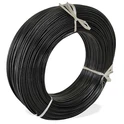
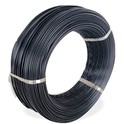
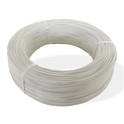
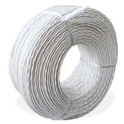
Hey there! As an insulated wire supplier, I've had my fair share of customers scratching their heads over the difference between flexible and rigid insulated wire. It's a topic that comes up a lot, so I thought I'd break it down in a way that's easy to understand.
First off, let's talk about what insulated wire is in general. Insulated wire is basically a conductor (usually copper or aluminum) covered with a layer of insulation. The insulation serves a few important purposes. It protects the conductor from physical damage, prevents electrical leakage, and can also provide some level of resistance to heat, chemicals, and other environmental factors.
Now, let's get into the nitty - gritty of flexible and rigid insulated wire.
Flexible Insulated Wire
Flexible insulated wire is, well, flexible! It can be bent, twisted, and routed around corners without much hassle. This makes it ideal for applications where the wire needs to be moved or adjusted frequently.
One of the main advantages of flexible insulated wire is its versatility. You can use it in a wide range of electronic devices, from small handheld gadgets to large industrial machinery. For example, in a smartphone, flexible wires are used to connect different components like the battery, the screen, and the circuit board. The ability to bend and flex allows the wires to fit into the tight spaces within the device.


Another benefit is its ease of installation. Since it can be easily manipulated, installers can quickly route the wire through conduits or around obstacles. This can save a lot of time and labor costs, especially in large - scale projects.
Flexible insulated wire also tends to have better resistance to vibration. In applications where there is a lot of movement or shaking, such as in vehicles or aircraft, flexible wires can withstand the vibrations without breaking or losing their electrical conductivity.
However, flexible insulated wire does have some drawbacks. Because it is more flexible, it may not be as strong or durable as rigid insulated wire in some cases. Over time, repeated bending and flexing can cause the insulation to wear out or the conductor to break. Also, flexible wires may not be suitable for applications where a high level of mechanical support is required.
Some common types of flexible insulated wire include UL1371 FEP Insulated Wire. FEP (Fluorinated Ethylene Propylene) insulation provides excellent chemical resistance and low friction, making it a popular choice for applications in the aerospace and chemical industries.
Rigid Insulated Wire
Rigid insulated wire, on the other hand, is stiffer and less flexible than its counterpart. It is designed to maintain its shape and provide a high level of mechanical support.
One of the key advantages of rigid insulated wire is its durability. It can withstand harsh environments, including high temperatures, high pressures, and exposure to chemicals. For example, in industrial furnaces or power plants, rigid insulated wires are used to transmit electricity because they can handle the extreme heat and stress without degrading.
Rigid insulated wire also offers better protection against physical damage. Since it is stiffer, it is less likely to be accidentally bent or crushed during installation or use. This makes it a good choice for applications where the wire is exposed to rough handling or heavy machinery.
In terms of electrical performance, rigid insulated wire often has lower capacitance and impedance compared to flexible wire. This means that it can transmit electrical signals more efficiently, with less loss of power. This is particularly important in high - frequency applications, such as telecommunications or radar systems.
However, rigid insulated wire is not without its limitations. Its stiffness makes it more difficult to install, especially in applications where the wire needs to be routed around tight corners or through small spaces. It may also require more specialized tools and techniques for installation.
A well - known type of rigid insulated wire is UL3340 Insulated Wire. EPDM (Ethylene Propylene Diene Monomer) insulation in UL3340 wire provides good resistance to heat, ozone, and weathering, making it suitable for outdoor and industrial applications.
Comparing the Two
When it comes to choosing between flexible and rigid insulated wire, several factors need to be considered.
Application Requirements
The first thing to think about is the specific application. If the wire needs to be moved or adjusted frequently, or if it needs to fit into tight spaces, flexible wire is the way to go. On the other hand, if the wire will be exposed to harsh environments or requires high mechanical support, rigid wire is a better choice.
Cost
Cost is also an important factor. Generally, flexible insulated wire is more expensive than rigid wire. This is because the manufacturing process for flexible wire is more complex, and it often uses more advanced insulation materials. However, in some cases, the cost savings from easier installation and reduced labor may offset the higher initial cost of flexible wire.
Electrical Performance
Depending on the electrical requirements of the application, one type of wire may be more suitable than the other. For high - frequency applications, rigid wire may offer better performance due to its lower capacitance and impedance. For applications where the electrical signal is not as critical, flexible wire may be sufficient.
Conclusion
In conclusion, both flexible and rigid insulated wire have their own unique advantages and disadvantages. As an insulated wire supplier, I understand that choosing the right type of wire can be a challenging decision. But by considering the application requirements, cost, and electrical performance, you can make an informed choice.
If you're still not sure which type of insulated wire is best for your project, don't hesitate to reach out. I'm here to help you find the perfect solution. Whether you need a small quantity for a DIY project or a large order for an industrial application, I've got you covered. Let's start a conversation and see how we can work together to meet your needs.
References
- Electrical Wiring Handbook, 5th Edition
- Insulated Wire Manufacturing: Principles and Practices