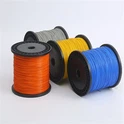
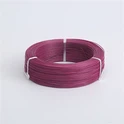
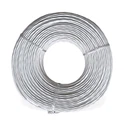
As a supplier of Zhejiang IRONFLON Wire&Cable, the most common product questions I hear from customers are various product inquiries. Among them, there is a problem that occurs particularly frequently: "Can your UL10308 single core copper wire be used in high-frequency circuits? "After all, high-frequency circuits have strict requirements for wires. If not selected correctly, not only will the equipment fail to perform properly, but it may also leave safety hazards. Now let's talk about this issue, and after reading it, you will have a clear idea in your mind.
Let me give you a clear answer first: UL10308 single core copper wire can be fully used in high-frequency circuits, and its performance can surprise you in many high-frequency scenarios. There is only one small premise, which is to choose the right specifications and use them in the right place. After all, there is no universal solution for wires, only the most suitable choice.
As the core product of our Zhejiang IRONFLON, UL10308 is not comparable to ordinary copper wires on the market. From material to production process, every aspect is carefully crafted, which is also the key to its ability to be used in high-frequency scenarios.
First, let's take a look at the conductor part. UL10308's conductors can be made of high-quality bare copper, tin plated copper, silver plated copper, or nickel plated copper, and can be customized according to needs. Whether it is a solid or multi stranded style, the conductivity is fully stretched. What are high-frequency circuits most afraid of? The biggest fear is signal loss during signal transmission, and high-quality copper conductors have particularly low resistance, which can minimize energy consumption in high-frequency signal transmission and avoid signal distortion. This is like a highway without congestion, where signals can flow smoothly all the way without buffering or attenuation, and transmission efficiency is maximized.
If the conductor is the foundation, then the insulation layer is a bonus for UL10308 to adapt to high-frequency circuits. It uses FEP insulation material, the golden partner of high-frequency circuits. Most people believe that insulation serves as a protective layer, but for high-frequency circuits, it is much more than that. FEP has two core advantages that perfectly meet the needs of mid to high frequency scenarios. One is that its dielectric constant is particularly low and its stability is extremely strong. No matter how the ambient temperature changes or the signal frequency fluctuates, its dielectric performance will not change significantly, which can effectively reduce the "interference noise" of high-frequency signals and make signal transmission purer. The second advantage is that high-frequency loss is particularly small, which can avoid signal loss during transmission, especially when high-frequency signals need to be transmitted over long distances.
In addition, FEP material is particularly durable, with a high temperature resistance of up to 200 ℃, acid and alkali resistance, oil resistance, and is not easily aged. Even inside high-frequency equipment with complex structures and harsh environments, it can operate stably without worrying about insulation aging leading to short circuits. Its safety and stability are both reliable.


At this point, some people may ask: Since it can be used in high-frequency circuits, what specific scenarios can it be used in? Are there any restrictions? Don't worry, let's divide the scenes and explain them slowly. This way, it will be clearer and more convenient for you to find the right place.
First, let's talk about the high-frequency scenarios that are most suitable for UL10308 single core copper wire. Choosing it is definitely the right choice:
The internal wiring of high-frequency electronic devices, such as radio frequency (RF) modules, various communication equipment, and testing instruments, is very suitable. The signal frequency of these devices can usually reach the MHz or even GHz level, and the low loss and anti-interference characteristics of UL10308 perfectly match this high-frequency transmission requirement, ensuring stable and normal operation of the equipment.
Small high-frequency instruments can also be used, such as the internal flexible connection wires of consumer electronics products such as mobile phones and digital cameras, as well as the lead wires of micro motors and precision circuit boards. UL10308 has multiple wire specifications to choose from (32AWG-10AWG), and thinner ones can easily adapt to the small space of small devices, while also balancing high-frequency transmission performance and flexibility. Even if repeatedly bent, it will not affect signal transmission.
It can also be used in industrial high-frequency scenarios, such as connecting wires for high-frequency sensors of temperature control probes in industrial furnaces and wiring for high-frequency instruments on chemical equipment. UL10308 has the characteristics of high and low temperature resistance, acid and alkali resistance, and can stably transmit high-frequency signals in these harsh environments without worrying about environmental factors affecting product performance.
There are also high-frequency scenarios in automotive electronics, where the high-frequency sensor wiring harness in the engine compartment needs to be resistant to high temperatures, oil stains, vibrations, and meet high-frequency transmission requirements. UL10308's comprehensive performance meets the standard, and it has also passed VW-1 flame retardant certification, ensuring safety.
Of course, there are also some small details that need to be noted. Not all UL10308 single core copper wires can be easily used in high-frequency circuits, and choosing the right specifications is crucial.
Firstly, the choice of wire gauge. When high-frequency signals are transmitted, there is a "skin effect", which means that the signal is mainly transmitted on the surface of the conductor. Therefore, in high-frequency scenarios, it is recommended to choose multi stranded conductors with moderate wire gauge, which not only have better transmission effect than solid conductors, but also have stronger flexibility and are more convenient for wiring. If it is high-frequency small signal transmission, selecting a fine specification of 32AWG-24AWG is sufficient; If it is high-frequency high current transmission, choose the coarse specification of 18AWG-10AWG, which can be determined according to your equipment parameters.
Secondly, there is a need to block requirements. If your high-frequency circuit is in an environment with significant interference, such as strong electromagnetic devices, it is recommended to choose UL10308 single core copper wire with a shielding layer (the shielding layer can be customized), which can further reduce external interference and ensure signal purity. After all, even a slight interference from high-frequency signals can affect the normal operation of the equipment.
Here is a common misconception: many people believe that high-frequency circuits must use specialized high-frequency wires, and ordinary single core copper wires are simply not suitable. Actually, it's not like that. The core requirements of high-frequency wires are low loss, anti-interference, and strong stability, and UL10308 single core copper wire fully meets these three core requirements. And it has also passed UL758 standard certification, with a rated voltage of 600V, ensuring safety and reliability. Its cost-effectiveness is even higher than many dedicated high-frequency cables, making it a high cost-effective choice in high-frequency scenarios.
As a supplier of Zhejiang IRONFLON Wire&Cable, we have been producing UL10308 single core copper wire for many years and have been exposed to various high-frequency scenarios to meet customer needs. Whether you are working on high-frequency communication equipment, small electronic instruments, or industrial high-frequency sensors, we can customize UL10308 single core copper wire with suitable specifications according to your specific needs. We provide professional advice throughout the process, from conductor material and wire gauge to insulation layer thickness and shielding layer configuration, to help you avoid selection errors and avoid detours.
If your project happens to require wires for high-frequency circuits and you are unsure if UL10308 single core copper wire is compatible or which specification to choose, feel free to contact us at any time (luna@ironflon.com) . As a source supplier, we not only provide high-quality products, but also offer one-on-one selection guidance to help you save time, effort, and cost.