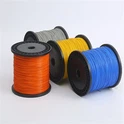
Hey there! As a supplier of UL1643 tin plated ETFE insulated wire, I often get asked about the tensile strength of this type of wire. So, I thought I'd write this blog post to share some insights on what the tensile strength of UL1643 wire is and why it matters.
First off, let's quickly go over what tensile strength means. Tensile strength is the maximum amount of tensile (pulling) stress that a material can withstand before it breaks. In the case of wire, it's how much force you can apply to the wire in a pulling direction before it snaps. It's an important property because it determines how well the wire can handle being stretched or pulled during installation, use, or any other situation where it might experience tension.
The tensile strength of UL1643 wire can vary depending on a few factors. One of the main factors is the gauge of the wire. Generally, smaller gauge wires (higher AWG numbers) have lower tensile strength compared to larger gauge wires (lower AWG numbers). This is because smaller wires have less cross sectional area, which means there's less material to resist the pulling force.
For example, a 22 AWG UL1643 tin plated ETFE insulated wire might have a different tensile strength than a 18 AWG wire. The 18 AWG wire, with its larger cross sectional area, can typically withstand more pulling force before breaking.
Another factor that can affect the tensile strength is the quality of the tin plating and the ETFE insulation. A well plated wire with high quality ETFE insulation is likely to have better tensile strength. The tin plating provides some protection to the wire core and can also enhance its conductivity, while the ETFE insulation helps to keep the wire flexible and resistant to environmental factors.
In general, the tensile strength of UL1643 tin plated ETFE insulated wire can range from a few pounds to several tens of pounds, depending on the specific wire characteristics. For instance, a common 20 AWG UL1643 wire might have a tensile strength of around 20-30 pounds.


Now, you might be wondering why the tensile strength of UL1643 tin plated wire is so important. Well, there are several reasons.
During installation, wires often need to be pulled through conduits, cable trays, or other tight spaces. If the wire doesn't have enough tensile strength, it could break during the pulling process, which would be a major headache. You'd have to start over, waste time and materials, and potentially delay the project.
In applications where the wire is subject to movement or vibration, a higher tensile strength is crucial. For example, in automotive or aerospace applications, wires are constantly jostled around. If the wire breaks due to insufficient tensile strength, it could lead to electrical failures, which can be dangerous and costly to fix.
It's also interesting to compare the tensile strength of UL1643 tin plated wire with other types of wires. For example, UL1508 Insulated Power Wire and UL1671 High quality wire and UL1516 High quality wire have their own tensile strength characteristics.
UL1508 insulated power wire is designed for specific power applications. It might have a different tensile strength profile compared to UL1643. The design and intended use of each wire type play a role in determining their tensile strength. UL1671 high quality wire, on the other hand, is known for its high performance features. It could have a relatively high tensile strength, especially if it's used in demanding environments. UL1516 high quality wire also has its own set of properties, and its tensile strength might be optimized for certain applications.
As a supplier of UL1643 wire, we take several steps to ensure that our wires have the appropriate tensile strength. First, we source high quality raw materials. The copper core of the wire is carefully selected to have the right mechanical properties. We also use high grade tin for plating and top notch ETFE insulation.
Our manufacturing process is closely monitored. We use advanced equipment to ensure that the wire is made to the highest standards. During production, we conduct regular quality checks to measure the tensile strength of the wire. If the wire doesn't meet our specified tensile strength requirements, it doesn't leave our facility.
If you're in the market for UL1643 tin plated ETFE insulated wire, or any of the other wires I mentioned like UL1508 Insulated Power Wire, UL1671 High quality wire, or UL1516 High quality wire, we'd love to hear from you. We can provide you with detailed information about the tensile strength and other properties of our wires, and help you choose the right wire for your application. Whether you're working on a small DIY project or a large industrial installation, we've got the wire solutions you need. Don't hesitate to reach out and start a conversation about your wire requirements.