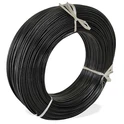
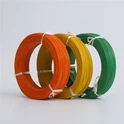
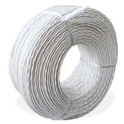
Hey there! As a supplier of UL20710 multi core copper wire, I often get asked about the impedance of this type of wire. So, I thought I'd write a blog post to shed some light on this topic.
First off, let's talk a bit about what impedance is. In simple terms, impedance is like a measure of how much a circuit resists the flow of alternating current (AC). It's a combination of resistance, inductance, and capacitance. For electrical wires, impedance plays a crucial role in determining how well they can transmit signals without significant loss or distortion.
Now, the impedance of UL20710 multi core copper wire isn't a fixed number. It can vary based on several factors. One of the main factors is the wire's construction. UL20710 multi core copper wire consists of multiple copper conductors bundled together. The number of cores, their gauge (thickness), and how they're arranged within the cable can all affect the impedance.
For instance, if we have more cores packed closely together, the electromagnetic interaction between them can change the inductance and capacitance values, which in turn affects the impedance. Also, the insulation material used around the copper cores matters a lot. Different insulation materials have different dielectric constants, and this impacts the capacitance of the wire, and thus the impedance.
Another important factor is the frequency of the AC signal. At low frequencies, the resistance of the copper conductors might be the dominant factor in determining the impedance. But as the frequency goes up, the inductive and capacitive effects become more significant. UL20710 multi core copper wire is designed to work well across a range of frequencies, but the impedance will change as the frequency varies.
Typically, for UL20710 multi core copper wire, the impedance values are specified in the datasheet provided by the manufacturer. These values are usually given at specific frequencies, like 100 MHz or 1 GHz. The impedance might range from around 50 ohms to 120 ohms, depending on the exact design and application of the wire.
If you're looking for other related wire products, we also offer UL20604 Multi Core Copper Wire, which has its own unique impedance characteristics based on its construction and intended use. And for those who need a wire with different properties, our UL20711 FEP Wire and UL20711 Multi Core Copper Wire are great options too.
Understanding the impedance of UL20710 multi core copper wire is crucial for various applications. In telecommunications, for example, the correct impedance ensures that signals are transmitted accurately over long distances without too much loss. In electronic devices, it helps in proper signal matching between different components, reducing interference and improving overall performance.
When you're considering using UL20710 multi core copper wire for your project, make sure to carefully check the impedance requirements of your specific application. If you're not sure about what impedance value you need, it's a good idea to consult with an electrical engineer or reach out to us. We have a team of experts who can help you select the right wire based on your needs.
If you're interested in purchasing UL20710 multi core copper wire or any of our other wire products, we're here to assist you. Whether you're working on a small DIY project or a large - scale industrial application, we can provide you with high - quality wires that meet your impedance and other performance requirements. Just get in touch with us to start the procurement process and have a detailed discussion about your needs.


References
- Electrical Engineering textbooks on circuit theory and transmission lines
- Datasheets of UL20710 multi core copper wire provided by industry manufacturers