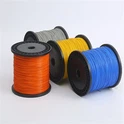
As a supplier of PTFE insulated wire, I often encounter inquiries about the mechanical strength of this remarkable product. PTFE, or polytetrafluoroethylene, is a synthetic fluoropolymer known for its outstanding chemical resistance, high-temperature stability, and low friction coefficient. When used as an insulation material for wires, it offers a range of benefits, but understanding its mechanical strength is crucial for various applications.
Many customers may wonder why there is such a large difference in strength between different manufacturers for PTFE electrical wire? Based on our years of production and supply experience, the core lies in two points: material purity and production process. As a source supplier, we have always insisted on using high-purity PTFE without adding any impurities, and then forming it through sintering process, which can minimize the strength attenuation caused by ordinary melting process. This is also the key to the stable tensile strength of our PTFE insulation wire in the industry. On the other hand, some low-priced products on the market may add recycled materials or impurities in order to reduce costs, and their tensile strength may not even reach 10MPa. When wiring with slight force, the insulation layer will crack, which can easily cause equipment short circuits and pose safety hazards in the later stage.
Some people may still have little concept of "mechanical strength". Below, based on several customer scenarios that I have most contact with in my daily life, I will explain to you:
- One of the most common scenarios is the wiring of robotic arms in industrial automation workshops. The robotic arm rotates and bends tens of thousands of times every day, and the cables move back and forth along with it. It has to withstand continuous friction and repeated pulling and pulling. We have a customer who specializes in automated production lines. They have previously used PTFE wires from other manufacturers, but within six months, they frequently shut down for repairs due to insulation layer wear and tear. Later, we changed our cables and the elongation at break can reach over 300%. With the flexible bending of the robotic arm, there is no problem, even with long-term friction, there will be no wear or breakage. It is much more durable than ordinary PVC cables, which have an elongation of only 50% to 100% and cannot withstand the high-frequency movement of the robotic arm.
- Speaking of the aerospace and high-temperature equipment fields, these extreme environments have higher requirements for cables. It should be able to withstand long-term high temperatures of 260 ℃ and also withstand high-frequency vibrations during equipment operation. We previously supplied to a aerospace related customer whose equipment needed to be used near the rocket engine compartment in a particularly harsh environment. According to actual testing, our PTFE electrical wire can maintain a mechanical strength of over 80% at a high temperature of 260 ℃, with stable compressive and impact resistance. Even in high-frequency vibration environments, it can transmit signals stably. This is also the core reason why PTFE electrical wire can be widely used in aircraft harnesses and satellite communication cables.
- There is also a petrochemical workshop, which not only needs to resist the corrosion of strong acids and alkalis, but also needs to withstand the friction and compression caused by equipment operation, resulting in particularly fast losses of cables. We have an old customer in the chemical industry who used to replace ordinary insulated wires in less than a year, resulting in particularly high maintenance costs. After replacing our PTFE insulated wire, not only does it have excellent corrosion resistance, but its wear resistance also far exceeds that of ordinary cables. Under continuous friction conditions, its service life can reach 3 to 5 times that of ordinary cables, and there is almost no need for frequent replacement in the later stage, greatly reducing maintenance costs.
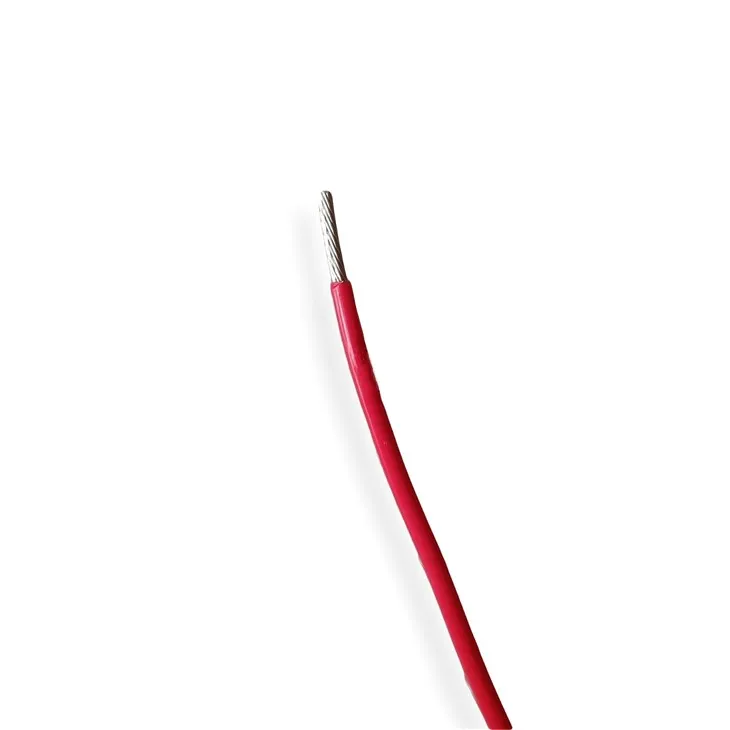
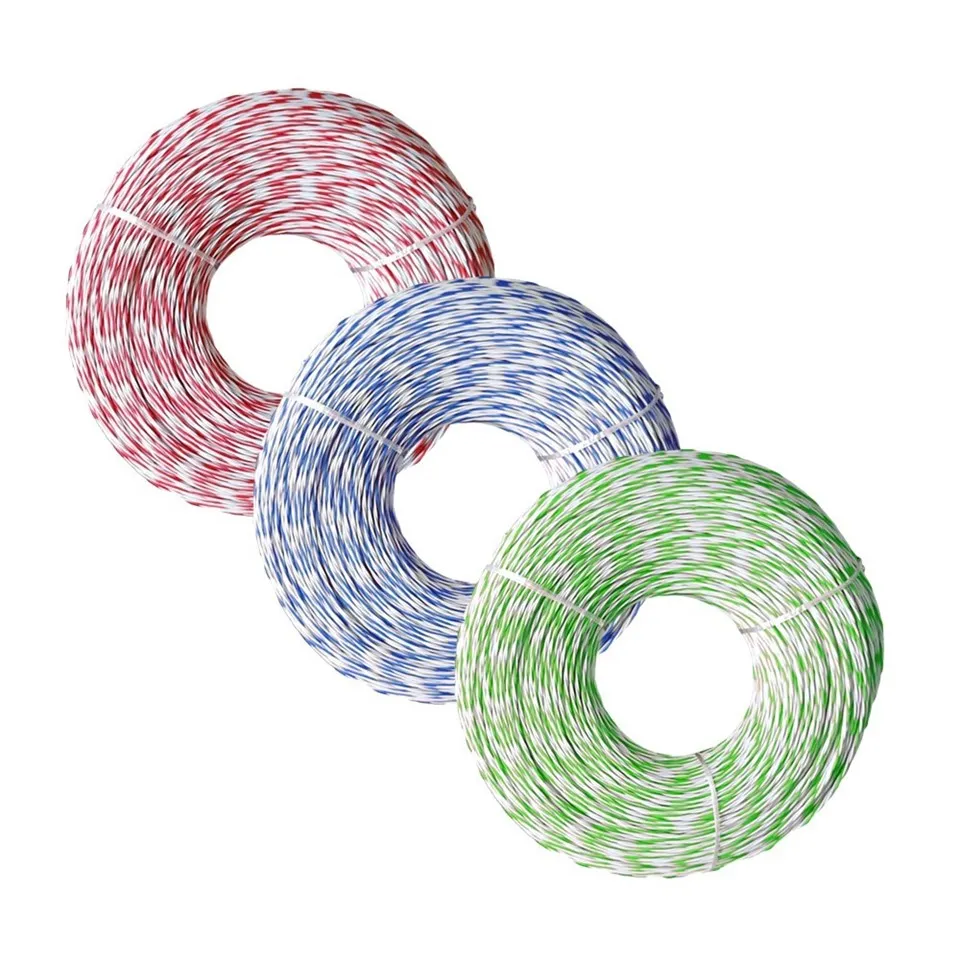
Here is another small experience to share with everyone. When choosing PTFE insulated wire, don't just focus on the tensile strength indicator, be sure to choose according to your actual working conditions. For example, if you use it in a low-temperature environment such as a freezer, you need to choose a model with good low-temperature toughness, otherwise the cable is prone to brittle fracture in an extremely cold environment of -200 ℃; If used in dynamic friction scenarios such as conveyor belts, the focus should be on wear resistance and elongation at break, otherwise it will wear out soon; If it is a high-voltage scenario, it is necessary to balance mechanical strength and insulation performance.
Finally, to put it simply, the mechanical strength of PTFE insulated wire can fully meet the needs of most industrial, electronic, aviation and other scenarios with conventional models, while high-quality modified models can adapt to more extreme working conditions. When choosing a line, don't just look at the price. Prioritize selecting suppliers with pure quality and standardized production to avoid equipment failures and repeated repairs due to insufficient mechanical strength, which may result in more wasted money.