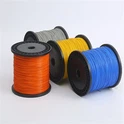
UL1516 tinned ETFE insulated wire is considered an "old acquaintance" in the fields of industry, home appliances, and electronic equipment. What people are most concerned about is whether it can cooperate well with other electrical components. Today, instead of giving rigid professional lectures, I will use practical cases that I have encountered to explain this matter in layman's terms, helping you avoid selection detours and improve production efficiency.
Let me give you a peace of mind first. This wire is essentially a "versatile" model, made according to UL758-2010 and UL1581-2009 standards. It has both compatibility and stability, and can seamlessly connect most conventional and high-end electrical components. However, on the other hand, compatibility is not absolute. Different component specifications and usage scenarios will result in varying adaptation effects, which is also what I want to focus on discussing with everyone today.
Why can UL1516 adapt to so many components?
To determine whether a wire is compatible with other components, one must first understand its "foundation". The core structure of UL1516 wire is very simple, which is "tinned copper conductor+ETFE insulation layer", but the characteristics of these two parts precisely determine its adaptability. Those who have used it know that this configuration is really practical.
First, let's talk about tin plated copper conductors. They are twisted and bundled structures with specifications ranging from 36AWG to 20AWG, which can meet the needs of different equipment. I have previously contacted a client who specializes in precision electronic equipment, and they have provided feedback that the tin plating layer of this wire is particularly practical. It not only prevents corrosion, but also makes welding very easy. Unlike some bare copper conductors, which are prone to virtual soldering and desoldering during welding, this wire basically does not have such problems. The contact resistance is also small, and the connection is particularly firm. Especially in humid environments with chemical media, the advantage is more obvious, as signal distortion is not caused by conductor oxidation, which is really worry free.
Looking at the ETFE insulation layer again, some people may not be familiar with it. In fact, it is an ethylene tetrafluoroethylene copolymer, which can be called a "versatile expert in the insulation industry". I have been in this industry for so long and have seen many insulation layers that are either temperature resistant or prone to wear and tear. This ETFE insulation layer is different, able to withstand extreme temperatures ranging from -80 ℃ to 105 ℃. Whether it is a low-temperature workshop in the north or an industrial equipment operating at high temperatures, it can remain stable. And it is resistant to wear, chemical solvents, oil, and has passed UL VW-1 vertical flame retardant testing, meeting ROHS/REACH environmental standards, so you don't have to worry about environmental compliance issues.
More importantly, its insulation layer thickness can be flexibly adjusted, far exceeding the requirement of 0.10mm in UL1516 standard. Regardless of the size of the component interface, it can basically match. To be honest, the "hardware configuration" of this wire is designed to adapt to different types and working conditions of electrical components, and the compatibility foundation is particularly solid.
Adaptation to core electrical components : not 'seamless compatibility', but 'conditional adaptation'
Matching with terminals : More than 90% of conventional terminals can be adapted, and welding and crimping are reliable
Terminals are like a "bridge" between wires and other components, and whether the connection is good or not directly affects the stability of the equipment. The key to matching UL1516 wires and terminals is to check the conductor specifications and tin plating layer. If these two points are done well, there will be basically no problems.
For example, the commonly used pin terminals in household appliances and electronic devices belong to the welding type terminals. The tin plated copper conductor of this wire has excellent welding performance, moderate melting point, and will not cause the tin plating layer to fall off during welding, nor will there be virtual soldering or desoldering - this is much stronger than bare copper conductors. I used to have a customer who used bare copper conductors in household appliances and often had poor welding. After switching to this one, the repair rate was directly reduced, especially for internal wiring of precision electronic devices.
The commonly used crimping terminals in industrial equipment and control cabinets can also be perfectly adapted. The conductor of the twisted structure can tightly adhere to the crimping surface of the terminal, resulting in a particularly tight contact and stable resistance after crimping. Moreover, the ETFE insulation layer has good toughness and will not easily break or fall off during crimping, thus avoiding the hidden danger of short circuit.
Here is a small reminder that many people tend to overlook: when selecting terminals, be sure to match the AWG specification of the wire. For example, for 20AWG wires, do not use terminals that are compatible with 20AWG wires, otherwise the crimping will not be firm, or the insulation layer will be squeezed out, which will add chaos.
Paired with connectors : No need to add extra accessories, can withstand high and low temperatures, and multiple environments
The function of a connector is to allow wires, equipment, and modules to be detachable and connected without the need for soldering, and to facilitate subsequent maintenance. Its compatibility with wires mainly depends on the size of the insulation layer, temperature resistance, and chemical stability, which UL1516 wires have done very well in.
The insulation layer thickness of this wire is particularly uniform, approximately between 0.12~0.15mm, and can be adjusted according to needs. The outer diameter is also very precise, with fixed outer diameters corresponding to different AWG specifications, and the error control is very strict, only ± 0.10~± 0.15mm. When inserted into a conventional connector interface, it will not be too loose or too tight, and it is particularly smooth.
I have previously worked with a customer who specializes in industrial automation equipment. Their equipment operates in high temperature environments all year round, and the insulation layer of the wires used before tends to soften, resulting in poor connector contact. After replacing with UL1516 wires, this problem has never occurred again - the temperature resistance of ETFE insulation layer is just suitable for the working temperature of the connector, and it can remain stable even in high temperature environments for a long time.
And its resistance to chemical corrosion and oil is also very good. For example, in scenarios with fuel, acidic and alkaline media, such as industrial equipment and automotive electronic auxiliary equipment, the insulation layer will not age or crack, and the compatibility stability of the connector will not be affected. Whether it is board to board, wire to board connectors, or conventional industrial connectors, it can be used directly without the need for additional accessories, saving a lot of procurement and assembly costs.
Paired with switches and relays : current matching for safer use
Switches and relays are the "control centers" of circuits, equivalent to the "switch buttons" of equipment. When paired with wires, the most critical factors are the current carrying capacity and insulation matching, which directly affect the safety of the equipment and cannot be taken lightly.
The conductor resistance of UL1516 wire is very standardized. At 20 ℃, the average conductor resistance of 20AWG is 36.70 Ω/Km, and that of 30AWG is 361.00 Ω/Km. It can match the current requirements of most conventional switches and relays, adapt to a rated voltage of 30V, and meet the current transmission requirements of internal wiring of the equipment without any problems. Whether it is a small control switch in household appliances or a relay used in industry, it can stably transmit current without overheating due to current overload. I have conducted multiple tests on this and it is particularly reliable.
In addition, the ETFE insulation layer has VW-1 flame retardant certification and high insulation strength, which is particularly suitable for the insulation requirements of switches and relays. Even if the switch frequently starts and stops, it will not break through the insulation layer, which can effectively avoid safety hazards such as short circuit and leakage. Especially for the internal wiring of lighting fixtures and electromechanical equipment, using this wire can greatly improve the safety and reliability of the equipment, which is also one of the core reasons why many customers choose it.
Paired with sensors and temperature control components : stable signal, suitable for precision scenarios
Sensors and temperature control components, such as temperature sensors and pressure sensors, have higher requirements for wires - not only must they be connected stably, but they must also not interfere with signals, as these components transmit weak signals. A little interference may cause equipment false alarms and affect normal operation.
UL1516 wires can precisely meet this requirement. The dielectric constant of ETFE insulation layer is very low, which can effectively reduce signal loss and interference, ensuring accurate transmission of weak signals from sensors without signal distortion. Moreover, tin plated copper conductors have good conductivity and stable resistance, making them particularly suitable for the low current transmission needs of sensors, especially for precision scenarios such as temperature sensing where the lead out connection wire is used with peace of mind.
I used to have a customer who worked on temperature control equipment. Their equipment sometimes had to work in low temperature environments. The wires and insulation layers used before were prone to brittle cracking, and the conductors also oxidized, causing unstable sensor signals. After switching to this wire, stable compatibility can be maintained in both low and high temperature environments. The false alarm rate of the equipment has been greatly reduced, and the after-sales pressure has also been greatly reduced.


Easy to overlook adaptation limitations and precautions
Although UL1516 wires have strong compatibility, there are a few small details that are not paid attention to in actual selection and use, which may lead to adaptation failure and even affect equipment performance. Based on my usual experience, I would like to remind everyone.
Firstly, it is about specification matching. The AWG specification and conductor structure (single or bundled) of the wire must correspond to the interface specifications of the component. For example, for a 30AWG wire, do not pair it with a terminal that is compatible with a 20AWG wire, otherwise it is easy to have poor contact. This may seem simple, but many people fall for it.
Next is environmental adaptation. If the equipment is used in high temperature, strong chemical corrosion, and high humidity environments, it is necessary to confirm that the temperature and corrosion resistance of the components match the UL1516 wires. For example, the temperature resistance of the components should be at least ≥ 105 ℃. Otherwise, over time, the insulation layer will age and the component contact will also fail, making maintenance particularly difficult in the later stage.
There is also certification compliance. The UL1516 wire itself has passed UL certification, and it is recommended to choose components that comply with relevant standards such as UL and CUL, otherwise it may affect the certification pass rate of the entire equipment, and the early research and production will be in vain.
Conclusion : UL1516 wire compatibility, compatible but not "all rounder"
Returning to the initial concern of everyone : Is UL1516 tinned ETFE insulated wire compatible with other electrical components? The answer is very clear: yes, and the adaptability is particularly strong.
Whether it is core components such as terminals, connectors, switches, or sensors, they can be seamlessly matched to meet the needs of home appliances, lighting fixtures, industrial automation equipment, or internal wiring of electronic devices. Moreover, its combination of tin plated conductor and ETFE insulation layer precisely solves the pain points of poor welding of conventional wires, aging of insulation, and signal interference. It can also adapt to complex working conditions and help enterprises reduce after-sales repair rates and save costs.
If your device has special operating conditions, such as extreme high temperatures, strong corrosive environments, or is unsure about specific components and their compatibility details, feel free to leave a message for consultation. Based on years of experience, I can help you accurately match specifications and avoid selection pitfalls.