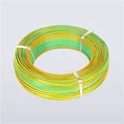
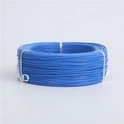
Non-standard cable refers to wire and cable products that do not meet the national testing standards, and its production and sale of industry chaos. These products due to poor quality materials, conductor resistance, wire diameter specification is insufficient and backward technology and other issues, easy to trigger a short circuit, overload heating and even fire. Below I will detail the common pitfalls of non-standard cables, safety hazards and effective methods of identification.
Definition and common types of non-standard cables
Non standard cables refer to wires and cables that are not produced according to national standards, with high conductor impurities, high resistance, wire diameter smaller than the national standard requirements, insulation layer made of inferior materials, and production processes that do not meet standards. According to the search results, there are several common types of non-standard cables:
Shrinkage of conductor cross-sectional area: If the actual cross-sectional area of a wire with a nominal area of 4mm ² is only 2.5mm ², it leads to an increase in resistance and excessive heat generation when current passes through.
Impurity doping: Using inferior copper materials containing impurities (such as iron and zinc) reduces conductivity and accelerates copper core oxidation corrosion.
Use of flammable materials: Replace flame retardant materials with ordinary PVC, which releases a large amount of toxic gases (such as hydrogen chloride) during combustion, and the fire spreads rapidly.
The insulation layer thickness does not meet the standard: the national standard requires the insulation layer thickness to be ≥ 0.6mm, while non-standard products may only be 0.3mm. They are prone to softening and breakdown at high temperatures.
Insufficient length: The standard line is about 100 meters long, while the non-standard line is mostly only about 90 meters long.
Non-standard cable safety hazards and common pitfalls
Non-standard cables in use may bring serious safety hazards, according to the Ministry of Emergency Management statistics, in the domestic major fire cases, fires caused by cables accounted for more than 50% of all types of fires in the first place. Specific safety hazards include:
1. Material defects
Shrinkage of copper core cross-sectional area: resulting in increased resistance, excessive heat generation when current passes through, easily triggering line overload and fire.
Impurity adulteration: reduced conductivity, accelerate the oxidation of the copper core corrosion, shorten the service life of the cable.
The use of flammable materials: combustion releases a large number of toxic gases, and the rapid spread of fire.
Insulation thickness is not up to standard: it is easy to be softened and punctured under high temperature, which will lead to discharge accident.
2. Production process loopholes
Stranding process defects: loose stranding of conductors, making the cable less flexible, easy to break or local overheating.
Uneven insulation extrusion: the thickness of the insulation layer fluctuates greatly, there is a local weak point, easy to be pierced.
3. Falsification of inspection and testing
Falsification of inspection reports: obtaining false 3C certification through illegal means to avoid verification of key indicators.
Fuzzy marking: not labeled according to the requirements of the factory name, specifications and other key information, consumers can not trace the quality issues.
Identification methods for non-standard cables
1. View the complete logo
Check if there are quality system certification certificates, certificates of conformity, and other documents.
Observe whether the key data such as trademark, specifications, voltage, etc. are clearly printed on the wire.
Pay attention to the cross-sectional color of the copper core of the wire. The high-quality purple copper has a bright and soft color.
2. Identify the workmanship of the cross-section
Observe whether there are bubbles or core deviation in the cross-section of the insulation layer.
The color of high-quality copper wire is bright and reddish, with a soft touch; Poor quality copper wire generally has a purple black color, with a tendency towards black, yellow, or white.
3. Test insulation feel
Take a wire head for bending testing. High quality wires should have a soft feel and good fatigue resistance.
There should be no cracks on the insulator. The insulation layer of fake and inferior wires is mostly made of recycled plastic, which has poor resilience.
4. Weighing comparison
High quality wires and cables have a weight within the specified range every 100 meters.
For example, a 1.5mm ² plastic insulated single stranded copper core wire should weigh between 1.8-1.9 kilograms per 100 meters.
5. Look at the copper material
Qualified copper core wires should have a purple red color, luster, and a soft touch.
Fake and inferior copper core wires have copper cores that are purple black, yellowish or whitish, with many impurities and poor mechanical strength.
6. Price comparison
Due to the low production cost of counterfeit and inferior wires, the selling price is often significantly lower than the market price.
Consumers must compare the market average price when making a purchase, and should not try to get cheap for a while.
Summary and Recommendations
Although non-standard cables are cheap, they have serious safety hazards and may cause accidents such as fires and electric shocks. Consumers should pay attention to:
Choose legitimate channels: purchase from qualified distributors to avoid purchasing products from unknown sources.
View complete labeling: Ensure that the product has clear information such as factory name, address, inspection stamp, production date, etc.
Conduct simple testing: preliminarily judge the product quality through observation, bending, weighing, and other methods.
Comparing market prices: Products that are significantly lower than the average market price are likely to have quality issues.
Request for testing report: Require the supplier to provide a comprehensive testing report issued by a third-party testing agency.