Material and Manufacturing Optimization
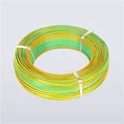
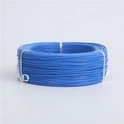
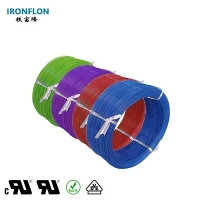
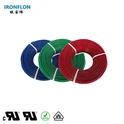
High Performance Insulation Materials: High temperature and water tree aging resistant materials such as XLPE\PTFE\PFA\FEP\ETFE\Silicone are used, whose long-term allowable working temperature can reach 90℃, significantly better than PVC (70℃).
Strict process control: Through UHF partial discharge detection, X-ray and other online monitoring technologies, we ensure that the insulation layer is free of defects and improve the quality of cables leaving the factory.
Installation and laying key
Avoid mechanical damage
Professional laying equipment usage: Cable conveyors and other specialized equipment must be used for laying operations, which can accurately control traction and laying speed to ensure that cables are not damaged.
Key points of protection:
Prevent compression: Avoid external pressure on the cable during installation, which may cause deformation of the insulation layer or damage to the conductor.
Prevent distortion: Keep the cable in a natural bent state to avoid excessive twisting that may cause damage to the internal structure.
Prevent excessive stretching: Strictly control the traction force to avoid the conductor being stretched or the insulation layer cracking.
Environmental adaptation measures
Selection of anti-corrosion sheath:
The protective sheath material with corresponding corrosion resistance level should be selected according to the soil pH value of the laying environment.
For high humidity environments, sheath materials with excellent moisture resistance should be selected.
Special treatment for severe cold regions:
Cable slack must be reserved (appropriate slack) to counteract the stress caused by low-temperature shrinkage.
When calculating relaxation, local minimum temperature and historical extreme climate data should be taken into account.
Moisture proof sealing requirements
Protection in damp areas:
Strict waterproof sealing treatment must be implemented, including critical parts such as joints and terminals.
Waterproof treatment should reach IP68 or higher protection level standards.
Potential risk prevention:
Moisture intrusion can cause short circuit faults between conductors.
Long term humid environments may cause the phenomenon of tree branches (dendritic discharge channels formed inside insulation materials), significantly reducing the service life of cables.
These measures together constitute the quality assurance system for cable laying engineering, and each requirement is based on a large number of engineering practices and fault case analysis. Strict implementation can ensure the long-term reliable operation of the cable system.


Operation and Maintenance Strategy
Intelligent monitoring: Deploy distributed fiber optic temperature measurement (DTS) and partial discharge (PD) sensors. The DTS system can monitor the temperature distribution of the whole cable in real time, and the PD sensors can detect the local discharge signals generated by insulation defects, so as to realize dual monitoring through these two sensors.
Load management: Avoid overloaded operation, where copper conductor resistance increases with temperature and may trigger a vicious cycle.
Periodic inspection: Focus on checking problems such as oxidization of joints and brittleness of insulation, and timely replacement of aging parts.
Environmental risk prevention and control
High temperature protection: Avoid direct sunlight, XLPE cables are preferred for high temperature environments.
Low temperature response: Cold resistant sheath materials (such as cold resistant PVC) can prevent low-temperature embrittlement.
Riot and rodent prevention: Outdoor cables need to be equipped with protective sleeves and rodent prevention measures should be taken.