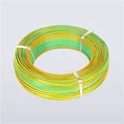
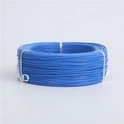
For industrial equipment and precision instruments, selecting the right wires and cables is like choosing the "lifeline" for the equipment - especially in extreme scenarios such as high temperature and corrosion. Ordinary wires are prone to aging and short circuiting, which not only delays production but may also pose safety hazards.ETFE high temperature electrical wire are the first choice for solving such problems. Today, let's talk about the advantages of ETFE Wire and how to choose them.
Why can ETFE High Temperature electric wire handle high temperatures?
First, clarify two core concepts: high-temperature electric wire refer to wires that can operate stably at temperatures exceeding the normal ambient temperature (usually above 70 ℃), while ETFE electric wire are high-temperature wires that use ETFE (ethylene tetrafluoroethylene copolymer) as the insulation layer. The two are in a "category+subdivision" relationship. But ETFE electric wire stand out not because they have been exposed to high temperatures, but because of their own hard core material advantages.
ETFE material can be understood as a "durable and flexible protective shield". Compared with ordinary PVC and even other fluoroplastics, its advantages are very prominent, such as:
- Wide temperature resistance range and full stability : Unlike ordinary wires that soften and age when exposed to high temperatures, ETFE electric wire can work in environments ranging from minus tens of degrees Celsius to over a hundred degrees Celsius for a long time, and some compliant products can even cope with higher instantaneous temperatures. Whether it is a stuffy equipment compartment, a cold outdoor scene, or an industrial workshop with large temperature fluctuations, it can maintain stable performance and will not easily experience insulation layer cracking or conductive faults.
- Corrosion resistance, aging resistance and longer service life : in the industrial scene, it is inevitable to encounter oil stains, chemical reagents, wet water vapor, and the insulation layer of ordinary wires is easy to be eroded, while ETFE material can resist the corrosion of strong acids, strong alkalis, and organic solvents, and can resist ultraviolet radiation. Long term use will not embrittlement and aging. This means that the replacement frequency of equipment wiring is significantly reduced, which saves costs and reduces trouble.
- Easy to install, easy to process, and highly adaptable : Compared to some high-temperature wires that are hard and not easily bent, ETFE electric wire have good flexibility and a small bending radius. Whether it is compact wiring inside the equipment or mechanical arm circuits that require frequent movement, they can be easily adapted. Moreover, its insulation layer has a uniform thickness and is easy to peel and cut, which can improve construction efficiency during installation and reduce the risk of malfunctions caused by improper processing.
- Environmental compliance and adaptation to global standards : Nowadays, countries have increasingly strict requirements for environmental protection. ETFE material itself is halogen-free, low smoke, and does not release harmful gases when burned, complying with EU RoHS and other environmental directives. If you need to sell your product to multiple countries, choosing ETFE electric wire can reduce compliance risks without having to change wiring schemes separately for different markets.


ETFE insulated high-temperature wire adaptation scenario
Industrial manufacturing and automation
Steel smelting, plastic processing, CNC machine tools and other equipment generate a large amount of heat during operation, and some areas have high temperatures throughout the year, which may also be accompanied by oil and metal debris pollution. ETFE insulated wires can withstand high temperatures during equipment operation and resist oil contamination, making them particularly suitable for wiring critical parts such as robot arms, conveyor belts, and heating furnaces. For example, the robotic arm needs to be frequently twisted and bent, and the flexibility and wear resistance of ETFE insulated wires ensure that the circuit is not interrupted, avoiding the entire production line from stopping due to circuit faults.
In the field of new energy
Photovoltaic inverters, energy storage battery modules, and battery compartments for new energy vehicles are typical high-temperature scenarios - batteries generate heat during charging and discharging, and enclosed spaces make it difficult to dissipate heat, requiring extremely high temperature resistance and insulation of wires. ETFE insulated wires can withstand the high temperature environment of battery compartments and adapt to high-voltage transmission needs. At the same time, their low smoke and halogen-free characteristics can also improve the safety factor of equipment. Nowadays, many high-end new energy vehicle and photovoltaic companies have made ETFE insulated wires standard.
Aerospace and Precision Electronics
Scenes such as aircraft engine compartments and satellite equipment not only have extreme temperatures, but also have strict requirements for the weight and stability of electrical wires. ETFE material has low density and light weight, which will not add too much burden to the equipment. At the same time, it can maintain stable performance in the severe temperature difference between high altitude and low temperature, and high engine temperature, ensuring stable transmission of signals and power. In addition, precision electronic devices such as semiconductor equipment and medical instruments have narrow internal wiring spaces and concentrated temperatures, and ETFE insulated wires with fine diameter and high temperature resistance can also be perfectly adapted.
Chemical Industry and Marine Environment
The reaction vessels and distillation towers in chemical plants not only have high temperatures, but also come into contact with various corrosive gases and liquids; Marine equipment must face issues of high humidity and salt spray corrosion. The corrosion resistance of ETFE insulated wires can resist these erosions, avoid safety accidents caused by line short circuits, and extend the service life several times longer than ordinary high-temperature wires, especially suitable for equipment that operates in harsh environments for a long time.


Purchasing must see: Choosing the right ETFE wire is crucial
When selecting wires, one should not only focus on the three words "high temperature resistance", but also consider their own needs, certification standards, and product details to avoid pitfalls.
Clearly define the scenario requirements and avoid blindly pursuing "high parameters"
The temperature and voltage resistance parameters of different ETFE wire vary. For example, some are suitable for long-term operation at 150 ℃, while others can withstand instantaneous high temperatures of 200 ℃. There is no need to blindly pursue the highest parameters - the higher the parameters, the higher the cost. Matching with one's own scenario is the most cost-effective. Before purchasing, it is important to clarify the following questions: What is the long-term operating temperature of the equipment? Do you have additional requirements such as chemical corrosion and frequent movement? What is the required voltage level to withstand? By clarifying these, we can narrow down the selection range and avoid wasting money unnecessarily.
Identify international certifications and avoid "pseudo compliant" products
Foreign markets have strict safety standards for wires and cables. When purchasing, it is important to identify authoritative certifications to avoid buying products that do not comply with local regulations. Common certifications include these:
- UL certification : the core certification for the North American market, such as UL 758, UL 10109 and other standards, which have clear requirements for the temperature resistance, flame retardancy, and insulation performance of ETFE high temperature electrical wire. Only products that pass the certification can enter the US and Canadian markets.
- CE certification : The entry certificate for the EU market must comply with the Low Voltage Directive (LVD) and the Electromagnetic Compatibility Directive (EMC) to ensure safe use of the product within the EU without causing interference to other devices.
- RoHS certification : Environmental certification, limiting the content of harmful substances, is now mandatory in countries such as the European Union, Japan, and South Korea. Products without this certification are difficult to enter the mainstream market.
Note: During procurement, suppliers can be requested to provide certification certificates and testing reports to verify whether the certificate number and product specifications are consistent, in order to avoid encountering pseudo compliant products with "labeling certification".
Pay attention to detail quality and avoid hidden defects
The quality differences of ETFE high temperature electrical wire are often hidden in details. When purchasing, it is important to pay attention to these two points: first, the conductor material should be given priority, with tin plated copper and silver plated copper conductors being preferred. These conductors have good conductivity, oxidation resistance, can reduce resistance heating, and extend service life; The second is the insulation layer process. The insulation layer of high-quality ETFE electrical wire is uniform without bubbles, with a smooth surface, and will not turn white or crack when bent by hand. However, inferior products may have problems with uneven insulation layer thickness and mixed materials, which can easily cause breakdown in high temperature environments.


ETFE electric wire vs other high temperature electric wire
In addition to ETFE electrical wire, there are also high-temperature wires made of materials such as silicone rubber and PTFE on the market, which many people struggle with when purchasing. Here's a simple comparison to help you make quick decisions:
- Compared to ETFE electrical wire : Silicone rubber wires have good flexibility, but their corrosion resistance and wear resistance are not as good as ETFE electrical wire. They are suitable for scenarios with slightly higher temperatures and no corrosion, and have a relatively lower price; If it is an extreme scenario with corrosion and high wear, ETFE electrical wire are more durable.
- Compared to PTFE electrical wire : PTFE electrical wire have stronger temperature resistance, but their texture is harder and less prone to bending, making them more difficult to process and install, and they are also more expensive; ETFE electrical wire have a better balance between temperature resistance and flexibility, with higher cost-effectiveness, making them suitable for most industrial scenarios.
Simply put, if your scenario is just ordinary high temperature without complex additional requirements, silicone rubber wires can be used as an alternative; If it is a composite scenario of high temperature, corrosion, and frequent movement, ETFE electrical wire is the most cost-effective and practical solution; PTFE electrical wire are only considered for special scenarios with ultra-high temperature and low bending requirements.
Choose the right wires and cables, and provide equipment with 'safety insurance'
The core requirement for purchasing high-temperature wires has never been "cheap", but "stable, compliant, and durable" - after all, a wire failure can cause the entire production line to shut down, resulting in losses far higher than the cost of the wire. The reason why ETFE electric wire can become the preferred choice for extreme scenarios is precisely because they can take into account multiple advantages such as high temperature resistance, corrosion resistance, easy installation, and compliance, which can avoid the trouble of frequent replacement and compliance obstacles.
In general, when choosing ETFE high temperature electrical wire, first clarify the scene requirements, then identify international certifications, and finally check the quality of details, it can basically avoid most procurement misunderstandings. If ETFE wire can accurately match the usage environment of their own equipment, they can not only extend the service life of the equipment, but also indirectly reduce maintenance costs, making it a "cost-effective investment".