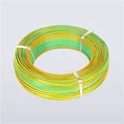
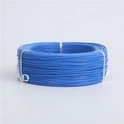
Selecting the right electrical wiring for high-heat environments is one of the most critical decisions in industrial equipment design, automotive engineering, and aerospace manufacturing. Standard PVC or polyethylene insulated wires and cables often degrade, crack, or melt when exposed to elevated temperatures, leading to short circuits, system failures, and expensive operational downtime.
What qualifies an electrical wire as "high temperature"? Generally, any cable engineered to withstand continuous operating temperatures above 150°C (302°F) falls into this category. However, picking the right option involves balancing thermal limits, electrical properties, conductor plating, and international compliance standards like UL.
This comprehensive guide outlines a step-by-step framework to help design engineers and sourcing managers select the optimal high-temperature wire insulation for their specific applications.
Define Your Operating Temperature Requirements
Before looking at material datasheets, you must establish the exact thermal conditions of your system. A common misstep in cable selection is evaluating only ambient room temperature while ignoring internal heating.
Continuous vs. Peak Temperature Limits
Continuous Operating Temperature: The maximum heat level the wire can endure indefinitely without degradation of its dielectric or mechanical integrity.
Peak Temperature (Short-Term Excursions): Brief heat spikes during power surges or transient environmental conditions.
Standard Temperature Classifications
150°C to 180°C: Suitable for motor lead wires, standard industrial sensors, and commercial appliances.
200°C to 260°C: The benchmark range for heavy industrial machinery, semiconductor equipment, automotive sensors, and aerospace systems.
450°C and Above: Required for extreme heat applications like industrial kilns, blast furnaces, and aerospace engine compartments.
Compare High-Temperature Insulation Materials
| Insulation Material | Max Temperature | Mechanical Toughness | Chemical Resistance | Common Use Case |
| PTFE (Polytetrafluoroethylene) | 260°C | High | Excellent | Aerospace, high-frequency RF, high-heat ovens |
| FEP (Fluorinated Ethylene Propylene) | 200°C | Good | Excellent | Long-run cabling, automotive sensors, oil & gas |
| ETFE (Ethylene Tetrafluoroethylene) | 150°C – 200°C | Superior (Cut-through) | Very Good | Avionics, high-wear industrial harnesses |
| Silicone Rubber | 180°C – 200°C | Moderate (Flexible) | Good | Tight bend-radius wiring, heating elements |
High-Performance Fluoropolymers (PTFE, FEP, ETFE)
Fluoroplastic insulation remains the industry standard for high-temperature wiring due to its exceptional thermal stability and non-flammability.
- PTFE (up to 260°C): Known for extreme chemical inertness and high dielectric strength. It is ideal for demanding environments where space and thermal limits are stretched to the max.
- FEP (up to 200°C): Unlike PTFE, FEP is melt-processable, allowing long continuous manufacturing lengths with high optical clarity and moisture resistance.
- ETFE (up to 150°C/200°C): Offers exceptional mechanical durability, impact resistance, and cut-through protection compared to softer fluoropolymers.
Select the Right Conductor & Plating Material
- Tin-Plated Copper (Up to 150°C): Cost-effective for mid-range heat applications; provides excellent solderability.
- Silver-Plated Copper (Up to 200°C–250°C): Excellent electrical and thermal conductivity. Ideal for high-frequency signal transmission and aerospace applications.
- Nickel-Plated Copper (Up to 250°C–450°C): Maximum protection against severe oxidation and chemical corrosion in extreme thermal environments.


Voltage, certification, processing adaptation, and three key points that need to be verified in procurement
- Voltage: Reserve a safety margin of at least 20% for the rated voltage; High frequency signal scenarios prioritize low dielectric loss fluoroplastic insulation to ensure signal stability.
- Safety certification: When exporting overseas, it is necessary to verify the UL certificate on the official website to prevent false labeling of wires and avoid customs seizure and project acceptance failure; Verify corresponding standards such as CQC for domestic projects.
- Processing adaptation: PTFE wire stripping is difficult; FEP and PFA are more suitable for automated wire stripping, and the processing difficulty needs to be evaluated in advance for large-scale production.
Common UL Fluoropolymer Cable Styles
- UL 1180: PTFE insulated hook-up wire rated for 300V and 200°C. Widely used in internal industrial equipment wiring.
- UL 1330: FEP insulated wire rated for 600V and 200°C. Excellent for continuous long-run industrial harnesses.
- UL 1516: ETFE insulated wire designed for high mechanical strength and reliable power transmission.
Zhejiang IRONFLON Wire&Cable Co., Ltd. offers a full range of PTFE/FEP/PFA/ETFE fluoroplastic high-temperature wires, all of which can be verified by UL certification on their official website. The conductors support tin plating, silver plating, and nickel plating, and can be delivered in bulk in standard stock or customized in small quantities. Our products are exported to multiple countries including Vietnam, Russia, Thailand, Peru, etc.
If you are unsure about the selection of high-temperature wire insulation, please send us your operating parameters. Based on extensive project experience, we can help you screen high cost-effective solutions, avoid selection errors, and reduce equipment maintenance costs in the later stage.