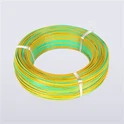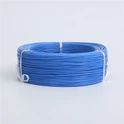
FEP insulated wire plays an important role in industrial equipment operating in high temperature, chemical contact, and harsh electrical environments. This type of wire uses fluorinated ethylene propylene (FEP) as the insulation material, which has excellent thermal stability, chemical corrosion resistance, electrical insulation performance, and low moisture absorption. These characteristics make it an ideal choice for internal wiring, power connections, and control circuits in various industrial environments.
With the continuous improvement of industrial machinery automation, the operating environment of equipment is becoming increasingly harsh, and the requirements for wire insulation materials are also increasing. FEP insulation layer can help conductors resist the effects of high temperatures, oils, solvents, humid environments, and various corrosive substances, making it highly practical for industrial equipment manufacturers and electrical system integrators.
Core Industrial Equipment Applications
| Applications | Equipment / System Type | Role of FEP Insulated Wire |
 Industrial heating and heat treatment industry |
Industrial ovens, industrial furnaces, drying equipment, heating elements, and temperature control systems | Provide high-temperature resistant electrical connections for heating elements and control circuits. Its thermal stability helps maintain the integrity of the insulation layer in environments close to the heating components. |
 Chemical and Petrochemical Industry |
Chemical reactors, fluid transfer pumps, metering and dosing systems, tank monitoring equipment, and chemical processing machinery | Provide electrical insulation connections in environments exposed to oils, solvents, acids, and other industrial chemicals. Its chemical corrosion resistance helps protect conductors from external environmental influences. |
 Industrial Automation and Robotics Industry |
PLC control cabinet, robot equipment, automated production line, sensors and actuators | Used as internal power lines, control lines, and signal lines. Its electrical insulation performance helps maintain reliable connections between controllers, sensors, and automation components. |
 Power generation and electrical distribution industry |
Generator components, electrical control panel, auxiliary power supply system, and distribution equipment | Provide insulation protection for internal electrical connections and auxiliary control circuits, suitable for equipment with high temperatures and harsh electrical operating conditions. |
 Aerospace and Defense |
Aviation electronic equipment, engine compartment sensors, and heavy-duty actuators | Capable of withstanding extreme vibrations, rapid temperature changes, and liquid contamination while minimizing the weight of seat belts. |
 Refrigeration and Industrial Cooling Industry |
Industrial refrigeration units, cooling machinery, low-temperature processing equipment, and temperature monitoring systems | Provide insulation protection for electrical connections and monitoring circuits, suitable for working environments with low temperature, humidity, and large temperature changes. |
 Instrumentation and Industrial Monitoring Industry |
Temperature sensors, pressure transmitters, flow meters, process monitoring instruments, and measurement control systems | Used as an internal signal connection line and electrical connection line. Its dielectric properties and low moisture absorption contribute to maintaining stable insulation performance in industrial monitoring environments. |
 Electronic and precision equipment manufacturing industry |
Electronic control modules, precision instruments, testing equipment, and compact electrical components | Provide a compact internal wiring solution with reliable electrical insulation performance, as well as the ability to withstand high temperatures and some chemical pollutants. |
UL certified FEP wire models

UL1330 FEP Insulated High Temperature Hook Up Wire (600V, 200°C)
Technical Profile: Rated for continuous operation up to 200°C and 600V, featuring a thicker insulation wall engineered for high-voltage dielectric integrity.
Differentiated Application: Ideal for internal wiring of heavy industrial heating equipment, commercial ovens, high-voltage power distribution cabinets, and high-temperature motors where both thermal spikes and elevated electrical loads occur simultaneously.
UL1332 FEP Insulated Tin-Plated Copper Wire (300V, 150°C)
Technical Profile: Rated for 150°C and 300V, offering a thinner, lighter insulation profile compared to UL1330 while retaining full FEP chemical and flame resistance.
Differentiated Application: Well-suited for compact electronic assemblies, precision instrumentation, sensor harnesses, and control panels where space and weight constraints are critical, and operating voltages remain within the 300V threshold.


UL1887 FEP Insulated Tin-Plated Copper Wire (600V, 150°C)
Technical Profile: Combines a 600V voltage rating with a 150°C thermal ceiling, utilizing tin-plated copper conductors paired with durable FEP insulation.
Differentiated Application: Specifically designed for industrial machinery exposed to humid or mildly corrosive atmospheres where conductor solderability and oxidation resistance are paramount, such as marine control systems, HVAC compressor assemblies, and automated factory switchgear.
Conclusion
From industrial heating systems, chemical processing machinery, to automation equipment, power distribution components, and industrial instruments and meters, FEP insulated wires provide a reliable material selection for electrical wiring in harsh industrial environments due to their thermal stability, chemical corrosion resistance, and electrical insulation performance.
The correct selection of wire products should be based on complete application requirements, including operating temperature, voltage, conductor structure, chemical contact environment, installation space, and relevant industry standards.
Collaborating with suppliers with extensive experience in manufacturing fluoropolymer wires can help equipment manufacturers obtain stable product specifications, customized wire structures, and reliable long-term project supply support.