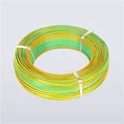
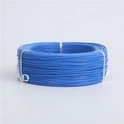
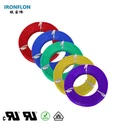
In the field of power transmission and electrical equipment, the selection of insulation materials directly affects the safety and service life of the system. This article will provide a detailed introduction to the temperature resistance levels, performance characteristics, and applicable environments of two common insulation materials - PVC (polyvinyl chloride) and XLPE (cross-linked polyethylene), to help you make the best choice based on your actual needs.
Temperature Resistance Rating
PVC insulation generally has a long-term operating temperature of 70°C and a short-term overload temperature of up to 90°C. The temperature resistance of PVC insulation is relatively low. Its relatively low temperature resistance is determined by the molecular structure of PVC.
Temperature Resistance Rating
The long-term working temperature of XLPE insulation material can reach 90 ℃, and the short-term overload temperature can reach 130 ℃. Through special processing, some XLPE materials can even work at 150 ℃.
Characteristics of PVC insulation performance
Good mechanical performance: with high tensile strength and wear resistance
Low price: the lowest cost among the three materials
Flame retardant performance: extinguishes immediately upon ignition, low smoke density index
Corrosion resistance: able to resist chemical corrosion such as acid and alkali, salt spray, etc
Characteristics of XLPE insulation performance
Excellent heat resistance: tight molecular structure, good stability at high temperatures
High current carrying capacity: Under the same cross-sectional area, the current carrying capacity of PVC cables is greater than that of PVC cables
Environmental safety: does not release toxic HCl smoke during combustion
Electrical performance: dielectric strength of up to 30kV/mm or more
Applicable Environment
PVC insulation material is most suitable for:
Power transmission at room temperature
Architectural lighting wiring system
Power cord for electric tools
Low voltage signal line inside household appliances
Applicable Environment
XLPE insulation is best suited for:
Distribution networks with a rated voltage of 0.6/1kV at industrial frequency and below
Fixed wiring in industrial installations
High-voltage battery pack connection lines for new energy vehicles
DC side cables for photovoltaic inverter
Comparison of two insulation materials
| feature | PVC insulation material | XLPE insulation material |
| Temperature Resistance Grade | 70℃ | 90℃ |
| Mechanical Strength | High | Medium High |
| Flexibility | Low | Medium |
| Cost | Low | Medium-high |
| Environmental friendliness | General | Good |
| Typical applications | Building wiring | High voltage cables |
Suggestions for selection
Normal temperature environment: Prioritize cost-effectiveness and choose PVC insulation.
Medium to high temperature environments: choose XLPE insulation to balance performance and cost.
Mobile equipment or special environments: choose rubber insulation to ensure flexibility and weather resistance.
High-voltage critical circuits: XLPE is a safer and more reliable choice
Extreme temperature environments: Consider specialty rubbers such as silicone rubber.
By understanding the properties of different insulation materials, you can choose the most appropriate material for your application, ensuring the safe and reliable operation of your power system.