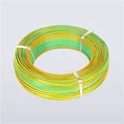
The scientific principle of wire heating
Heat generation from wires is an unavoidable physical phenomenon when an electric current passes through a conductor, and its core principle can be explained by Joule's Law. According to Joule's law, the heat generated by an electric current through a conductor (Q) is proportional to the square of the current (I²), the resistance of the conductor (R), and the time of energization (t), with the mathematical expression: Q=I²Rt.
From a microscopic point of view, when the current through the conductor, free electrons in the electric field under the action of directional movement, will collide with the conductor atoms, part of the kinetic energy into the thermal vibration energy of the atoms, manifested as the conductor heating. This energy conversion process essentially follows the law of conservation of energy - electrical energy is not completely converted into other forms of energy, the loss of part of the internal form of energy release.
In practical applications, the degree of wire heating mainly depends on three factors:
Current intensity: The larger the current, the more square the heat generated increases
Conductor resistance: The greater the resistance, the greater the heat generated at the same current
Power on time: The amount of heat generated is proportional to the power on time
The Hazards of Electrical Overload
Electrical overload is a phenomenon in which the current in electrical equipment or wiring exceeds the safe carrying capacity during operation. Its essence lies in the current density in the circuit exceeds the tolerance limit of the conductor material, resulting in conductor overheating and triggering physical damage such as carbonization of insulation layer and melting of metal.
Overloading can have the following serious consequences:
Insulation damage: sustained high temperatures can soften, age or even melt the wire insulation, increasing the risk of short circuits.
Fire Hazard: The heat generated by the overload may ignite surrounding combustible materials, which is one of the main causes of electrical fires.
Equipment damage: Overcurrent may cause internal components of connected equipment to burn out.
Safety Hazard: Severe overloading may trigger an arc discharge, resulting in a risk of electric shock to personnel.
Practical measures to prevent wire overload
1. Reasonably select wire specifications
According to the national standard GB/T 4706.1-2005, there are clear regulations on the safe current carrying capacity of wires of different specifications:
| Wire cross-sectional area (mm ²) | Long term safe current carrying capacity of copper core wire (A) |
| 1.0 | 8-12 |
| 1.5 | 12-15 |
| 2.5 | 16-25 |
| 4.0 | 25-32 |
| 6.0 | 32-40 |
When selecting wires, ensure that their current carrying capacity is greater than the maximum operating current of the circuit, and consider factors such as ambient temperature and laying method.
2. Install overload protection device
Circuit Breaker
Function Principle: When the current in the circuit exceeds the preset safety value, the circuit breaker will automatically trip and immediately cut off the circuit connection.
Protection Function: Effectively prevent safety accidents such as line overheating, equipment damage or even fire caused by excessive current.
Fuse
Working Mechanism: In the event of an overcurrent situation, the fuse inside the fuse will fuse due to the high temperature, forming an open circuit state.
Safety features: By physically breaking the circuit, it ensures that the electrical system will not be damaged by continuous overloading.
Residual current protector
Detection function: Continuously monitors changes in leakage current in the circuit.
Protection focus: Mainly for personal electric shock protection, when dangerous leakage current is detected it will quickly cut off the power supply.
3. Precautions for daily use
Electricity load management
Avoid centralized power consumption: Pay special attention not to use multiple high-power electrical devices (including but not limited to air conditioners, electric heaters, microwave ovens, etc.) at the same time to prevent circuit overload operation.
Line maintenance
Regular inspection: It is necessary to regularly check whether the wires have aging, insulation layer damage, overheating and discoloration at the joints, and promptly deal with any problems found
Standardize wiring
Safety guidelines: It is strictly prohibited to privately connect temporary lines, especially to avoid using substandard extension cords or multi hole sockets, which may become safety hazards.
Heat dissipation requirements
Wiring specifications: All wires should be kept in a naturally stretched state, and covering or excessive bundling is prohibited. Sufficient air circulation space must be ensured to facilitate heat dissipation.