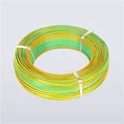
Hello,Dear friends! Whether you are engaged in engineering construction, equipment manufacturing, or responsible for procurement coordination, as long as you deal with "electricity", it is highly likely that you cannot bypass the key link of wires and cables. Among various types of wires, multi core wire and cable are definitely the "universal players" - from home decoration to industrial workshops, from household appliances to outdoor engineering, their presence can be seen everywhere.
As a supplier and manufacturer who has been deeply involved in the high-temperature wire and cable industry for many years, we receive various questions from overseas customers every day: "Which should we choose between multi core wire and single core wire?" "What scenarios should wires with different numbers of cores be used in?" "How to judge the quality of multi-core wire?" Today, let's talk about multi-core insulated wires, an easy to understand and purchase article.
Why is everyone talking about "multi core insulated wires"?
If you compare a single wire to a straw, then multi core insulated wires are like a bundle of neatly tied and individually protected "premium beverage tubes". Simply put, multi core insulated wires are two or more insulated wires wrapped in the same outer jacket. In complex electrical systems, this design is simply the "savior" of engineers.
Save space and say goodbye to 'spider webs'
Imagine if your device has 10 signal points and you pull 10 single core wires, the wiring site would be a disaster. Multi core insulated wires integrate them together, resulting in a neat appearance and increased installation efficiency by more than double.
Better durability and flexibility
The structural design of multi core insulated wires is usually more resilient than a single thick wire. For robotic arms or automated assembly lines that require frequent bending, multi core flexible cables can withstand millions of reciprocating motions without breaking.
Multi functional integration
We can integrate power lines, signal lines, and even control lines into the same cable. This "one-stop" transmission greatly reduces the risk of signal interference and the difficulty of later maintenance.
How to choose multi core electrical wire with different numbers of cores?


One of the core differences of multi core electrical wire is the "number of cores" - common specifications include 2-core, 3-core, 4-core, and special specifications of 5-core or more. The usage of different numbers of chips varies greatly, and choosing the wrong one not only wastes money, but may also pose safety hazards. Below is a detailed explanation for everyone:
2-core wire: basic model, preferred for simple scenarios
As the name suggests, it has two independent conductors inside, mainly used in simple scenarios where only power transmission is required and no neutral wire is needed. for example
- Basic lighting circuits and outdoor lighting fixtures (such as courtyard lights and street lamps) for households or commercial places;
- Power cords for small household appliances (such as desk lamps, small fans);
- Temporary power supply lines (such as temporary lighting on construction sites and temporary electricity for outdoor activities).
The advantages are obvious: simple structure, affordable price, easy installation, lightweight design is also suitable for short distance wiring. The only thing to note is that it does not have a neutral conductor and is not suitable for complex power supply systems.
3-core wire: versatile and widely used
This is the most commonly used multi core wire on the market, which includes three conductors: live wire, neutral wire, and ground wire. It can meet the needs of the vast majority of single-phase AC circuits and can be called a "universal player". Applicable scenarios include:
- Socket circuits for home and commercial spaces (such as wall sockets, office desk sockets);
- Power supply lines for commonly used household appliances such as air conditioners, refrigerators, and washing machines;
- Control panels for industrial equipment, HVAC ventilation and air conditioning systems;
- Daily power supply wiring for ordinary buildings.
The reason why it is so popular is because it can form a complete circuit loop, as well as ground protection, ensuring both safety and practicality. The only minor drawback is that it is slightly thicker and heavier than a 2-core wire, and the price is also slightly higher, but the cost-effectiveness is definitely worth it.
4-core wire: industrial version, suitable for three-phase equipment
There are 4 conductors inside, mainly used for three-phase power supply systems (without neutral wires) or scenarios that require the transmission of multiple control signals. Common uses:
- Three phase motors, water pumps, compressors and other equipment in industrial workshops;
- Control cabinets for large machinery and power supply lines for automated production lines;
- Industrial power supply scenarios that require balancing load distribution.
The advantage is that it can stably support the operation of three-phase equipment, with even load distribution and stronger durability (the outer sheath is usually thicker). However, its diameter and weight are larger than 2-core and 3-core wires, so more space needs to be left for threading and wiring, and professional personnel are also required for installation.
5-core and above wires: high-end models, exclusive for complex scenarios
Containing 5 or more conductors, typically a complete three-phase system (live wire+neutral wire+ground wire), or used in complex scenarios where power and multiple signals are transmitted simultaneously. Applicable scenarios:
- Complete power supply and control systems for large factories and automated workshops;
- Integrated cabling for data centers and intelligent buildings (simultaneously transmitting power and control signals);
- Specialized circuits for special equipment, such as medical devices and precision instruments.
The advantage of this multi core wire is that it can reduce the number of wiring, make complex circuits cleaner, and meet the precise power supply needs of high-end equipment. But the cost is relatively high, and the more cores there are, the less flexible it will be. It needs to be customized according to specific scenarios.
Multi core insulated wires vs single core insulated wires: how to choose?
Many customers may struggle with this question, but there is no absolute 'who is better', only 'who is more suitable'. Let's compare, everyone can choose according to their own scenario:
Flexibility: Multi Core Flexible Cables win
Multi Core Flexible Cables are as soft as "ropes", making them easy to use for turning, threading pipes, or frequently moving devices such as industrial robots and handheld tools. They are not easily broken even after repeated bending. Single core wire is like an "iron rod", hard and sturdy, and can only be used for fixing wiring (such as hidden wires in building walls). A few more bends may cause cracking.
Conductivity and heat dissipation: each has its own advantages
The conductor of a single core insulated wire is solid, with a large cross-section, and the transmission efficiency of DC and low-frequency currents is slightly higher. But there is a gap between the thin conductors of multi-core insulated wires, which has better heat dissipation effect and better high-frequency signal transmission performance (because high-frequency current mainly flows on the surface of the conductor, and the surface area of multiple thin cores is larger).
Installation and maintenance: Multi core insulated wires are more worry free
In complex wiring environments such as ceilings, pipelines, and equipment interiors, multi-core insulated wires are more efficient in threading and installation due to their flexibility, which can save a lot of construction time. However, during maintenance, it is necessary to check the condition of each core wire; Single core insulated wires are easy to install, but maintenance only requires checking one conductor, each with its own advantages.
Summarize the selection logic
- If it is fixed wiring (such as concealed wires on building walls and ceilings), the pursuit of the lowest cost is: single core insulated wires;
- If it is complex wiring, requires frequent movement, or internal device wiring: choose multi-core insulated wires;
- Household and commercial daily electricity consumption (sockets, household appliances): Priority should be given to 3-core insulated wires;
- Industrial equipment, three-phase power supply: choose 4-core or 5-core insulated wires.
Guide to Avoiding Pits: How to Obtain High Quality Cables at Low Cost?
There are various types of multi-core insulated wires on the market, with significant price differences. Accidentally purchasing inferior products can not only lead to malfunctions but also pose safety hazards such as short circuits and fires. As a supplier, we share with you three simple and easy to understand purchasing tips that can be judged without the need for professional tools:
Look at the conductor: the quality of the copper core is the core
Conductors are the "heart" of wires, and their quality directly determines their conductivity and service life. The current mainstream is copper core (although aluminum core is cheap, it has poor conductivity and is prone to oxidation, so it is not recommended for critical scenarios). Good copper cores have two characteristics:
- Positive color: High quality oxygen free copper is purple red with a soft and uniform luster, without blackening, whitening or yellowing (if the color is dark, it is likely to be recycled copper with many impurities);
- Good flexibility: Take a section of copper core and bend it repeatedly 4-6 times. High quality copper core is soft and tough, not easily broken, and will not show obvious creases (inferior copper core will break at once or crack after a few folds).
Check insulation and sheath: just touch and look to know
The insulation layer and outer sheath are the "protective clothing" of the wire, responsible for preventing leakage, aging, and mechanical damage. Judging good from bad is very simple:
- Touch sensation: The high-quality insulation layer and sheath have a tight and elastic texture, which will not deform when squeezed by hand, and will not leave white marks when scratched with a fingernail (inferior products use recycled plastic, which feels hard and brittle, and can be easily broken with a single scratch);
- Check uniformity: Cut a section of wire and observe whether the insulation layer is evenly thick, without pores or indentations, and whether the conductor is in the center (if the eccentricity is severe, it is a manifestation of poor craftsmanship and prone to local heating);
- Identification: The outer sheath of regular products will be clearly printed with the model, specifications, rated voltage, and certification marks (such as UL, CUL, etc.). If the information is unclear or there is no identification, it will be passed directly.
Look at the craftsmanship: details determine quality
The production process of multi-core insulated wires is crucial, especially the twisting of conductors and the extrusion of sheaths. A good multi-core insulated wire has tightly twisted fine conductors inside, which will not loosen (loose conductors are prone to local heating and oxidation); The surface of the outer sheath is smooth, without bubbles or cracks, and there will be no whitening or cracking after bending.
In addition, it is important to pay attention to the issue of "false labeling" - some unscrupulous merchants may label wires with actual specifications that are smaller as larger specifications (such as labeling 2.5mm ² wires as 4mm ²). Simple verification method: For wires of the same specifications, high-quality products will have a heavier weight. If they are clearly lighter when held in hand, it is likely to be a false label.
Common application scenarios of multi-core insulated wires: can be used in these places


Construction field (residential, commercial, office buildings)
This is one of the most commonly used scenarios for multi-core insulated wires. for example
- Indoor lighting circuit: Use 2-core or 3-core wires to flexibly adapt to complex wiring of ceilings and walls;
- Socket circuit: prioritize 3-core wire (live wire+neutral wire+ground wire) to ensure electrical safety;
- High power equipment such as air conditioners and water heaters: use 3-core or 4-core wires to meet power supply needs, while also having ground wire protection.
Industrial sector (factories, workshops, production lines)
The industrial scene requires higher durability and flexibility of wires, and the advantages of multi-core insulated wires are very obvious:
- Three phase motors, water pumps, and compressors: use 4-core or 5-core wires to stably transmit three-phase power;
- Automation equipment and industrial robots: use multi-core wires (usually 5 cores or more) to transmit power and control signals simultaneously, with neat wiring and adaptability to the frequent movement of equipment;
- Control panel and instrument circuit: using fine multi-core insulated wires for precise signal transmission and easy installation.
In the field of home appliances and equipment (home appliance manufacturing, equipment assembly)
Whether it is household appliances or industrial equipment, internal wiring cannot do without multi-core insulated wires:
- Household appliances (refrigerators, washing machines, air conditioners, microwave ovens): Use 2-core or 3-core multi core flexible cables to adapt to the complex structure inside the equipment and facilitate assembly;
- Handheld devices (drills, vacuum cleaners, irons): use multi core flexible cables, which are flexible and suitable for frequent movement and bending;
- Precision instruments (medical equipment, testing instruments): using multi-core insulated wires, stable signal transmission, and strong anti-interference ability.
Outdoor and Special Scenarios
In outdoor or special environments (such as high temperature, humidity, corrosion resistance), multi-core insulated wires can also be competent, as long as the corresponding special sheath material (such as flame-retardant PVC, polyurethane PUR, cross-linked polyethylene XLPE) is selected:
- Outdoor lighting and landscape lights: use waterproof and weather resistant multi-core insulated wires;
- Petroleum and chemical workshops: use multi-core insulated wires that are resistant to oil and corrosion;
- High temperature environment (such as near a boiler): Use heat-resistant multi-core insulated wires.
As a supplier, what can we offer you?


After discussing the knowledge of multi-core insulated wires, let me briefly introduce ourselves - as a manufacturer and supplier specializing in multi-core insulated wires, we have more than 20 years of industry experience. Our products are exported to many countries and regions around the world (including the United States, the United Kingdom, India, Brazil, etc.), whether it is conventional products or customized needs, we can meet your needs.
Full standard conventional products, available in stock
Our conventional multi-core insulated wires cover specifications of 2-core, 3-core, 4-core, 5-core and above. The conductor materials include pure copper and oxygen free copper, and the insulation and sheath materials can be selected according to the scenario (PTFE, XLPE, PFA, FEP, ETFE, etc.). The products have passed international authoritative certifications such as UL, CUL, VDE, RoHS, ISO9001, SGS, with guaranteed quality and sufficient stock. After placing an order, they can be quickly shipped without delaying your project progress.
Customized solutions, adapted as needed
Each customer's scenario may have special requirements - such as special core numbers, special sheath materials, special lengths, or the need to adapt to local voltage standards and certifications. We have a professional technical team that can customize exclusive multi-core insulated wire solutions according to your specific needs. From design, production to testing, we follow up one-on-one throughout the process to ensure that the product fully meets your usage requirements.
Comprehensive after-sales service, reliable cooperation
We deeply understand that the core of overseas cooperation is trust and guarantee. Whether it's early-stage consultation, sample testing, or later logistics and installation guidance, we have a dedicated team that responds 24/7. If there are any problems with the product, we will communicate and solve them as soon as possible, so that you can purchase without worry and use with peace of mind.
Choose multi-core insulated wires and remember these 3 points
1. Select the number of cores according to the scenario : 2 cores for simple lighting, 3 cores for daily power supply, 4 cores for industrial three-phase equipment, and 5 cores or more for complex scenarios;
2. Select products based on quality : check the color and flexibility of the copper core, feel the insulation layer, check the outer sheath label, and avoid inferior and falsely labeled products;
3. Find partners according to needs : find spot goods for regular products, customize for special needs, and choose qualified and experienced suppliers for easier cooperation.
If you are looking for suppliers of multi core electrical wire or have any questions about product selection or customization, please feel free to contact us at any time((luna@ironflon.com )! Whether it's sample application, technical consultation, or quotation docking, we will respond quickly and provide you with the most suitable solution. Looking forward to working together with you to create a safe and efficient electricity environment!