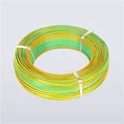
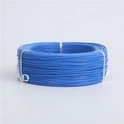
Adaptability, reliability, and long-term effectiveness have always been the core considerations for purchasing insulated wires and cables. When conventional insulated cables frequently "trip" under extreme conditions such as high temperature, corrosion, and strong interference, PTFE insulated wire, with their inherent performance advantages, have become a procurement necessity for multiple high demand industries, accurately matching diverse application scenarios from aerospace to consumer electronics.
As the "performance king" in high end cable, the core value of PTFE (polytetrafluoroethylene) insulated wires has long surpassed the "conductive transmission" function of ordinary cables. It breaks the application boundaries of traditional cables with stable high and low temperature resistance, strong chemical inertness, and excellent insulation performance, playing the role of "line guardian" in various harsh scenarios.
Core characteristics of PTFE wire: Multi scenario adaptation confidence
- The temperature resistance performance can be regarded as the industry benchmark - it can work stably for a long time in a wide temperature range of -200 ℃ to 260 ℃. Whether it is the high-temperature baking of spacecraft re-entry into the atmosphere or the low-temperature icing faced by polar equipment, the insulation layer will not soften or crack, and the conductor connection will always be reliable. This feature completely eliminates the limitation of conventional cables being "temperature sensitive" and adapts to complex working conditions with alternating high and low temperatures.
- Chemical inertness is irreplaceable - it is "immune" to almost all corrosive media such as aviation kerosene, seawater salt spray, acid-base solvents, industrial chemicals, etc. The insulation layer will not age or crack, solving the problem of "corrosion failure" of cables in chemical, shipbuilding and other fields from the root.
- The electrical performance is extremely stable, with low dielectric loss and high insulation resistance. Even in high-frequency signal transmission scenarios, it can effectively avoid signal interference and loss, ensuring the integrity of data transmission. At the same time, its flame retardant performance meets high-end industry standards, with no dripping during combustion and the ability to quickly self extinguish, adding a safety barrier to equipment operation.
With these core characteristics that far exceed conventional cables, PTFE insulated wire have successfully broken through the application boundaries of ordinary cables, firmly rooted in high-end fields such as aerospace, electronic semiconductors, chemical metallurgy, new energy, and medical equipment that have strict requirements for cable performance. They have become the core adaptive cable that ensures stable operation of equipment under extreme working conditions and breaks through the wiring limitations of complex scenarios.


Mainstream applicable scenarios
Aerospace field: the "lifeline" under extreme working conditions
The reliability requirements for cables in aerospace equipment are extremely demanding. From the engine compartment of spacecraft, satellite measurement and control systems to the electrical links of civil aircraft, they all face multiple tests such as high temperature, high pressure, strong radiation, and severe vibration. Traditional cables are prone to insulation melting, conductor breakage, signal distortion, and other issues under such working conditions, which directly threaten equipment safety.
PTFE insulated wire are perfectly suited for such extreme demands. It can maintain stable performance in high temperature environments above 200 ℃ during spacecraft re-entry into the atmosphere, and can also resist the risk of brittle fracture caused by high-altitude -65 ℃ low temperature; The structural design of nickel plated copper conductor combined with PTFE insulation layer enhances the cable's tensile and vibration resistance, perfectly adapting to the mechanical impact during spacecraft launch; Excellent radiation resistance can ensure uninterrupted line connections for in orbit equipment such as satellites and space stations.
In the construction of electrical systems for aerospace equipment, PTFE insulated wires are preferred for the core transmission channels of the avionics links of mainstream commercial aircraft such as the Boeing 787 and electronic instrument circuits of various spacecraft. Choosing this type of cable not only meets the strict standards of the aerospace industry, but also holds the key defense line of equipment electrical safety under extreme working conditions such as high temperature, strong radiation, and severe vibration, laying a solid "lifeline" for the stable operation of aerospace equipment.
In the field of electronic information semiconductors: "adaptation and optimization" for miniaturization and high frequency
With the upgrading of electronic devices towards miniaturization, high frequency, and high precision, the requirements for cables in fields such as consumer electronics, industrial control, and semiconductor equipment are becoming increasingly stringent - they need to adapt to the wiring needs of narrow spaces, ensure the stability of high-frequency signal transmission, and withstand local high temperatures during device operation.
The thinning characteristics of PTFE wires can accurately match the packaging requirements of miniaturized components, and can be embedded in narrow circuit compartments of precision electronic equipment, saving installation space; Its extremely low dielectric loss ensures that high-frequency signal transmission in scenarios such as 5G base stations and semiconductor vacuum feedthrough lines is not distorted, avoiding equipment accuracy degradation caused by signal interference.
In semiconductor equipment, PTFE wires can withstand high temperatures and chemical etching corrosion in vacuum environments, and are suitable for wiring requirements in wafer processing, chip testing, and other processes; In industrial control equipment, it can work stably in strong electromagnetic interference environments generated by frequency converters, servo motors, etc., ensuring accurate transmission of control signals. It is a key supporting component for adapting product upgrades and enhancing terminal equipment competitiveness.
Chemical and metallurgical fields: the "durable choice" in corrosive environments
The production environment of the chemical and metallurgical industries is constantly filled with corrosive media such as acidic and alkaline solutions, organic solvents, high-temperature flue gas, and seawater salt spray. The insulation layer of traditional cables is highly susceptible to erosion and aging, leading to short circuits and equipment shutdowns. This not only increases maintenance costs but also poses safety hazards.
The chemical inertness of PTFE high end cable plays an irreplaceable role in such scenarios - whether it is temperature measurement lines in chemical pipelines, control cables in metallurgical furnaces, or wiring on ship decks, it can resist the erosion of various corrosive media, and the insulation layer will not age or crack after long-term use. At the same time, its high temperature resistance can adapt to the high-temperature environment of 180 ℃ -260 ℃ around the metallurgical furnace body, avoiding cable softening and failure due to high temperature.


In the field of new energy: "Stability guarantee" under high temperature conditions
With the rapid development of new energy vehicles, photovoltaic power stations, energy storage equipment and other fields, higher requirements have been put forward for the high temperature resistance, aging resistance and electromagnetic interference resistance of cables. Taking new energy vehicles as an example, the motor compartment is exposed to a high temperature environment of over 120 ℃ for a long time, and faces corrosion and strong electromagnetic interference from battery electrolytes, making it difficult for conventional cables to work stably for a long time.
PTFE insulated electrical wire can withstand high temperatures and electrolyte erosion in the motor compartment, adapt to the wiring connection requirements of motor three-phase wires and battery management systems, and ensure that the wiring does not fail during long-term driving of the vehicle; In photovoltaic power plants, it can withstand outdoor high temperatures, ultraviolet radiation, and rain and snow erosion, and is suitable for the wiring needs of inverters and combiner boxes; In energy storage devices, their stable electrical performance can avoid the risk of insulation failure caused by current overload and high temperature.
Medical equipment field: "rigid adaptation" of compliance and safety
The requirements of medical equipment for cables are both "high performance" and "high compliance" - they need to adapt to the precise requirements of equipment operation, as well as comply with medical industry standards such as biocompatibility and disinfection resistance, in order to avoid potential harm to the human body.
PTFE material has excellent biocompatibility, no physiological toxicity, and can withstand various disinfection methods such as ethylene oxide and high-temperature steam. It will not cause insulation layer aging or release harmful substances due to disinfection treatment, and is perfectly suitable for the wiring connection needs of medical devices such as endoscopes, diagnostic instruments, and surgical equipment. Its stable electrical performance can ensure accurate detection and operation of medical equipment, avoiding diagnostic errors caused by signal interference.
PTFE high end cable not only meet industry compliance requirements, but also provide guarantees for the safe operation of medical equipment, making them the "standard" for medical cables.


Select the right product and empower the competitiveness of end products
From extreme working conditions in aerospace to precise operation of medical equipment, from high-temperature environments in new energy to corrosion tests in the chemical industry, PTFE insulated wire cover the diverse needs of high-end industries with their comprehensive performance advantages. It is not only a "high-performance cable", but also a "strategic support" that helps terminal products improve reliability, avoid operational risks, and enhance market competitiveness.
For industries that pursue quality and long-term benefits, understanding the applicable scenarios of PTFE high end cable and accurately matching their own scenario needs is necessary to take the initiative in fierce market competition. In the future, with the continuous upgrading of the high-end equipment industry, the application scenarios of PTFE electrical wire will be further expanded.