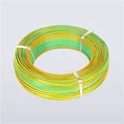
An essential trade-off in high-temperature wire and cable design is choosing between electrical conductivity and maximum temperature resistance. When selecting conductor materials for fluoroplastic-insulated wires (such as PTFE, FEP, and PFA), design engineers and procurement teams frequently balance Silver-Plated Copper (SPC) against Nickel-Plated Copper (NPC). Both options protect the underlying bare copper core from high-temperature oxidation, but their performance profiles serve distinctly different operational environments.
Technical Comparison Matrix
| Specification / Attribute | Silver-Plated Copper (SPC) | Nickel-Plated Copper (NPC) |
| Max Continuous Temperature | 200°C | 250°C |
| Electrical Conductivity (% IACS) | 100% – 108% | 90% – 94% |
| High-Frequency & RF Performance | Superior (minimal skin-effect loss) | Higher loss due to magnetic skin depth |
| Corrosion Resistance | Excellent in chemical environments; prone to tarnishing (sulfides) | Outstanding; high oxidation & chemical resistance |
| Solderability | Excellent (rapid wetting with standard fluxes) | Requires specialized fluxes or mechanical crimping |
| Cost Profile | Moderate to High (tied to silver market price) | High (plating process & material requirements) |
Temperature Operating Limits
Uncoated copper oxidizes rapidly above 150°C, leading to conductor degradation and insulation failure. Surface plating acts as a diffusion barrier and corrosion shield:
- Silver-Plated Copper (200°C Limit): Silver provides an effective thermal barrier up to 200°C. Above this temperature, silver atoms diffuse into the copper base, increasing conductor resistance over time and accelerating oxidation at the copper-silver interface.
- Nickel-Plated Copper (250°C Limit): Nickel exhibits significantly lower intermetallic diffusion rates with copper at elevated temperatures. A nickel barrier layer allows reliable continuous operation up to 250°C, making nickel-plated copper the standard choice for ultra-high-temperature fluoroplastic insulation systems (such as high-grade PFA or PTFE).
Electrical Conductivity & Signal Integrity
- DC Resistance & Current Capacity: Silver possesses the highest electrical conductivity of any metal. When applied as a cladding over copper, the overall conductor maintains nearly 100% IACS conductivity. By contrast, nickel is significantly less conductive, reducing total conductor conductivity to approximately 93%–96% IACS depending on plating thickness.
- Skin Effect In High-Frequency Applications: At elevated frequencies, current density shifts toward the outer surface of the conductor (the skin effect). Because silver is highly conductive, silver-plated copper offers minimal attenuation for high-frequency signal and RF transmission. Nickel, being ferromagnetic and higher in resistivity, introduces measurable signal attenuation and phase distortion at high frequencies.
Termination & Processing Dynamics
- Silver-Plated Copper: Highly solderable using standard lead-free or leaded solders without requiring active fluxes. Ideal for dense harness assembly and automated termination.
- Nickel-Plated Copper: The passive nickel oxide film makes crimping and soldering more complex. Soldering NPC requires specialized high-temperature, highly activated fluxes (often needing post-solder washing) or high-pressure mechanical crimping tools tailored for hard-surface plating.


Application Guidance
Choose Silver-Plated Copper Wires when:
- Operating temperatures remain continuously at or below 200°C.
- Minimal signal attenuation and high-frequency RF transmission performance are critical (e.g., aerospace avionics, medical sensor leads, precision instrumentation).
- System assembly relies primarily on standard soldering processes.
Choose Nickel-Plated Copper Wires when:
- Continuous operating temperatures range between 200°C and 250°C.
- The application demands exposure to harsh chemical fumes, industrial heating elements, or high-temperature aircraft engine compartments.
- Mechanical crimp terminations are utilized in assembly.
The choice between silver plated copper or nickel plated copper ultimately depends on the matching of thermal performance limits and signal integrity requirements. Silver-plated copper wires remain the industry standard for precision signal transmission and continuous operation at temperatures up to 200°C, while nickel-plated copper wires provide the necessary thermal boundary protection in extreme environments up to 250°C.
Engineers should carefully verify peak heat exposure and operating frequency during the wire specification development phase to ensure long-term reliability of the system. If you need to customize fluoroplastic insulated high-temperature wire and cable, you can contact our sales team.