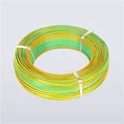
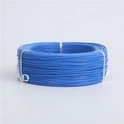
PTFE insulated wires are widely used in the selection of internal wiring for high-density industrial electronic products, commercial cooking equipment, automotive testing systems, and aerospace instruments due to their excellent temperature resistance, chemical resistance, and dielectric strength. Among them, UL1180, UL1199, and UL1213 are very common PTFE insulated wires.
While all three styles utilize PTFE insulation paired with silver-plated or nickel-plated copper conductors – typically rating for 200°C (with silver-plated copper) or 260°C (with nickel-plated copper) – their differences in voltage ratings and insulation wall thicknesses define distinct engineering selection criteria and application scopes.
Comparison of core parameters and electrical performance
| UL Style | Voltage Rating | Nominal Insulation Thickness | Typical Conductor Range | Key Structural Characteristic |
| UL1213 | 150V | Thin Wall (About 0.006 inches/0.15mm) | 30 AWG – 10 AWG | Lightweight, minimal outer diameter, maximum space savings |
| UL1180 | 300V | Standard Wall (About 0.013 inches / 0.33mm) |
30 AWG – 10 AWG |
Balanced mechanical and electrical performance |
| UL1199 | 600V | Heavy Wall (About 0.020 inches / 0.51mm) | 30 AWG – 10 AWG | High dielectric strength, superior cut-through resistance |
UL1213 wire (150V) - High-Density Packaging and Weight-Sensitive Systems
- Design Features: Features the thinnest insulation wall among the three styles.
- Primary Applications: Low-voltage signal transmission, high-density electronic assemblies, aerospace instrumentation, and compact medical devices.
- Engineering Considerations: Due to its thin wall, cut-through resistance is lower. It performs best in tightly constrained spaces where mechanical abrasion and high mechanical stress are minimized.
UL1180 wire (300V) - General-Purpose Appliance Wiring
- Design Features: A standard insulation wall providing a balance of flexibility, dielectric strength, and physical protection.
- Primary Applications: Commercial food warming equipment, industrial heating control cabinets, high-temperature sensor leads, and analytical equipment.
- Engineering Considerations: Represents the benchmark general-purpose high-temperature hook-up wire for 300V internal wiring requirements.
UL1199 wire (600V) - High Voltage and Severe Mechanical Environments
- Design Features: Heavy insulation wall offering maximum dielectric breakdown margins and enhanced resistance to abrasion, pinching, and cut-through.
- Primary Applications: Industrial electric furnaces, power supplies, motor lead wires, heating element mains circuits, and environments subject to mechanical vibration.
- Engineering Considerations: The larger overall diameter requires careful consideration in tight conduit runs, but it provides the highest electrical safety margin.


Processing and Compliance Considerations
Conductor Plating Selection:
- Silver-Plated Copper (SPC): Rated up to 200°C. The silver layer prevents copper oxidation at elevated temperatures while maintaining high electrical conductivity and solderability.
- Nickel-Plated Copper (NPC): Rated up to 260°C. Ideal for extreme heat environments, though processing parameters (strip force and crimp settings) must be adjusted due to nickel's hardness compared to silver.
Stripping and Termination: Due to PTFE's high crystalline structure and toughness, precise mechanical stripping blades are required. For thin-walled UL1213, blade depth calibration is critical to prevent conductor nicking. For heavy-walled UL1199, strip settings must account for material elongation to prevent insulation drag.
Flame Resistance Standards: UL1180, UL1199, and UL1213 typically pass the VW-1 vertical flame test. Fluoropolymers exhibit a high Limiting Oxygen Index, rendering them self-extinguishing and non-dripping in fire situations.
Selecting the correct PTFE wire style requires matching system operating voltage with physical routing constraints:
- Specify UL1213 wire when working within tight enclosures or signal-level circuits up to 150V where outer diameter and weight reduction are paramount.
- Choose UL1180 wire as the standard specification for general 300V internal appliance wiring requiring a balance of flexibility and dielectric protection.
- Select UL1199 wire for 600V power distribution, heavy machinery leads, or environments exposed to severe mechanical wear and higher voltage potentials.
Proper alignment of voltage rating, insulation wall thickness, and conductor plating ensures long-term operational reliability and compliance with UL 758 safety standards in high-temperature applications.