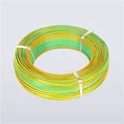
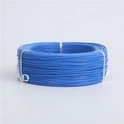
When sizing conductors for high-density interconnects, the immediate instinct is often to compare unit material cost. However, in modern airframe architectures and 800V+ automotive powertrains, wire insulation functions as a critical structural component. The decision to switch from Cross-linked Polyethylene (XLPE) to Ethylene Tetrafluoroethylene (ETFE) isn't driven by general claims of quality, but by specific spatial, thermal, and mechanical failure thresholds.
Here is an engineering breakdown of why XLPE reaches its physical limit in constrained environments, and where ETFE insulated wire introduces distinct processing and operational trade-offs.
Thermal and Electrical Performance Thresholds
Continuous Temperature Endurance
- XLPE: Operating range typically capped between -40°C and +125°C (up to 150°C for specialized cross-linked grades).
- ETFE: Operating range spans from -65°C to +150°C continuous, with short-term thermal excursion tolerance reaching up to +200°C.
- Material Behavior: Cross-linking transforms low-density polyethylene into a thermoset matrix, preventing it from melting at elevated temperatures. However, prolonged exposure above 125°C triggers thermo-oxidative chain scission. In high-current EV battery management harnesses, localized thermal spikes cause XLPE to harden, embrittle, and eventually micro-crack under thermal cycling. Conversely, ETFE relies on strong Carbon-Fluorine (C-F) bonds to maintain mechanical ductility and dielectric integrity near hot engine manifolds or high-voltage junction boxes.
Dielectric Strength and Insulation Wall Thickness
- XLPE: Dielectric breakdown voltage ranges around 20–25 kV/mm. Standard thin-wall constructions typically require an insulation thickness of 0.40mm to 0.60mm to ensure reliable dielectric and mechanical protection.
- ETFE: Dielectric breakdown voltage reaches 30–35 kV/mm. Its superior strength allows for high-reliability thin-wall configurations (down to 0.15mm to 0.25mm) while meeting identical voltage specs.
- Volumetric & Weight Impact: In a 30-conductor bundle routed through a cramped aircraft bulkhead or wheel well, this wall reduction shrinks the overall harness bundle diameter by roughly 25%. Replacing standard XLPE with thin-wall ETFE can strip 8 to 12 kg out of a light vehicle's complete wiring assembly.
Mechanical Abrasion & Chemical Hazards
Cut-Through and Friction Mechanics
- XLPE: Exhibits a softer elastomeric surface. Under continuous micro-vibration against raw stamped metal brackets, it experiences cold flow under sustained pressure, which can lead to eventual conductor exposure.
- ETFE: Features a semi-crystalline fluoropolymer structure with high surface hardness and a low friction coefficient. It resists mechanical cut-through under high clamping loads, allowing harness designers to eliminate heavy protective corrugated tubing in high-vibration zones.
Fluid Inertness and Solvents
- XLPE: Susceptible to outer jacket swelling and plasticizer leaching when exposed to extended contact with ester-based hydraulic fluids (such as Skydrol) or hot diesel fuel.
- ETFE: Highly inert across aggressive chemical environments. It exhibits zero dimensional swell when submerged in jet fuel, hydraulic fluids, battery acids, engine oils, or de-icing agents.


Real-World Trade-Offs & Manufacturing Constraints
Switching to ETFE introduces specific processing and financial factors that procurement and engineering teams must weigh:
- Flexibility & Routing Limits: ETFE possesses a significantly higher flexural modulus than XLPE. This makes it stiffer to bend manually during harness assembly. In cramped cabin dashboards, tight bend radii may require pre-forming, whereas XLPE easily yields to tight manual routing paths.
- Raw Material Cost: Fluoropolymer resin costs substantially more per kilogram than XLPE compound. For applications where weight reduction, extreme thermal resistance, and chemical immunity are not required (e.g., standard door-lock wiring or 12V cabin lighting), XLPE remains the cost-effective choice.
Specifying the Right Insulation
When determining whether to specify ETFE or XLPE for your next harness build, consider the following environmental threshold test:
Specify XLPE if:
- The operating environment remains consistently below +125°C.
- Space constraints are moderate, and standard insulation wall thickness is acceptable.
- Unit price sensitivity is the primary project constraint (e.g., standard consumer automotive chassis wiring).
Specify ETFE if:
- Operating temperatures regularly exceed +125°C or experience localized thermal spikes.
- The harness requires tight bending radiuses, minimal outer diameter, or maximum weight reduction.
- The wire is exposed to severe abrasion, vibration, or aggressive chemical fluids (e.g., aerospace avionics, EV battery management systems, motorsport/performance automotive).
With the development of aerospace and automotive architecture towards higher power density, lighter weight, and stricter space constraints, the selection of wire insulation materials is no longer a secondary consideration. Although cross-linked polyethylene (XLPE) still holds a place in general commercial and low stress wiring, the systemic advantages of ethylene fluoroethylene copolymer (ETFE), such as thinner wall thickness, lighter harness weight, higher heat resistance, and superior fluid resistance, make it a necessary upgrade choice for high reliability applications.
For system designers and procurement managers, switching to ETFE insulated wire represents a strategic investment that reduces total cost of ownership by eliminating external protective sleeving, streamlining assembly, and mitigating catastrophic field failures in severe operating environments.