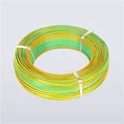
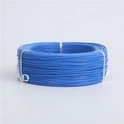
When choosing insulated wires for construction projects, industrial production lines, or new energy projects, do you often face the dilemma of traditional wires frequently aging and tripping easily when overloaded in high-temperature environments, requiring a significant investment in maintenance or even replacement in just a few years? In today's increasingly strict global engineering standards and prolonged project lifecycle requirements, choosing an insulated wire that combines high performance, high reliability, and foresight has become the key to ensuring the long-term value of the project. XLPE insulated wire have become the preferred solution for global buyers to empower the future of projects, thanks to their comprehensive performance that far exceeds traditional materials. This article will take you through five dimensions: technical principles, core advantages, application scenarios, compliance certification, and cost-effectiveness, to comprehensively understand why XLPE insulated Electrical Wire can become a "future guarantee" product that crosses industries, providing clear guidance for your procurement decisions.
Decrypting XLPE: The Core Logic from Molecular Structure to Performance Leap
To understand the excellent performance of XLPE insulated copper wire, it is first necessary to clarify the essential changes brought about by its core technology - "cross-linking". XLPE stands for cross-linked polyethylene, and its basic raw material is polyethylene (PE), a common insulation material. However, pure polyethylene has fatal defects: its linear molecular structure makes it poorly heat-resistant, and its long-term working temperature can only be maintained at 70 ℃. It is prone to softening and deformation when exposed to high temperatures, resulting in a sharp decline in insulation performance.
The "cross-linking" process converts the linear molecular chains of polyethylene into a three-dimensional network structure through chemical or physical means, similar to weaving scattered silk threads into a sturdy mesh surface. This structural reshaping has brought about a qualitative leap: key indicators such as heat resistance, mechanical strength, and aging resistance have all been improved several times, fundamentally solving the shortcomings of traditional polyethylene wires. There are currently three mainstream industrial cross-linking processes that are adapted to different application scenarios, and can be accurately matched according to demand during procurement:
- Peroxide chemical crosslinking : The most mature process that triggers molecular crosslinking through the decomposition of peroxides under high temperature and pressure, resulting in stable product quality. It is suitable for medium and low voltage cables and is the mainstream choice in the industrial and construction fields.
- Silane water cross-linking : With low equipment investment and high production efficiency, a cross-linked network is formed through silane hydrolysis and condensation, which is commonly used in building wiring and low-voltage cables, and has significant cost-effectiveness advantages.
- Radiation crosslinking : a physical crosslinking method that does not require the addition of chemical agents, resulting in a purer insulation layer. It is suitable for thin-walled small wire diameter cables (such as automotive wires and electronic wires) and special scenarios, with better environmental friendliness and accuracy.


Four core advantages: making XLPE the hardcore support for "future proof"
When purchasing insulated wires, it is important to focus not only on current performance compatibility, but also on long-term stability and adaptability. The four core advantages of XLPE insulated Electrical Wire precisely match these needs, making them a "universal high-performance solution" that spans different industries.
Heat resistance and current carrying capacity: Breaking through environmental limitations and improving system efficiency
High temperature environment is the "enemy" of insulated wires. Traditional PVC wires only work at a temperature of 70 ℃ for a long time. Once the critical value is exceeded, there may be risks such as insulation layer melting and short circuit. The long-term allowable working temperature of XLPE insulated wires can reach 90 ℃, and they can withstand extreme high temperatures of 250 ℃ during short circuits (within 5 seconds). The direct benefit of this performance is a significant increase in current carrying capacity - under the same conductor cross-sectional area, XLPE wires have a current carrying capacity 15% -20% higher than PVC wires, which means that the amount of conductor used can be reduced and wiring costs can be lowered.
The heat resistance advantage of XLPE wires is particularly crucial for industrial workshops, rooftop photovoltaic power stations, data center computer rooms, and other scenarios that require high-temperature operations. Taking a photovoltaic project in the Middle East as an example, the temperature near the photovoltaic modules often reaches over 60 ℃ in summer. After using XLPE insulated copper wire, there was no insulation failure caused by high temperature, compared to the previous use of traditional wires which had an average of 8 failures per year, reducing maintenance costs by 60%.
Mechanical and chemical stability: reduce life cycle losses
In engineering projects, wires are inevitably subjected to tests such as compression, wear, and chemical corrosion during laying, installation, and use. The three-dimensional mesh structure of XLPE endows it with excellent mechanical properties, with tensile strength more than 30% higher than PVC, and wear resistance nearly doubled. It is not easily damaged by friction during pipe laying. At the same time, it can resist the erosion of common chemical substances such as oil stains and acid-base solutions, and is suitable for special environments such as chemical workshops and food processing plants.
What deserves more attention is its anti-aging performance. In natural environments, the aging rate of XLPE insulation layer is much slower than traditional materials, and its service life can reach more than 30 years, which is 2-3 times that of PVC wires. In a renovation project of an old factory building in Europe, XLPE wires laid in 1990 were tested and found to maintain insulation performance of 85% of their initial state, far exceeding PVC wires laid during the same period (only 40% remaining), without the need for early replacement, saving the owner a huge amount of renovation costs.
Electrical performance: Ensure system safety and adapt to high-voltage upgrade requirements
The core mission of insulated wires is to ensure electrical safety, and XLPE's performance in this field can be regarded as a benchmark. Its dielectric constant is ≤ 2.3 (20 ℃, 1MHz), volume resistivity is ≥ 1 × 10 ¹⁴Ω· cm (90 ℃), and its insulation strength far exceeds materials such as PVC and ethylene propylene rubber (EPR). This means that at the same voltage level, the XLPE insulation layer can be made thinner, reducing the overall diameter of the wire and lowering the installation space requirements; At the same time, it can effectively avoid the risk of insulation breakdown and improve the safety of system operation.
With the global power grid upgrading towards high voltage and intelligence, the adaptability advantages of XLPE are becoming increasingly prominent. From low-voltage building wiring of 0.6/1kV to high-voltage transmission and distribution backbone network of 64/110kV, XLPE wires can be stably adapted. In a power grid upgrade project in a certain city in Japan, replacing traditional cables with XLPE high-voltage cables reduced transmission losses by 8%. At the same time, due to excellent insulation performance, the underground laying of cables was successfully achieved, saving the construction cost of ground transmission towers.
Environmental Protection and Compliance: Adapt to strict global standards and facilitate international markets
Nowadays, regions such as Europe, America, and Southeast Asia have increasingly strict environmental requirements for wires and cables, and certifications such as RoHS and REACH have become the "door opener" for entering the market. XLPE insulated Wire naturally have environmental advantages, especially for halogen-free and low smoke products. When burned, they do not release toxic halogen acid gases, have low smoke density, and a light transmittance of ≥ 80%. They fully comply with UL VW-1 vertical combustion testing and IEC 61034 smoke density standards.
Whether it's CE certification in Europe, UL certification in the United States, or local standards in Southeast Asia, XLPE wires can easily meet the standards. For example, XLPE wires that meet the UL3321 standard not only comply with UL758 and UL1581 electrical standards, but also pass RoHS and REACH environmental certifications, allowing them to directly enter the European and American markets without the need for additional adaptive modifications, saving buyers certification costs and time cycles.
Accurate Adaptation: Practical Analysis of Five Core Scenarios
XLPE insulated wire have strong versatility, but the emphasis on performance varies in different scenarios. Understanding its application logic in core industries can help you select more accurately and achieve the optimal match between performance and cost.
Architecture and Real Estate: Dual Protection of Safety and Longevity
The construction industry has strict requirements for the fire resistance and durability of electrical wires, especially in densely populated areas such as high-rise buildings, hospitals, and shopping malls. XLPE halogen-free low smoke flame-retardant wires can effectively suppress smoke and toxicity in case of fire, buying valuable time for personnel evacuation, and have become a standard configuration for new buildings in Europe and America. In a high-rise residential project in Munich, Germany, XLPE halogen-free low smoke flame-retardant wires were used and passed the fire safety inspection in one go. Due to their long service life, the developer marketed "30-year no wire maintenance" as a selling point, increasing the premium space of the property.
For home wiring, the current carrying advantage of low-voltage XLPE wires (0.6/1kV) can meet the needs of high-power electrical appliances and avoid tripping due to overload. At the same time, its aging resistance means that there is no need to frequently replace wires after decoration, reducing the trouble of later renovation.


Industrial manufacturing: a "reliable partner" that adapts to harsh environments
The high temperature, oil pollution, mechanical vibration and other environmental factors in industrial workshops pose great challenges to electrical wires. The heat resistance and chemical corrosion resistance of XLPE wires play a central role in this scenario. In the automotive parts processing plant, the temperature near the welding station can reach 120 ℃. After using irradiated cross-linked XLPE wires, there was no aging or cracking of the insulation layer; In the chemical workshop, XLPE wires can withstand splashes of acidic and alkaline solutions, and their service life is twice as long as traditional EPR wires.
In addition, industrial automation equipment requires high flexibility of wires. XLPE wires cross-linked with silane water have both flexibility and strength, which can adapt to the wiring needs of mobile parts such as robot arms, reducing wire breakage caused by bending.
New energy sector: the "core carrier" to assist in green transformation
The outdoor, high-voltage, and high humidity environment of new energy projects such as photovoltaics, wind power, and energy storage places higher demands on the weather resistance and electrical performance of wires. XLPE insulated Electrical Wire have become the preferred choice in the field of new energy due to their excellent weather resistance and high voltage adaptability. In a large photovoltaic power station in Australia, XLPE wires laid outdoors have been tested alternately by 40 ℃ high temperature and rainstorm, and the insulation resistance has always remained stable, and the power generation efficiency has not been affected; In energy storage systems, UL3820 standard XLPE electrical wires can adapt to 1000V high voltage environments, meeting the power transmission needs of large capacity energy storage equipment.
With the popularization of new energy vehicles, the demand for charging station wiring has surged. The high current carrying capacity of XLPE electrical wires can meet the current requirements for fast charging, and its flame retardancy improves the safety of charging stations. It has been widely adopted by charging station suppliers of Tesla, Volkswagen and other car companies.
Smart grid: the "key bridge" supporting efficient power transmission
The trend of high-voltage and underground smart grid makes XLPE high-voltage cables the core choice. Medium and high voltage XLPE cables (6/10kV to 220kV and above) use ultra clean materials and three-layer co extrusion technology, with insulation eccentricity ≤ 5%, which can evenly distribute the electric field and avoid local breakdown. In the London underground power grid renovation project, the use of 110kV XLPE high-voltage cables increased transmission capacity by 30%, while saving urban land resources as there is no need to build ground transmission towers.
In addition, the low loss characteristics of XLPE cables can reduce energy waste during power grid transmission, which is in line with the global trend of energy conservation and emission reduction. In a certain transmission project between China and Europe, the use of XLPE cables reduced annual transmission losses by 120 million kWh, equivalent to saving 48000 tons of standard coal.
Special Environment: Customized Solutions to Address Extreme Challenges
For extreme scenarios such as cold regions, underwater, and mining, XLPE wires can be customized to meet the needs. In the mining project in Siberia, Russia, customized cold resistant XLPE wires can maintain flexibility in low temperature environments of -40 ℃, avoiding insulation layer cracking caused by icing; In cross sea transmission projects, XLPE cables with steel wire armor can withstand seawater corrosion and water flow impact, with a service life of over 50 years.


Procurement Guide: How to Accurately Choose XLPE Insulated Wire?
Facing XLPE wires of different specifications and processes, precise selection is the key to achieving "cost optimization and performance adaptation". The following three core points can help you make quick decisions:
- Clarify voltage levels and scenario requirements : For low voltage scenarios (such as building wiring), choose 0.6/1kV silane cross-linked or peroxide cross-linked products; Choose peroxide cross-linked ultra clean products for medium and high voltage scenarios (such as power grids and new energy); Special flexible requirements (such as equipment wiring) should be given priority in choosing radiation crosslinked products.
- Verification of certification and quality standards : UL and CE certifications need to be confirmed for exports to Europe and America, and RoHS and REACH certifications need to be verified for scenarios with high environmental requirements; In terms of quality, core indicators such as insulation eccentricity (≤ 5%) and volume resistivity (≥ 1 × 10 ¹⁴Ω· cm) can be considered.
- Balancing cost and long-term value : XLPE wires have an initial procurement cost 10% -20% higher than PVC, but their lifespan is extended by 2-3 times and maintenance costs are reduced by over 60%. It is recommended to evaluate through "full lifecycle cost estimation" to avoid increasing losses in the later stages due to short-term cost choices.
Whether you are a builder pursuing safety and durability, a manufacturer in need of stable production, or a developer laying out the transition to new energy, XLPE insulated wire can be your "reliable partner". Choosing XLPE is to build a solid foundation for your project's future and gain an advantage in the fierce market competition. If you would like to learn more about the specifications, customized solutions, or sample matters of XLPE insulated Electrical Wire, please feel free to contact us at any time( luna@ironflon.com )We will provide you with professional one-on-one procurement support and technical answers.