If you've ever stood beneath a jet lifting off from a runway, or peered into the cramped, heat-resistant wiring harnesses that keep a satellite in low Earth orbit, you might not stop to think about the materials holding those systems together-until something fails. For aerospace engineers, every component has to pull double duty: it has to survive extreme temperature swings, withstand radiation, hold up to vibration, and still carry a reliable electrical signal when every second counts. That's where the question of ETFE insulated wire comes in: as a supplier who's worked with this material for over a decade, I get asked all the time, "Can ETFE insulated wire actually hold up in aerospace applications?" The short answer is yes-but only when you match the right ETFE formulation to the specific aerospace demand, and ignore the one-size-fits-all assumptions that many people make about this versatile polymer.
First: What Makes ETFE Different From Other Wire Insulation?
Before we dive into aerospace suitability, let's break down why ETFE (ethylene tetrafluoroethylene) has become a go-to for high-performance wiring across industries, from aerospace to industrial manufacturing. Unlike PVC, which breaks down above 105°C and leaches toxic fumes when heated, ETFE is a fluoropolymer that boasts a temperature range of -100°C to 150°C for standard formulations, with high-heat grades stretching that to well over 200°C. It's also lightweight-critical for aerospace, where every gram saved translates to thousands of dollars in launch costs-and resistant to UV radiation, chemical corrosion, and moisture. For aerospace, where wiring is often routed through tight, exposed spaces on aircraft or satellites, its abrasion resistance is another major win: it doesn't scuff or crack easily when routed around sharp edges, which reduces the risk of short circuits during routine maintenance or operation.
Aerospace's Non-Negotiable Requirements for Wiring
To understand why ETFE works for specific aerospace use cases, you have to first understand what aerospace wiring has to survive, and what materials can check every box. Let's walk through the core requirements:
- Temperature extremes: Commercial aircraft cruise at 35,000 feet, where cabin wiring is exposed to -55°C temperatures, while engine compartment wiring can reach 200°C during takeoff and climb. Satellites experience 300°C swings when moving from sunlight to Earth's shadow, so insulation can't melt, crack, or become brittle over repeated cycles.
- Fire and smoke safety: In a closed aircraft cabin, fire is an immediate hazard. Wiring must self-extinguish within 15 seconds, produce minimal smoke, and emit zero toxic fumes that could disable passengers or crew.
- Radiation resistance: Satellites and aircraft flying through Van Allen belts or polar routes are exposed to cosmic radiation, which breaks down polymer chains over time. Insulation has to retain its mechanical and electrical properties after years of exposure.
- Vibration and mechanical stress: Jet engines produce constant vibration, while satellite launch subjects wiring to 10g to 100g of shock. Insulation has to resist abrasion and tear to prevent shorts that could disable critical systems.
- Lightweight: Every kilogram of wiring adds fuel costs for aircraft, and every gram adds launch costs for satellites. Insulation that's lighter than alternatives like PTFE is a huge win for aerospace.
ETFE in Action: Where It's Used (And Where It's Not)
Now, let's get into the practical applications: ETFE insulated wire is not a one-size-fits-all solution, but it excels in several key aerospace segments. Let's break them down, with real examples I've seen as a supplier:
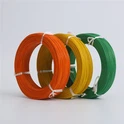
- Commercial Aircraft Avionics and Cabin Wiring: This is ETFE's bread and butter in aerospace. Cabin wiring operates in the -55°C to 125°C range, so standard aerospace-grade ETFE is more than enough, and its lightweight nature reduces overall aircraft weight. Many major airlines use our UL10086 wire for in-flight entertainment (IFE) systems, seat controls, and cabin lighting because it's flexible enough to route through tight spaces in aircraft fuselages, and its low smoke and zero toxicity make it safe for passengers in case of an emergency. Engine compartment wiring is a different story-those areas hit 200°C, so engineers need a high-heat resistant wire, which is where our high heat resistant wire comes in. This formulation is rated for 200°C, and it's often used in turbine control systems and wiring near engine mounts, where extreme temperatures rule out standard ETFE.
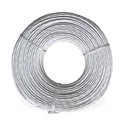
- Satellite and Small Launch Vehicle Wiring: Satellites require insulation that can survive 15+ years in space, exposed to constant cosmic radiation and temperature swings of -100°C to 250°C. Silver-plated copper wire is the standard for satellite wiring, because pure copper oxidizes in space, while silver offers better conductivity. Our Copper Wire Silver Plated with ETFE insulation is a popular choice here, because ETFE's radiation resistance (when properly formulated) stands up to the harsh space environment, and it's lighter than the alternative PTFE insulation that many satellites used a decade ago. I recently worked with a small launch startup that used this wire for their small satellite's power and communication harness, and they reported no insulation degradation after two years of orbit testing.
- Uncrewed Aerial Vehicles (UAVs) and General Aviation: UAVs are a fast-growing segment of aerospace, and they prioritize lightweight, low-cost materials that still meet safety standards. For general aviation, where cost is a bigger factor than commercial airliners, our UL10126 wire is a great middle ground. It's rated for 125°C, meets basic aviation safety standards, and is 30% lighter than equivalent PTFE wire, making it ideal for small UAVs and general aircraft, where every gram of payload matters.
Of course, ETFE isn't perfect for every aerospace application. For wiring that's exposed to constant temperatures above 250°C, like wiring in a rocket engine's combustion chamber, ETFE breaks down too quickly, and you'd need materials like polyimide (Kapton) instead. But for 80% of the wiring in commercial aircraft, satellites, and UAVs, ETFE is not just suitable-it's the most cost-effective and reliable option available today.
Common Misconceptions About ETFE in Aerospace
I've spent years talking to aerospace engineers, and there are two myths about ETFE that come up all the time. Let's bust them:
- "ETFE is too flimsy for aerospace vibration." This is often confused with low-quality, generic ETFE. Aerospace-grade ETFE is formulated with higher molecular weight polymers, which makes it far more abrasion-resistant than generic wire. I've seen our UL10086 wire pass 1,000 hours of vibration testing at 10g, which is more than enough for commercial aircraft operation. Generic ETFE would start to crack after a few hundred hours, but aerospace-grade ETFE is built to hold up to that kind of stress.
- "ETFE can't handle radiation in space." Again, this is about formulation. Standard ETFE breaks down when exposed to high levels of cosmic radiation, because the radiation breaks the polymer's carbon-fluorine bonds. But aerospace-grade ETFE, like the silver-plated copper wire we supply, is cross-linked during manufacturing, which strengthens those bonds and prevents them from breaking. Cross-linked ETFE can survive 10+ years of space radiation exposure without significant degradation, which is exactly what satellites need.


Final Thoughts: ETFE Is a Viable, Even Preferred, Choice for Most Aerospace Wiring
So, to circle back to the original question: yes, ETFE insulated wire can absolutely be used in aerospace applications-when you choose the right, aerospace-certified formulation, and work with a supplier that understands the unique demands of the industry. It's lightweight, resistant to extreme temperatures, fire-safe, and cost-effective compared to alternatives like PTFE, making it ideal for avionics, cabin wiring, satellite harnesses, and UAV systems. The only time ETFE falls short is in applications with constant temperatures above 250°C, where materials like polyimide are a better fit.
If you're currently researching wiring for an aerospace program, or you're looking to switch from outdated insulation materials, I'm here to help. We work with commercial airlines, satellite startups, military contractors, and general aviation companies to supply custom ETFE wire solutions that meet all safety and performance standards. Whether you need a small batch of prototype wire for a new UAV or high-volume wire for a new aircraft program, we can provide certified products that have been tested to withstand the rigors of aerospace operation.
To discuss your specific needs and get a quote for your aerospace wiring project, reach out to our team today. We'll walk through your requirements, recommend the right ETFE wire formulation, and make sure you get a product that meets all the strict safety and performance standards your program demands.
References
- Federal Aviation Administration. (2023). Part 25: Airworthiness Standards: Transport Category Airplanes, Subpart F – Equipment, Systems, and Installation. Retrieved from FAA.gov
- United States Military. (2021). MIL-W-22759/16: Wire, Electrical, 150°C, Insulated, TFE Fluorocarbon, Copper, Single Conductor. Retrieved from Department of Defense Standardization Database
- NASA Goddard Space Flight Center. (2022). Materials Selection for Spacecraft Wiring Harnesses. Retrieved from NASA.gov
- Underwriters Laboratories. (2024). Standard for Safety for Insulated Wire and Cable for Use in Electrical Equipment – UL 1508, UL 10086, UL 10126. Retrieved from UL.com