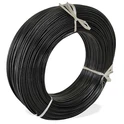
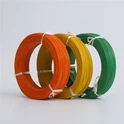
As a supplier of multi core copper wire, I often encounter inquiries from customers in various regions, each with their unique requirements and concerns. One question that has come up more frequently lately is whether multi core copper wire can be used in high - altitude areas. In this blog, I will delve into the technical aspects and practical considerations to provide a comprehensive answer.


Understanding High - Altitude Conditions
High - altitude areas present a set of environmental challenges that can significantly impact the performance of electrical cables. The most notable factors include lower air pressure, lower temperatures, and increased exposure to solar radiation.
Lower air pressure at high altitudes affects the dielectric strength of the air around the cable. Dielectric strength is the maximum electric field that a material can withstand without breaking down and allowing current to flow through it. In high - altitude areas, the reduced air density means that the air has a lower dielectric strength. This can potentially lead to corona discharge, which is a partial electrical discharge that occurs when the electric field around the cable exceeds the dielectric strength of the surrounding air. Corona discharge can cause power loss, electromagnetic interference, and damage to the cable insulation over time.
The lower temperatures in high - altitude regions can also have an impact on the physical properties of the multi core copper wire. Copper, like most metals, contracts as the temperature decreases. This contraction can put stress on the cable insulation and the connectors, potentially leading to cracking or loosening. Additionally, some types of cable insulation materials may become more brittle at low temperatures, increasing the risk of mechanical damage.
Solar radiation is another factor to consider. High - altitude areas typically receive more intense solar radiation due to the thinner atmosphere. Ultraviolet (UV) radiation can degrade the outer jacket of the cable, causing it to become brittle, crack, and lose its protective properties. This can expose the inner conductors to moisture, oxygen, and other environmental factors, leading to corrosion and reduced cable performance.
Performance of Multi Core Copper Wire in High - Altitude Areas
Despite these challenges, multi core copper wire can be used effectively in high - altitude areas with proper design and installation.
Electrical Performance
From an electrical perspective, multi core copper wire has several advantages that make it suitable for high - altitude applications. Copper is an excellent conductor of electricity, with low resistivity. This means that it can carry large amounts of current with minimal power loss, even in the presence of corona discharge. Additionally, multi core copper wire allows for multiple circuits to be bundled together, reducing the overall space requirements and simplifying the installation process.
To mitigate the effects of corona discharge, special cable designs can be employed. For example, cables can be designed with larger diameters to reduce the electric field intensity at the surface of the conductors. This helps to keep the electric field below the dielectric strength of the surrounding air, minimizing the risk of corona discharge. Insulation materials with high dielectric strength can also be used to provide an additional layer of protection.
Mechanical Performance
To address the challenges posed by low temperatures, multi core copper wire can be designed with flexible insulation materials that can withstand cold temperatures without becoming brittle. For example, some cables use ethylene - propylene rubber (EPR) or cross - linked polyethylene (XLPE) insulation, which have good low - temperature flexibility. These materials can maintain their mechanical properties even at extremely low temperatures, reducing the risk of cracking and damage.
In terms of mechanical protection, the cable should be installed with proper support and protection to prevent damage from contraction and expansion. Cable trays, conduits, and other support structures can be used to secure the cable and allow for some movement due to temperature changes. Additionally, the connectors should be designed to withstand the stress caused by temperature - induced contraction and expansion.
Environmental Resistance
To protect against solar radiation, multi core copper wire can be equipped with a UV - resistant outer jacket. This jacket is typically made of materials such as polyethylene or polyvinyl chloride (PVC) that have been formulated to resist the effects of UV radiation. The outer jacket provides a physical barrier between the inner conductors and the environment, preventing moisture, oxygen, and other contaminants from reaching the copper conductors.
Our Product Offerings
At our company, we offer a range of multi core copper wire products that are specifically designed for high - altitude applications. Our Multi Core Power Cables are engineered to have low resistivity and high dielectric strength, ensuring efficient power transmission even in challenging environments. They are also equipped with flexible insulation materials and UV - resistant outer jackets to withstand the low temperatures and intense solar radiation found in high - altitude areas.
Our Multi core control cable is designed for use in control systems in high - altitude locations. It provides reliable signal transmission and is resistant to electromagnetic interference, which is crucial for the proper operation of control equipment.
We also offer multi core electrical cable that is suitable for a variety of electrical applications in high - altitude areas. These cables are available in different sizes, configurations, and insulation materials to meet the specific needs of our customers.
Conclusion
In conclusion, multi core copper wire can be used in high - altitude areas, but it requires careful consideration of the environmental conditions and proper design and installation. By understanding the challenges posed by high - altitude environments and taking appropriate measures to address them, multi core copper wire can provide reliable and efficient electrical performance.
If you are planning an electrical project in a high - altitude area and need multi core copper wire, we are here to help. Our team of experts can provide you with technical advice, product recommendations, and support to ensure that you select the right cable for your application. We invite you to contact us to discuss your specific requirements and start a procurement negotiation. We are committed to providing high - quality products and excellent customer service to meet your needs.
References
- Grover, N. K. (2000). Electric Power Systems. New Age International.
- Neher, J. H., & McGrath, M. H. (1957). A Method of Calculating the Temperature Rise and Load Capability of Cable Systems. Transactions of the American Institute of Electrical Engineers, Part III: Power Apparatus and Systems, 76(3), 752 - 772.
- Perry, R. H., & Green, D. W. (1997). Perry's Chemical Engineers' Handbook. McGraw - Hill.