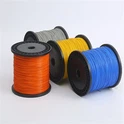
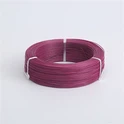
As a supplier of UL10316 single core copper wire, I am often asked about the feasibility of using this product in parallel circuits. In this blog post, I will delve into the technical aspects of UL10316 single core copper wire and discuss whether it can be used in parallel circuits.
Understanding UL10316 Single Core Copper Wire
UL10316 single core copper wire is a type of unsheathed copper wire that meets the standards set by Underwriters Laboratories (UL). This wire is designed for specific electrical applications and is known for its high conductivity and durability. The single core design means that it consists of a single strand of copper, which simplifies its use in various circuits.
The copper used in UL10316 wire is of high purity, typically 99.9% or higher. This high purity ensures low resistance, which is crucial for efficient electrical transmission. The wire is also insulated to protect it from external factors such as moisture, heat, and mechanical damage. The insulation material used is selected to meet the specific requirements of the application, such as temperature rating and chemical resistance.
Can UL10316 Single Core Copper Wire Be Used in Parallel Circuits?
The short answer is yes, UL10316 single core copper wire can be used in parallel circuits. However, there are several factors that need to be considered to ensure safe and efficient operation.
1. Current Capacity
In a parallel circuit, the total current is divided among the individual branches. When using UL10316 single core copper wire in parallel, it is important to ensure that the combined current capacity of the wires is sufficient to handle the total current of the circuit. The current capacity of a wire is determined by its cross-sectional area, material, and insulation.


UL10316 single core copper wire has a specific current rating, which is based on its cross-sectional area and the temperature rating of its insulation. When using multiple wires in parallel, the total current capacity is the sum of the current capacities of the individual wires. However, it is important to note that the current may not be evenly distributed among the wires due to differences in resistance. To ensure even current distribution, the wires should have the same cross-sectional area and length, and should be connected in a way that minimizes resistance differences.
2. Resistance Matching
In a parallel circuit, the voltage across each branch is the same, but the current through each branch is inversely proportional to its resistance. To ensure that the current is evenly distributed among the wires, the resistance of each wire should be as close to the same as possible. This can be achieved by using wires of the same cross-sectional area and length, and by ensuring that the connections are tight and free of corrosion.
If the resistance of the wires is not matched, some wires may carry more current than others, which can lead to overheating and potentially cause a fire. To avoid this, it is recommended to use a resistance meter to measure the resistance of each wire before connecting them in parallel.
3. Voltage Drop
In a parallel circuit, the voltage drop across each branch is the same. However, the total voltage drop across the circuit is determined by the total resistance of the circuit and the total current flowing through it. When using UL10316 single core copper wire in parallel, it is important to consider the voltage drop and ensure that it is within acceptable limits.
The voltage drop across a wire is proportional to its resistance and the current flowing through it. To minimize the voltage drop, it is recommended to use wires with a low resistance and to keep the length of the wires as short as possible. Additionally, the voltage drop should be calculated based on the specific application requirements and the maximum allowable voltage drop for the circuit.
4. Insulation and Safety
When using UL10316 single core copper wire in parallel circuits, it is important to ensure that the insulation of the wires is in good condition and that the wires are properly installed and protected. The insulation should be rated for the voltage and temperature of the circuit, and should be resistant to moisture, heat, and mechanical damage.
In addition, the wires should be installed in a way that minimizes the risk of short circuits and electrical shock. This can be achieved by using appropriate wiring methods, such as conduit or cable trays, and by ensuring that the connections are properly made and secured.
Advantages of Using UL10316 Single Core Copper Wire in Parallel Circuits
There are several advantages to using UL10316 single core copper wire in parallel circuits:
1. Increased Current Capacity
By using multiple wires in parallel, the total current capacity of the circuit can be increased. This is particularly useful in applications where a high current is required, such as in industrial and commercial electrical systems.
2. Redundancy
Using multiple wires in parallel provides redundancy, which means that if one wire fails, the other wires can still carry the current. This can help to prevent power outages and ensure the reliability of the electrical system.
3. Flexibility
UL10316 single core copper wire is available in a variety of sizes and lengths, which provides flexibility in designing and installing parallel circuits. This allows for the customization of the circuit to meet the specific requirements of the application.
Comparison with Other Types of Wires
When considering using UL10316 single core copper wire in parallel circuits, it is also important to compare it with other types of wires. For example, high voltage flexible cable and UL10584 single core wire are also commonly used in electrical applications.
High voltage flexible cable is designed for use in high voltage applications and is typically used in power transmission and distribution systems. It is more flexible than UL10316 single core copper wire and can be used in applications where flexibility is required. However, it is also more expensive and may not be suitable for all applications.
UL10584 single core wire is another type of single core copper wire that meets the UL standards. It is similar to UL10316 single core copper wire in terms of its conductivity and durability, but it may have different insulation properties and current ratings. When choosing between UL10316 single core copper wire and UL10584 single core wire, it is important to consider the specific requirements of the application.
Conclusion
In conclusion, UL10316 single core copper wire can be used in parallel circuits, but it is important to consider several factors to ensure safe and efficient operation. These factors include current capacity, resistance matching, voltage drop, and insulation and safety. By taking these factors into account, UL10316 single core copper wire can provide a reliable and cost-effective solution for parallel circuit applications.
If you are interested in purchasing UL10316 single core copper wire or have any questions about its use in parallel circuits, please feel free to contact us for a detailed discussion. Our team of experts is available to provide you with the information and support you need to make the right decision for your electrical application.
References
- UL Standards for Safety: UL10316
- Electrical Wiring Handbook: Principles and Practices
- Copper Development Association: Properties and Applications of Copper Wire