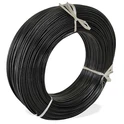
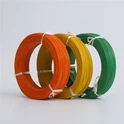
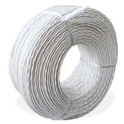
In the realm of electrical engineering, the selection of wires for high - voltage applications is a critical decision that can significantly impact the safety, efficiency, and longevity of electrical systems. As a supplier of UL1516 tin plated ETFE insulated wire, I often encounter inquiries regarding the suitability of this wire for high - voltage scenarios. In this blog post, I aim to explore the technical aspects of UL1516 tin plated ETFE insulated wire and assess its potential use in high - voltage applications.


Understanding UL1516 Tin Plated ETFE Insulated Wire
Before delving into its high - voltage capabilities, let's first understand what UL1516 tin plated ETFE insulated wire is. UL1516 is a standard established by Underwriters Laboratories (UL), which sets the requirements for the wire in terms of its construction, performance, and safety.
The tin plating on the wire serves multiple purposes. Firstly, it enhances the wire's corrosion resistance, protecting the underlying conductor from oxidation and environmental damage. This is particularly important in harsh operating conditions where the wire may be exposed to moisture, chemicals, or other corrosive agents. Secondly, tin plating improves the solderability of the wire, making it easier to connect to other electrical components during the assembly process.
ETFE (Ethylene Tetrafluoroethylene) is a high - performance fluoropolymer insulation material. It offers excellent electrical insulation properties, such as high dielectric strength, low dielectric constant, and low dissipation factor. These properties make ETFE an ideal choice for applications where electrical insulation is crucial. Additionally, ETFE has good mechanical properties, including high tensile strength, flexibility, and abrasion resistance, which allow the wire to withstand mechanical stress during installation and operation.
High - Voltage Requirements and Considerations
High - voltage applications typically involve electrical systems operating at voltages above 1000 volts. When selecting a wire for high - voltage use, several key factors need to be considered:
Dielectric Strength
Dielectric strength is the maximum electric field that an insulating material can withstand without experiencing electrical breakdown. In high - voltage applications, the insulation material must have sufficient dielectric strength to prevent arcing and short - circuits. The ETFE insulation used in UL1516 tin plated wire generally has a high dielectric strength, which is a positive attribute for high - voltage applications.
Partial Discharge
Partial discharge is a localized electrical discharge that occurs within the insulation material when the electric field exceeds a certain threshold. Over time, partial discharge can cause degradation of the insulation material, leading to reduced insulation performance and eventual failure. Wires used in high - voltage applications should have low partial discharge characteristics to ensure long - term reliability.
Temperature Resistance
High - voltage systems often generate heat, and the wire must be able to withstand elevated temperatures without significant degradation of its electrical and mechanical properties. ETFE has a high melting point and good thermal stability, which allows it to maintain its performance at relatively high temperatures.
Tracking Resistance
Tracking is the formation of a conductive path on the surface of the insulation material due to the presence of contaminants and electrical stress. Wires used in high - voltage applications should have good tracking resistance to prevent the formation of conductive paths, which could lead to short - circuits and electrical failures.
Assessing UL1516 Tin Plated ETFE Insulated Wire for High - Voltage Applications
Based on the above high - voltage requirements, let's evaluate UL1516 tin plated ETFE insulated wire:
Dielectric Strength
ETFE insulation has a relatively high dielectric strength, typically in the range of 20 - 30 kV/mm. This means that it can withstand a relatively high electric field without breaking down. For many high - voltage applications, this dielectric strength may be sufficient, especially in systems where the voltage stress is not extremely high. However, in very high - voltage applications, such as those in power transmission and distribution systems, additional insulation or design considerations may be required.
Partial Discharge
ETFE insulation generally has low partial discharge characteristics. The smooth surface and high purity of ETFE help to minimize the formation of voids and impurities within the insulation, which are the main causes of partial discharge. This makes UL1516 tin plated ETFE insulated wire suitable for high - voltage applications where low partial discharge is required.
Temperature Resistance
ETFE has a continuous operating temperature range of - 65°C to + 150°C. This wide temperature range allows the wire to be used in high - voltage applications where the operating temperature may vary significantly. The tin plating on the wire also helps to improve its thermal conductivity, which can further enhance its ability to dissipate heat.
Tracking Resistance
ETFE has good tracking resistance due to its non - polar and hydrophobic nature. It is less likely to form conductive paths on its surface compared to some other insulation materials. This property makes UL1516 tin plated ETFE insulated wire suitable for high - voltage applications in dirty or contaminated environments.
Case Studies and Applications
There are several real - world applications where UL1516 tin plated ETFE insulated wire has been used in high - voltage scenarios:
Aerospace and Aviation
In the aerospace and aviation industries, high - voltage systems are used for various purposes, such as aircraft electrical power distribution, avionics, and radar systems. UL1516 tin plated ETFE insulated wire is often used in these applications due to its lightweight, high - performance insulation, and resistance to harsh environmental conditions.
Medical Equipment
Medical equipment, such as X - ray machines and MRI scanners, often operate at high voltages. The use of UL1516 tin plated ETFE insulated wire in these applications ensures reliable electrical insulation and safety for patients and operators.
Industrial Automation
In industrial automation systems, high - voltage circuits are used for motor control, power supplies, and other functions. UL1516 tin plated ETFE insulated wire can be used in these applications to provide stable electrical performance and long - term reliability.
Other Related ETFE Insulated Wires
In addition to UL1516 tin plated ETFE insulated wire, we also offer other related products, such as [UL10109 Tin Plated ETFE Insulated Wire](/insulated - wire/etfe - insulated - wire/ul10109 - tin - plated - etfe - insulated - wire.html), [UL10086 ETFE Insulated Wire](/insulated - wire/etfe - insulated - wire/ul10086 - etfe - insulated - wire.html), and [UL1508 Tin Plated ETFE Insulated Wire](/insulated - wire/etfe - insulated - wire/ul1508 - tin - plated - etfe - insulated - wire.html). These wires also have their own unique features and applications, and our technical team can help you select the most suitable wire for your specific high - voltage requirements.
Conclusion
In conclusion, UL1516 tin plated ETFE insulated wire has several properties that make it a viable option for high - voltage applications. Its high dielectric strength, low partial discharge, good temperature resistance, and tracking resistance make it suitable for a wide range of high - voltage scenarios, including aerospace, medical, and industrial applications. However, it is important to note that the suitability of the wire for a specific high - voltage application depends on various factors, such as the voltage level, operating environment, and system requirements.
If you are considering using UL1516 tin plated ETFE insulated wire or any of our other related products in your high - voltage applications, I encourage you to contact us for a detailed consultation. Our experienced technical team can provide you with in - depth product information, technical support, and help you make the best decision for your project. We are committed to providing high - quality wires and excellent customer service to meet your electrical needs.
References
- Underwriters Laboratories. UL1516 Standard for Safety: Appliance Wiring Material.
- ASTM International. Standard Test Methods for Dielectric Breakdown Voltage and Dielectric Strength of Solid Electrical Insulating Materials at Commercial Power Frequencies.
- IEC International Electrotechnical Commission. IEC 60270: High - voltage test techniques - Partial discharge measurements.