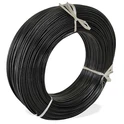
Yo, fellow electrical enthusiasts! I'm a supplier of UL1508 tin plated ETFE insulated wire, and today I wanna chat about how the insulation thickness affects the performance of this awesome wire.
First off, let's get a bit of background. UL1508 tin plated ETFE insulated wire is a top - notch choice in the electrical industry. ETFE (Ethylene Tetrafluoroethylene) is known for its excellent chemical resistance, high - temperature tolerance, and good electrical insulation properties. The tin plating on the wire adds corrosion resistance and improves conductivity.
Impact on Electrical Performance
One of the key aspects affected by insulation thickness is electrical insulation. A thicker insulation layer generally means better electrical insulation. It can prevent electrical leakage, which is super important in applications where safety is a top priority. For example, in high - voltage systems, a thin insulation might not be able to withstand the electrical stress, leading to short - circuits or even electrical fires.
On the other hand, a very thick insulation might not always be the best. In some low - voltage, low - power applications, a thick insulation can add unnecessary bulk and weight to the wire. It can also increase the cost of production. You see, more insulation material means more money spent on raw materials and more time in the manufacturing process.
Let's talk about capacitance. Capacitance is the ability of a wire to store electrical energy. The insulation thickness has a direct impact on the capacitance of the wire. A thicker insulation reduces the capacitance between the conductor and the surrounding environment. This is beneficial in high - frequency applications. In high - frequency circuits, excessive capacitance can cause signal distortion and loss. By increasing the insulation thickness, we can keep the capacitance in check and ensure a clean signal transmission. For instance, in communication cables, where high - speed data transfer is crucial, controlling the capacitance is essential. And that's where the right insulation thickness comes into play.
Thermal Performance
Thermal performance is another area where insulation thickness matters. ETFE is already a great material when it comes to heat resistance. But the thickness of the insulation can further enhance or limit the wire's ability to dissipate heat.
A thicker insulation can act as a better thermal barrier. It can protect the conductor from external heat sources and prevent the heat generated within the wire (due to electrical resistance) from escaping too quickly. This can be an advantage in some applications where the wire needs to maintain a certain temperature. For example, in some industrial heating elements, a thick insulation can help in maintaining a stable temperature and improving energy efficiency.
However, if the insulation is too thick, it can also trap heat inside the wire. This can lead to an increase in the wire's temperature, which can be bad news. High temperatures can degrade the insulation material over time, reducing its effectiveness and shortening the wire's lifespan. In extreme cases, it can even cause the insulation to melt, leading to electrical failures. So, finding the right balance is crucial.
Mechanical Performance
The insulation thickness also has an impact on the mechanical performance of the wire. A thicker insulation provides more protection to the conductor. It can resist abrasion, cuts, and impacts better than a thin insulation. This is especially important in applications where the wire is likely to be exposed to harsh environments or rough handling.
For example, in automotive wiring, the wires are often subject to vibrations, rubbing against other components, and physical impacts. A thick insulation can prevent the conductor from getting damaged, ensuring the reliability of the electrical system in the vehicle.
But again, there's a trade - off. A thick insulation can make the wire less flexible. In applications where flexibility is required, such as in robotics or some consumer electronics, a very thick insulation can be a drawback. The wire might be difficult to bend or route, which can limit its usability.
Chemical Resistance
ETFE is well - known for its chemical resistance. The insulation thickness can enhance this property. A thicker insulation layer provides more protection against chemical agents. It can prevent chemicals from reaching the conductor and causing corrosion.
In industrial settings where the wire might be exposed to various chemicals, such as in chemical plants or refineries, a thick insulation is a must. It can ensure the long - term reliability of the electrical system by protecting the wire from chemical attacks.
However, just like in other aspects, a very thick insulation might not always be necessary. In environments where the chemical exposure is minimal, a thinner insulation can still provide adequate protection while reducing costs and weight.
Cost - Benefit Analysis
As a supplier, I know that cost is always a major concern for our customers. When it comes to insulation thickness, there's a clear cost - benefit relationship.
A thicker insulation generally means higher costs. As I mentioned earlier, more insulation material means higher raw material costs. The manufacturing process also becomes more complex and time - consuming, which adds to the production cost. But on the other hand, the benefits of a thicker insulation, such as better electrical insulation, thermal protection, and mechanical strength, can justify the higher cost in some applications.
For example, in aerospace applications, where safety and reliability are of utmost importance, the extra cost of a thick insulation is often considered a worthy investment. The consequences of a wire failure in an aircraft can be catastrophic, so spending a bit more on high - quality, thick - insulated wire is a no - brainer.
On the other hand, in some consumer electronics, where cost - effectiveness is a key factor, a thinner insulation might be more appropriate. The goal is to find the right balance between performance and cost.
Finding the Right Insulation Thickness
So, how do we find the right insulation thickness for a particular application? Well, it depends on several factors.
First, we need to consider the electrical requirements. If it's a high - voltage or high - frequency application, we might need a thicker insulation to ensure proper electrical performance. Second, the thermal environment is important. If the wire will be exposed to high temperatures or needs to dissipate heat efficiently, the insulation thickness needs to be carefully chosen.
The mechanical environment also plays a role. If the wire will be subject to physical stress, a thicker insulation can provide better protection. And of course, cost is always a factor. We need to weigh the benefits of a thicker insulation against the additional cost.
As a supplier, I work closely with my customers to understand their specific needs. I offer a range of UL1508 tin plated ETFE insulated wires with different insulation thicknesses. Whether you need a wire for a high - end aerospace project or a simple consumer device, we can find the right solution for you.


If you're interested in our kabel 22, electrical copper cable or tin stranded wire, or if you have any questions about insulation thickness and its impact on wire performance, don't hesitate to reach out. We're here to help you make the best choice for your electrical projects.
References
- "Electrical Wiring Handbook"
- "Thermal Management in Electrical Systems"
- "Mechanical Properties of Insulated Wires"