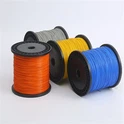
When it comes to ETFE insulated wire, industry insiders are familiar with its hard core strength: high and low temperature resistance, aging resistance, excellent insulation, flame retardant self extinguishing, and it is a "gold wire" for high-end equipment, precision instruments, and special working conditions. But no matter how good the wire is, if the selection, installation, and operation details are ignored, it will also bury safety hazards, even shorten the service life, and cause electrical failures. This highly practical safety usage guide helps you firmly guard the bottom line of electrical safety and maximize the performance of ETFE cables.
Choose the right specifications to eliminate 'inherent hazards'
The first step to safety is never remedial measures, but precise selection. The parameter matching degree of ETFE wires directly determines the safety of use, and it is important to avoid blindly using small wires instead of large ones.
1. Strictly match the rated parameters and refuse overloading operation
Rated voltage : The rated voltage of the selected wire must be greater than or equal to the maximum operating voltage of the line system, commonly specifications such as 300V and 600V. Low voltage versions are strictly prohibited in high-voltage scenarios to prevent insulation breakdown.
Current carrying capacity and wire diameter : The wire diameter is calculated based on the continuous operating current and short-term overload current of the equipment to ensure that the cross-sectional area of the conductor meets the current carrying requirements, avoid long-term overload heating, and accelerate the aging of the ETFE insulation layer.
Temperature resistance level : ETFE conventional temperature resistance is -60 ℃~150 ℃, and some special models can reach 200 ℃. It is necessary to select the appropriate temperature according to the working conditions. Long term over temperature operation will damage the insulation molecular structure and lose insulation performance.
2. Verify product qualifications and reject inferior wires
Be sure to choose products with authoritative certifications such as UL, CUL, RoHS, etc., check the factory inspection report, and focus on verifying indicators such as insulation layer thickness, tensile strength, flame retardancy, and insulation resistance. Poor quality ETFE wire doped with impurities greatly reduces its insulation performance, and is prone to cracking, leakage, and fire risks.
3. Adapt to the working environment and select targeted models
Special scenarios such as humidity, corrosion, high-frequency vibration, and oil stains require the use of modified ETFE wires; Strictly control the humidity in humid environments (≤ 75%) to prevent the oxidation of copper conductors and accelerated aging of insulation layers; Priority should be given to acid and alkali resistant materials in corrosive environments to avoid damage to the insulation layer caused by corrosion.
Standardized installation: details are in place to avoid "postnatal damage"
Improper installation is a common cause of ETFE wire failures, even minor bends, squeezes, and loose connections can pose long-term safety hazards. The entire installation process must strictly adhere to operating standards.
1. Strictly control mechanical protection and prevent physical damage
Bending radius : The ETFE insulation layer is relatively hard, and the bending radius must not be less than 6-8 times the outer diameter of the cable. Sharp angle bending and forced pulling are prohibited to prevent conductor breakage and insulation layer cracking.
Laying protection : fix with cable trays and bridges for exposed laying, protect with concealed conduit, and keep away from sharp edges, corners, and heavy objects; Maintain spacing when multiple cables are parallel to avoid entanglement and knotting, and prevent poor heat dissipation and mechanical wear.
Fixing method : Use specialized cable clamps and flame-retardant zip ties to fix, and prohibit direct binding with iron wire or nails to avoid puncturing the insulation layer; Suspension dragging and excessive stretching are strictly prohibited.
2. Standardize joint handling and strictly prevent poor contact
The connector is the "weak link" of the wire, and it is also a high-risk area for heating and leakage: multi stranded conductors must be crimped with wire noses and dedicated terminals to prevent virtual connections, leakage, and exposed burrs; After crimping, insulation sealing should be done well. Heat shrink tubing and waterproof insulation sheath should be installed in high temperature and humid environments to prevent water vapor and dust from entering and causing short circuits.
3. Stay away from heat sources and interference, optimize wiring environment
Although ETFE is resistant to high temperatures, it should be kept away from open flames, high-temperature pipelines, and heating components to avoid parallel and close laying; Separate the wiring of strong and weak electrical lines, maintain a safe distance between them, and prevent electromagnetic interference; When passing through firewalls and floor slabs, use fireproof mud to seal and block the path of fire spread.


Scientific operation and maintenance: regular inspections to extend service life
ETFE wires have excellent aging resistance, but long-term operation still requires regular maintenance to promptly identify hidden faults and nip risks in the bud.
1. Regular inspections, closely monitoring key indicators
Appearance inspection : Check the insulation layer monthly for cracks, discoloration, bulges, and wear, as well as for exposed or corroded conductors. If any damage is found, stop using and replace immediately.
Temperature monitoring : Use an infrared thermometer to detect the temperature of the cable body and joints. The normal temperature is ≤ 65 ℃. If there is abnormal overheating, immediately investigate overload and virtual connection problems.
Electrical testing : Conduct insulation withstand voltage test and resistance test once a year to ensure that the insulation resistance meets the standard, the current is balanced, and the phase to phase current deviation does not exceed 10%.
2. Environmental control to reduce external erosion
Maintain a dry and ventilated wiring environment, and install dehumidification equipment in scenarios with excessive humidity; Regularly clean the surface of cables in oil and dust environments to avoid the accumulation of dirt that affects heat dissipation; It is strictly prohibited to stack debris or hang heavy objects on wires to prevent mechanical damage.
3. Strictly prohibit unauthorized modifications and adhere to the bottom line of use
Do not connect or modify ETFE wires without authorization, and do not arbitrarily change the load of the circuit; When replacing wires, it is necessary to use products of the same specifications and materials, and it is prohibited to mix wires of different insulation materials and wire diameters.
Emergency response: rapid response, reducing safety losses
If the cable is found to be overheating, burnt, or emitting abnormal noise, immediately cut off the power supply and prohibit live maintenance. After cooling down, investigate the cause of the fault.
When the insulation layer is damaged or leaks electricity, it is forbidden to touch it directly. First, cut off the power and isolate it, and then replace the damaged wire or perform insulation repair.
Establish a spare parts mechanism, keep ETFE wires, terminals, and insulation sheaths of the same specifications on hand, and quickly replace them in case of sudden failures to reduce downtime losses.
Conclusion
Whether it is industrial equipment, precision electronics, or special engineering scenarios, strictly controlling the safety of ETFE wires throughout their entire lifecycle is not only responsible for equipment, but also for personal and property safety. Only by selecting compliant wires, adhering to operating standards, and insisting on regular maintenance can ETFE insulated wire achieve high performance and high safety in parallel.
References
- Manufacturer's documentation for ETFE insulated wire
- Industry standards and guidelines for electrical wiring safety