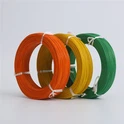
Hey there! I'm a supplier of UL20604 multi core copper wire. You know, signal crosstalk can be a real pain in the neck when it comes to multi core copper wires. It can mess up the performance of your electrical systems, causing all sorts of issues like data errors, interference, and reduced signal quality. So, in this blog, I'm gonna share some tips on how to reduce signal crosstalk in UL20604 multi core copper wire.
First off, let's understand what signal crosstalk is. Signal crosstalk happens when the electromagnetic fields from one wire in a multi core cable interfere with the signals in other wires. This interference can be caused by a bunch of factors, like the distance between the wires, the way they're twisted, and the shielding around them.
One of the simplest ways to reduce signal crosstalk is to increase the distance between the wires. When the wires are farther apart, the electromagnetic fields have less of a chance to interact with each other. So, when you're designing your multi core cable, try to space out the wires as much as possible. This might mean using a larger cable or arranging the wires in a way that maximizes the distance between them.
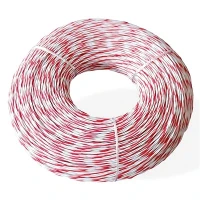
Another effective method is to use twisted pairs. Twisting the wires together helps to cancel out the electromagnetic fields. As the wires twist around each other, the magnetic fields generated by the current in each wire tend to oppose and cancel each other out. This reduces the amount of interference that can occur between the wires. UL20604 multi core copper wires often come with twisted pairs, and it's a good idea to make sure the twist rate is appropriate for your application. A higher twist rate generally means better crosstalk reduction, but it can also make the cable more difficult to work with.
Shielding is also a key factor in reducing signal crosstalk. A Multi core shielded cable has a conductive layer around the wires that acts as a barrier to electromagnetic interference. The shield can be made of materials like aluminum foil or braided copper. When the shield is properly grounded, it can absorb and redirect the electromagnetic fields, preventing them from interfering with the signals in the wires.
Proper grounding is crucial when it comes to shielding. If the shield isn't grounded correctly, it won't be able to do its job effectively. Make sure the shield is connected to a good ground point, and that the connection is secure. This will help to ensure that any electromagnetic interference is safely diverted away from the wires.


In addition to these physical methods, you can also use signal conditioning techniques to reduce crosstalk. Signal conditioning involves processing the signals before they're transmitted or received. This can include things like filtering, equalization, and amplification. Filtering can remove unwanted frequencies from the signal, while equalization can compensate for any signal loss or distortion. Amplification can boost the signal strength, making it more resistant to interference.
When it comes to choosing the right UL20604 multi core copper wire for your application, there are a few things to keep in mind. Look for a cable that has a good balance of features like twist rate, shielding, and conductor quality. A multi core electrical cable with a high-quality shield and tight twists will generally offer better crosstalk reduction.
It's also important to consider the environment in which the cable will be used. If the cable will be exposed to high levels of electromagnetic interference, you might need to choose a cable with more robust shielding. On the other hand, if space is limited, you might need to look for a more compact cable that still offers good crosstalk performance.
Another thing to think about is the length of the cable. Longer cables are more prone to crosstalk because the signals have to travel a greater distance, giving the electromagnetic fields more time to interact. If you need to use a long cable, consider using repeaters or amplifiers to boost the signal strength and reduce the effects of crosstalk.
Now, let's talk about testing. Once you've installed your UL20604 multi core copper wire, it's a good idea to test it to make sure there's no excessive crosstalk. You can use specialized testing equipment to measure the crosstalk levels and make sure they're within acceptable limits. If you find that there's too much crosstalk, you might need to go back and make some adjustments, like tightening the twists or improving the shielding.
In conclusion, reducing signal crosstalk in UL20604 multi core copper wire is all about a combination of physical design, proper installation, and signal conditioning. By following these tips, you can ensure that your multi core cable performs at its best and provides reliable signal transmission.
If you're in the market for high-quality UL20604 multi core copper wire, I'd love to talk to you. We have a wide range of multi core copper cable options that are designed to minimize signal crosstalk and meet your specific needs. Feel free to reach out for more information and let's start a conversation about your project.
References
- Electrical Wiring Handbook
- Cable Design and Installation Best Practices