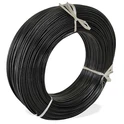
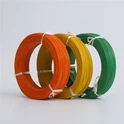
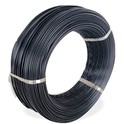
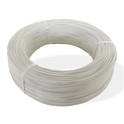
Hey there! As a supplier of PTFE insulated wire, I've seen firsthand how crucial it is to ensure the quality of these wires. In this blog, I'll share some practical ways to test the quality of PTFE insulated wire.
1. Visual Inspection
The first step in testing PTFE insulated wire is a simple visual check. Grab a good - quality magnifying glass if you can. Look at the surface of the insulation. It should be smooth and free of any visible cracks, bubbles, or scratches. Cracks can expose the inner conductor, leading to short - circuits or electrical leakage. Bubbles might indicate improper manufacturing processes, which could weaken the insulation over time.
For example, if you notice a small crack on the insulation, it could be a sign of poor handling during production or transportation. And those tiny bubbles? They can trap air, which might expand under high - temperature conditions and cause the insulation to break down.


2. Measuring the Dimensions
Accurate dimensions are key for PTFE insulated wire. You'll need a reliable caliper to measure the outer diameter of the insulation and the diameter of the inner conductor. The outer diameter should match the specifications provided by the manufacturer. If it's too thick, it might affect the flexibility of the wire, and if it's too thin, the insulation might not provide adequate protection.
The diameter of the inner conductor is also important. A thinner conductor than specified could result in higher resistance, which means more heat generation when current flows through the wire. This can not only reduce the efficiency of the electrical system but also pose a safety hazard.
3. Testing the Electrical Resistance
One of the most important aspects of a wire is its electrical resistance. You can use a multimeter to measure the resistance of the PTFE insulated wire. First, make sure the wire is disconnected from any power source. Then, set the multimeter to the resistance mode and connect the probes to the two ends of the wire.
The measured resistance should fall within the expected range based on the wire's length, cross - sectional area, and the type of conductor material. If the resistance is too high, it could indicate a problem with the conductor, such as a break or a poor connection. On the other hand, a resistance that's too low might suggest a short - circuit or a manufacturing defect.
4. Checking the Insulation Resistance
Insulation resistance is a measure of how well the PTFE insulation can prevent the flow of electric current through it. To test this, you'll need an insulation resistance tester, also known as a megger. Connect the tester to the conductor and the outer surface of the insulation.
A high insulation resistance value is desirable. It means that the insulation is doing its job of keeping the current within the conductor. A low insulation resistance could be a sign of moisture ingress, damage to the insulation, or contamination.
5. Evaluating the Temperature Rating
PTFE insulated wire is known for its excellent temperature resistance. But you still need to test if it can actually withstand the specified temperature range. You can use a temperature chamber to simulate different temperature conditions. Place the wire inside the chamber and gradually increase the temperature to the maximum rated temperature.
Keep the wire at this temperature for a certain period, say a few hours. Then, check the wire for any signs of degradation, such as changes in the insulation's appearance or a decrease in its electrical properties. If the wire shows signs of damage at temperatures below its rated limit, it might not be of high quality.
6. Assessing the Chemical Resistance
PTFE is highly resistant to many chemicals. However, it's still a good idea to test the wire's chemical resistance, especially if it's going to be used in an environment where it might come into contact with various chemicals.
You can soak a small sample of the wire in a test chemical for a specific period. After that, remove the wire, dry it, and check for any changes in the insulation, such as swelling, softening, or discoloration. If the wire shows significant damage after the chemical exposure, it might not be suitable for use in a chemically - harsh environment.
7. Flexibility and Bend Testing
In many applications, PTFE insulated wire needs to be bent or flexed. So, it's important to test its flexibility and ability to withstand repeated bending. You can use a bending machine to bend the wire back and forth a certain number of times at a specific radius.
After the bending test, check the wire for any signs of insulation cracking or conductor breakage. A high - quality wire should be able to withstand a reasonable amount of bending without losing its electrical or mechanical properties.
8. Flame Retardancy Test
Flame retardancy is a critical property, especially for wires used in electrical systems. You can perform a simple flame test on a small sample of the wire. Use a small flame source, like a butane lighter, and hold it close to the wire for a short period.
A good quality flame retardant wire should self - extinguish quickly once the flame source is removed. If the wire continues to burn or melts easily, it might not meet the required flame retardancy standards.
9. High - Voltage Testing
For applications that involve high - voltage, it's essential to test the wire's ability to withstand high - voltage stress. You can use a high - voltage tester to apply a specified high - voltage to the wire for a certain duration.
During the test, monitor the wire for any signs of electrical breakdown, such as arcing or corona discharge. A high - quality high voltage electrical wire should be able to withstand the high - voltage without any issues.
10. Comparing with Standards and Samples
Finally, it's always a good idea to compare the tested wire with industry standards and known high - quality samples. You can refer to relevant international standards, such as those from the International Electrotechnical Commission (IEC) or the Underwriters Laboratories (UL).
By comparing the test results with the standards and samples, you can get a better idea of whether the wire meets the required quality levels. And if you're looking for a high quality electrical wire, you can use these comparison methods to make an informed decision.
In conclusion, testing the quality of PTFE insulated wire involves a combination of visual, electrical, mechanical, and chemical tests. By following these steps, you can ensure that the wire you're using or supplying is of high quality and suitable for its intended application.
If you're in the market for PTFE insulated wire or have any questions about our products, don't hesitate to reach out. We're here to help you find the best wire solutions for your needs. Let's start a conversation and see how we can work together!
References
- Electrical Wiring Handbook, various editions
- Standards from the International Electrotechnical Commission (IEC)
- Standards from the Underwriters Laboratories (UL)