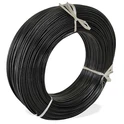
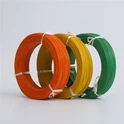
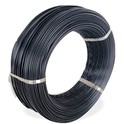
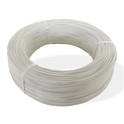
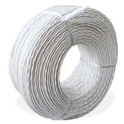
Hey there! I'm a supplier of UL10308 single core copper wire, and I've been in this business for quite some time. Today, I wanna share with you how to test the quality of UL10308 single core copper wire. It's super important to ensure that the wire you're using or selling meets the necessary standards, so let's dive right in!


Visual Inspection
The first step in testing the quality of UL10308 single core copper wire is a good old - fashioned visual inspection. This is something you can do pretty quickly and it can give you a lot of clues about the wire's condition.
Take a close look at the insulation. The insulation on UL10308 single core copper wire should be smooth and free of any cracks, cuts, or bubbles. If you see any of these issues, it's a red flag. Cracks or cuts in the insulation can expose the copper core, which is a safety hazard. Bubbles might indicate a problem with the manufacturing process, and they could lead to insulation failure over time.
Also, check the color of the insulation. UL10308 wire usually has a specific color code, and any deviation from the standard color could mean that the wire isn't up to par. And don't forget to look at the ends of the wire. They should be cleanly cut, without any frayed or damaged copper strands sticking out.
Dimension Check
Next up, we've got the dimension check. The diameter of the copper core and the thickness of the insulation are crucial factors in determining the quality of UL10308 single core copper wire.
You'll need a caliper for this part. Measure the diameter of the copper core at several points along the wire. The measurement should be within the tolerance range specified by the UL10308 standard. If the core is too thin, it might not be able to carry the required electrical current, which could lead to overheating. On the other hand, if it's too thick, it could make the wire too stiff and difficult to work with.
Then, measure the thickness of the insulation. Just like the core diameter, the insulation thickness should also meet the standard. A thinner insulation might not provide enough protection, while a thicker one could add unnecessary bulk and cost.
Conductivity Test
The conductivity of the copper core is a key aspect of UL10308 single core copper wire. After all, the whole point of this wire is to conduct electricity efficiently.
To test the conductivity, you'll need a multimeter. Set the multimeter to the resistance mode. Connect the probes to the two ends of the wire. The resistance reading should be within the acceptable range for UL10308 wire. A high resistance could indicate a problem with the copper quality, such as impurities or damage to the core.
It's also a good idea to test the conductivity at different points along the wire. This can help you identify any weak spots or breaks in the core. If you notice a significant difference in resistance between different sections of the wire, there might be an issue that needs further investigation.
Insulation Resistance Test
In addition to testing the conductivity of the copper core, you also need to test the insulation resistance. This test measures how well the insulation prevents the flow of electricity between the copper core and the outside environment.
You'll need an insulation resistance tester for this. Connect one probe to the copper core and the other to a conductive surface around the insulation (like a metal plate). The tester will apply a voltage to the wire and measure the resistance. The insulation resistance should be high, indicating that the insulation is doing its job.
A low insulation resistance could mean that the insulation is damaged or contaminated. It could also be a sign of moisture getting into the insulation, which can significantly reduce its effectiveness.
Temperature Rating Test
UL10308 single core copper wire has a specific temperature rating. This rating indicates the maximum temperature at which the wire can safely operate without degrading.
To test the temperature rating, you'll need a temperature chamber. Place a sample of the wire in the chamber and gradually increase the temperature. Monitor the wire's performance as the temperature rises. At the rated temperature, the wire should still be able to conduct electricity properly, and the insulation should remain intact.
If the wire starts to show signs of degradation, such as a decrease in conductivity or damage to the insulation, before reaching the rated temperature, then it's not meeting the quality standards.
Flexibility Test
Flexibility is another important factor, especially if the UL10308 single core copper wire is going to be used in applications where it needs to be bent or moved around.
To test the flexibility, take a length of the wire and try bending it back and forth a few times. The wire should be able to bend without breaking or damaging the insulation. If the wire snaps easily or the insulation cracks during the bending test, it's not flexible enough.
Chemical Resistance Test
UL10308 single core copper wire might be exposed to various chemicals in different environments. So, it's important to test its chemical resistance.
You can do this by soaking a sample of the wire in a solution of the chemicals it's likely to encounter. After a certain period of time, take the wire out and inspect it. The insulation should not show any signs of swelling, discoloration, or softening. If it does, then the wire might not be suitable for use in that particular chemical environment.
Comparing with Similar Products
It can also be helpful to compare UL10308 single core copper wire with other similar products on the market, like UL10316 Single Core Copper Wire and UL10358 Single Core Copper Wire. By doing so, you can get a better sense of how your UL10308 wire stacks up in terms of quality, performance, and price.
Conclusion
Testing the quality of UL10308 single core copper wire is a multi - step process that involves a variety of tests. From visual inspection to conductivity tests, each step plays an important role in ensuring that the wire meets the necessary standards.
If you're in the market for high - quality UL10308 single core copper wire, don't hesitate to reach out. We're committed to providing top - notch products that have passed all the necessary quality tests. You can learn more about our UL10308 Single Core Copper Wire and start a procurement discussion. We're here to help you find the best wire for your needs!
References
- Underwriters Laboratories (UL) Standards for Electrical Wires and Cables
- Industry best practices for testing electrical wires